
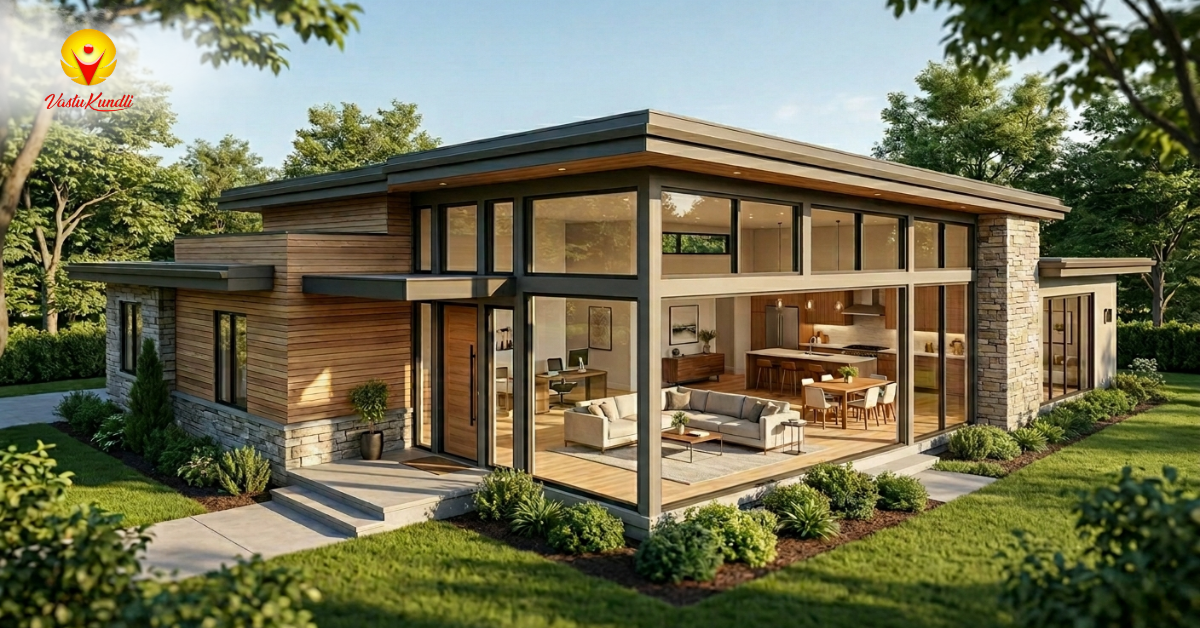
There’s a dangerous assumption many families make when buying newly built homes. They think that because everything is brand new, modern, and designed by professional architects, the home must be energetically sound. New construction means no history, no previous owners, no accumulated problems from the past. It’s a blank slate where your family gets to be the first to create memories and establish energy patterns. This sounds perfect until you realize that new doesn’t automatically mean good from a Vastu perspective.
Modern builders in the USA and Canada design homes based on construction efficiency, cost optimization, aesthetic trends, and building codes. Energy flow, directional alignment, and spatial harmony according to Vastu principles simply aren’t on their radar. They’re creating properties that look attractive in photos and maximize square footage within budget constraints. Whether those homes actually support the well-being of families living in them is not part of the design process.
Nishant and Sonali discovered this reality too late. They bought a gorgeous new construction townhouse in a Toronto development, feeling excited about being the first owners. Everything was pristine with modern finishes, energy-efficient appliances, and a contemporary open floor plan that everyone raves about. But within their first year, both started experiencing health issues they’d never had before. Nishant developed persistent back pain despite being only thirty-five. Sonali struggled with anxiety and sleep problems. Their young daughter became unusually clingy and fearful. When they finally consulted a Vastu expert, they learned their beautiful new home had multiple serious energy defects built right into the structure.
The master bedroom was located in a zone that disrupts rest and relationships. The open floor plan they loved created a piercing energy flow with no barriers to slow and circulate positive energy. The main entrance faced a direction that limited growth and opportunity. These weren’t problems they could blame on previous owners or old construction. These were fundamental design flaws in a brand-new home that would affect them for as long as they lived there unless corrected.
Modern Floor Plans and Energy Flow Challenges
The most popular trend in North American new construction is the open concept floor plan, where kitchen, dining, and living areas flow together without walls separating them. From a real estate marketing perspective, this creates the illusion of spaciousness and encourages family interaction. From an energy perspective, it often creates serious problems that builders never consider.
Open layouts can create what’s called energy rushing, where positive energy enters through the main door and shoots straight through the space without circulating properly through different zones. Think of it like water flowing through a pipe versus water circulating in a pond. The rushing energy doesn’t have the opportunity to settle and nourish different areas of your home. This manifests as difficulty retaining wealth, a constant feeling of restlessness, and opportunities that come and go without materializing into stable benefits.
Another issue with open floor plans is the lack of defined boundaries between different functional zones. When your kitchen cooking area is visible from the front entrance, when your dining space flows directly into your living room, when there’s no separation between public and private areas, the energy doesn’t know how to organize itself appropriately. Different activities require different energy qualities. Cooking needs focused fire energy. Resting needs calm earth energy. Socializing needs active air energy. When all these happen in one continuous space, the energies clash and create confusion.
Many new construction designs also feature two-story entry foyers, which look impressive but can create energy voids. The high ceiling in the entrance area means energy doesn’t ground properly when entering the home. It dissipates upward instead of flowing horizontally through your living spaces. Families in homes with dramatic entry foyers often struggle with feeling ungrounded, scattered, or unable to follow through on plans despite good intentions.
Builder Priorities Versus Family Wellbeing
Modern builders optimize for construction speed and cost efficiency above all else. They use standard floor plans repeated across entire developments because this streamlines the building process and reduces expenses. They’re not designing each home individually based on its specific lot orientation and directional characteristics. They’re dropping the same layout onto every property regardless of which direction it faces.
This means you might get a floor plan that was designed assuming north-facing orientation, but your actual lot faces west. The room placements that might work in one direction create problems in another, but the builder doesn’t adjust because that would require custom design work they’re not set up to provide. You’re buying a one-size-fits-all layout applied to your specific lot without regard for whether it actually suits that orientation.
Builders also prioritize maximizing square footage and bedroom count because these features drive sales prices. They’ll squeeze in an extra bedroom or expand the master suite, even if doing so places rooms in energetically problematic zones. A home advertised as having four bedrooms sounds better than three bedrooms, even if that fourth bedroom is positioned where it will create health or relationship issues for whoever sleeps there.
Plumbing and electrical efficiency also drive decisions about kitchen and bathroom placement. Builders cluster these rooms together to minimize plumbing runs and reduce costs. This is smart construction practice, but it often results in bathrooms located in zones that shouldn’t have water element concentration or kitchens placed in directions that create financial and health challenges. The builder saves money on installation, but your family pays the price in reduced well-being.
Common Vastu Problems in New Developments
Walk through any new housing development in the USA or Canada, and you’ll see repeated patterns of Vastu defects appearing in home after home because builders use standard designs without energy considerations. One extremely common problem is master bedroom suites located over attached garages. This sounds convenient and uses space efficiently, but places your sleeping area over an empty void with vehicle fumes and mechanical energy below you. The lack of a solid earth foundation beneath your bedroom disrupts rest and can contribute to health issues over time.
Another frequent issue is bathrooms positioned in the center of the home or located directly above bedrooms on lower floors. Modern multi-story designs often stack bathrooms vertically for plumbing efficiency. But having a toilet and shower directly over where you or your children sleep creates energy drainage that affects health and vitality. You’re literally being drained from above as water and waste energy flow over your resting space.
Many new townhouses and condos feature front doors that open directly into living rooms with no proper entrance foyer or transition space. You step from outside straight into your main living area with no buffer zone. This creates privacy issues, but more importantly, it means entering energy has no space to adjust and settle before flooding into your home. It’s like opening a dam directly into your living room rather than having channels that guide and moderate the flow.
New construction often includes large windows and glass doors, which look beautiful and bring in natural light. But excessive glass, particularly in certain directions, can create too much fire element and make spaces feel agitated rather than peaceful. Bedrooms with floor-to-ceiling windows might seem luxurious, but they often prevent proper rest because the space lacks the contained protective quality needed for sleep.
Basement Designs in North American Homes
Basements are standard in Canadian homes and common in northern USA properties, but ancient Vastu texts don’t address underground living spaces because they weren’t part of traditional Indian architecture. Modern families in North America use basements as bedrooms, home offices, gyms, and entertainment areas without understanding how underground energy functions differently.
Living or sleeping in basement spaces requires special attention because you’re below ground level with earth pressing in on multiple sides. This creates heavier, more compressed energy compared to above-ground rooms. Some people thrive in basement spaces, finding them cozy and grounding. Others feel claustrophobic, depressed, or lethargic spending time below grade. The effect depends partly on the specific basement location within the home’s overall structure and partly on individual sensitivity.
Many new constructions feature walkout basements, which are partially above grade on one side. These work better energetically than fully underground basements because they allow more natural light and connection to the exterior environment. But even walkout basements need careful evaluation regarding which activities occur there and who uses those spaces regularly.
The tendency to finish basements and add bedrooms there is popular in new construction because it increases living space affordably. But placing children’s bedrooms or guest rooms in basements without considering energy implications can create problems. Children especially need lighter, more expansive energy for healthy development. Confining them to underground spaces long-term can affect mood, motivation, and overall vitality.
Directional Orientation Ignored in Standard Designs
One of the biggest problems with new construction developments is that builders orient homes based on lot layout and street access, not based on optimal directional alignment for energy flow. They position the front door wherever it needs to face the street, regardless of whether that direction supports positive energy entry for the specific floor plan they’re using.
In traditional Vastu practice, you’d design the interior layout based on the directional orientation of the property. If your entrance faces east, you arrange rooms one way. If it faces south, you arrange them differently. Each direction has different energy qualities, and the internal layout should work with those qualities, not against them. Modern builders do the opposite. They have a fixed floor plan, and they rotate it to fit whatever lot orientation happens to exist.
This creates situations where the kitchen ends up in an unfavorable direction, not because anyone chose to put it there but because the standard design places it in the northwest corner, and your specific lot happens to orient that corner in a problematic direction. The builder didn’t adjust the layout for your lot. They just stamped the same plan onto your property as they did on every other lot in the development.
The same issue affects bedroom placement, bathroom location, and living area arrangement. None of it is customized to work with your home’s specific directional reality. You get a generic design applied universally, and you have to live with whatever energy consequences result from that particular orientation on your particular lot.
Why Custom Doesn’t Guarantee Vastu Compliance
Even families building custom homes often assume their architect will naturally create good energy flow. After all, they’re paying for professional design customized to their needs. But unless you specifically hire an architect knowledgeable about Vastu principles or consult with a Vastu expert during the design phase, your custom home will have the same issues as builder-grade construction.
Architects train in structural integrity, aesthetic appeal, building codes, and functional space planning. Energy flow according to directional principles isn’t part of standard architectural education in North America. Your architect might create a beautiful, functional home that looks amazing and meets all your stated requirements while completely ignoring energy considerations that will affect your family’s well-being for decades.
Custom home building is actually the perfect opportunity to incorporate Vastu from the beginning because you control the design before construction starts. But most families don’t realize this until after they’ve already finalized plans or even completed construction. Then they discover problems that could have been prevented entirely if energy principles had been part of the initial design process.
The Assumption That New Equals Problem-Free
The psychological comfort of buying new construction is powerful. No repair worries. No surprise issues. Everything under warranty. First family to live there, so no inherited problems from previous owners. This sense of security is real regarding physical condition but completely misleading regarding energy quality.
In some ways, new construction can be more problematic than older homes because newer designs prioritize trends like open floor plans and maximized square footage that often create energy flow issues. Older homes built with more defined rooms and traditional layouts sometimes have better natural energy circulation, even if those builders also weren’t thinking about Vastu explicitly.
The key is recognizing that new and safe are not synonymous when it comes to home energy. You still need to evaluate layout, directional orientation, room placement, and energy flow patterns just as carefully in new construction as in resale properties. The evaluation process differs slightly because you’re not dealing with accumulated history, but the need for assessment is equally important.
Learn 5 Essential Vastu Checks Before Buying a Home
Even before consulting an expert, families can perform 5 essential checks themselves:
- House Facing Issues – The direction your home faces affects overall energy and growth.
- Entrance Quality Mistakes – The main door controls how positive energy enters the house.
- Kitchen Placement Conflicts – Wrong kitchen direction can disturb health and finances.
- Toilet Placement Problems – Poor toilet location can weaken wealth and health zones.
- Bedroom Placement Problems – An incorrect bedroom zone can affect sleep and relationships.
These simple checks are just the start. To learn them in depth, with practical applications for homes in the USA and Canada:
Join our live course “5 Essential Vastu Checks Before Buying a Home.”
This course will guide you step-by-step to evaluate any property before making a purchase, helping you avoid mistakes that lead to stress, financial strain, and family discomfort. Families who take this course leave with actionable insights they can implement immediately, whether they’re buying a new home or checking an existing property.
Go to the course section and join our live course today to gain major Vastu insights for every home decision.
Book Your Comprehensive Vastu Health Report
For families ready to buy or even after selecting a property, our Vastu Health Report is invaluable. Unlike a casual consultation, this report examines 30-plus critical parameters of your home, including main door alignment and entrance energy, kitchen orientation and placement, bedroom and study room energy, clutter and lighting analysis, and hidden energy zones affecting health, wealth, and relationships.
By checking all these parameters, families can identify and correct energy blockages before moving in, ensuring long-term harmony, prosperity, and well-being.
Book your personalized Vastu Health Report in the consultation section today because your home should nurture your family, not drain it.
About Our Vastu Expert – Gaurav Jindl
Gaurav Jindl has worked extensively with families purchasing new construction properties across the USA and Canada, helping them understand that modern doesn’t automatically mean energetically optimal. His expertise includes evaluating builder floor plans before purchase and providing practical corrections that work within the constraints of new construction, where structural changes are even more restricted than in older homes.
He recognizes that new construction buyers face unique challenges, including dealing with homeowner association rules, builder warranties that prohibit certain modifications, and the psychological resistance to changing something brand new. Gaurav provides solutions that respect these limitations while still optimizing energy flow through room purpose assignment, furniture placement, color and lighting choices, and other non-structural methods.
Families working with Gaurav for new construction evaluation receive an honest assessment of floor plan strengths and weaknesses before they commit to purchase, allowing them to choose the best available lot and orientation within a development. For those who’ve already purchased, he provides clear guidance on maximizing their home’s energy potential within what can and cannot be changed.
Practical Advice for Families in the USA
When shopping in new construction developments, request floor plans before touring model homes so you can evaluate the layout objectively. Model homes are staged beautifully to create emotional attachment, but the actual floor plan is what you’ll live with daily. Study the layout, considering directional orientation and energy flow, not just visual appeal and square footage.
Ask builders about lot orientation options if you’re buying before construction starts. Sometimes you can choose which lot gets your selected floor plan. Pick an orientation that works best with that specific layout rather than just choosing based on street appeal or yard size. A less prestigious lot with better directional alignment serves your family better than the corner lot everyone wants that creates energy problems.
Consider a pre-construction Vastu consultation where an expert reviews builder plans and helps you select the best available option or suggests modifications you can request before construction begins. Some builders accommodate reasonable layout requests, especially if you’re buying early in development. This is infinitely easier than trying to correct problems after you’ve already moved in.
Don’t assume builder upgrades improve energy quality. Granite countertops and hardwood floors don’t fix fundamental layout problems. Focus first on floor plan evaluation and directional alignment. Then worry about finishes and upgrades. A home with perfect energy flow and builder-grade finishes serves you better than a poorly designed home with luxury upgrades.
Final Thoughts
Nishant and Sonali eventually made several non-structural corrections to their townhouse that significantly improved their experience. They changed which bedrooms family members used, repositioned furniture to optimize directional alignment, adjusted their use of the open living space to create energetic boundaries, and made their garage entry the primary entrance instead of the front door. These changes didn’t require permits, didn’t violate their homeowner association rules, and didn’t void any builder warranties. Their health issues gradually improved, and the home began feeling more supportive.
The lesson isn’t to avoid new construction. Modern homes offer many advantages, including energy efficiency, modern systems, and customization options. The lesson is don’t assume new automatically means good from an energy perspective. New construction needs evaluation just as carefully as resale properties, with the advantage that you’re making decisions before problems accumulate rather than trying to fix inherited issues.
Whether you’re considering new construction or already living in a newly built home, understanding Vastu principles helps you make the most of your property. Sometimes that means choosing a different lot or floor plan. Sometimes it means making simple adjustments after move-in. It always means approaching your home as an energy environment that affects your well-being, not just a physical structure that provides shelter.
Frequently Asked Questions
Q. Should I avoid open floor plan homes because they create Vastu problems?
A. Not necessarily. Open floor plans require more intentional energy management through furniture arrangement, color zones, and strategic use of area rugs or partial dividers to create energetic boundaries. With proper adjustments, many open layouts work well, but they do need more attention than traditionally divided floor plans.
Q. Can I request floor plan changes from builders to improve Vastu?
A. If you’re buying early in the development process, some builders accommodate layout modifications, especially minor ones like moving doors or adjusting room purposes. Once construction begins, changes become much harder. Evaluate plans early and ask about flexibility before committing.
Q. Is it worth paying more for a custom home with a Vastu-compliant design?
A. If you’re already planning custom construction, incorporating Vastu from the design phase costs very little extra compared to the total project. You’re not paying more for Vastu compliance. You’re simply ensuring your architect considers energy flow alongside other design factors. The value is enormous for minimal additional investment.
Q. What if my new construction home has problems, but I just moved in?
A. Most new construction Vastu issues can be addressed through non-structural corrections. Get a comprehensive evaluation to identify which specific problems your layout has and which corrections will provide the biggest benefit. Many families see significant improvement with relatively simple adjustments.
Q. Do builders ever design homes with Vastu principles intentionally?
A. Very rarely in North America. Some custom builders working with Indian families have learned to incorporate basic Vastu considerations, but the vast majority of builders have zero awareness of energy principles. This is why buyer education and evaluation before purchase are so important, regardless of whether you’re buying new construction or resale property.
