
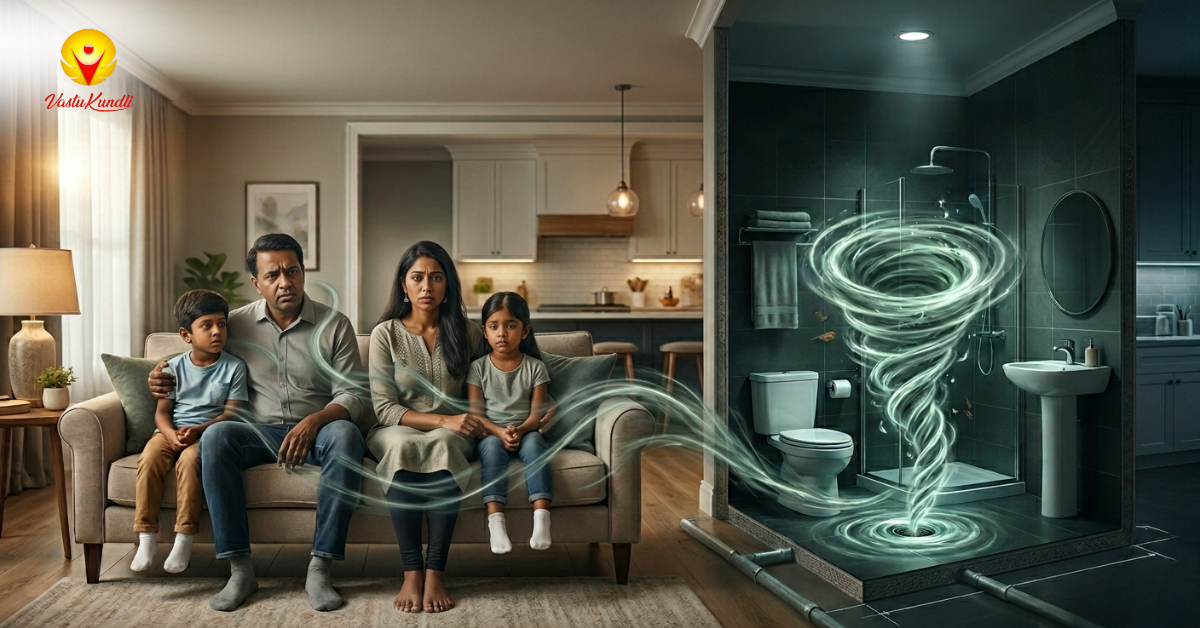
Bathrooms are the most overlooked spaces when families evaluate homes in the USA and Canada. You count how many bathrooms a property has, treating the number as a feature without ever considering where those bathrooms are actually located within the home’s directional grid. Real estate listings boast about updated bathrooms with modern fixtures while completely ignoring that a beautifully renovated bathroom in the wrong zone is draining your family’s health and vitality every single day.
The challenge is that North American builders position bathrooms based purely on plumbing efficiency and construction costs. They cluster bathrooms vertically to minimize plumbing runs. They place them centrally for equal access from different rooms. They never consider directional energy or which zones should absolutely not contain water and waste elements. The result is that most homes have at least one bathroom, creating energetic drainage in a critical area affecting family wellbeing.
Abhinav and Shalini experienced this reality after moving to their new home in Charlotte. They loved the property with its updated kitchen and spacious bedrooms. The three bathrooms seemed like a luxury compared to their previous apartment. What they didn’t realize was that one bathroom sat almost exactly in the center of their home and another occupied the northeast corner. Within six months, both were experiencing health issues they’d never had before.
Shalini developed chronic digestive problems that multiple doctors couldn’t fully explain. Abhinav had persistent low energy and unexplained aches. Their daughter caught every cold and flu going around school. The family’s medical expenses kept climbing while their overall vitality kept declining. When they finally consulted a Vastu expert about these concerns, the consultant immediately identified the bathroom placements as primary culprits creating ongoing health drainage.
The expert explained that bathrooms aren’t inherently problematic, but their location within the directional grid matters enormously. Water and waste energy in certain zones create specific health and vitality impacts. The center bathroom was draining the heart of their home. The northeast bathroom was depleting their spiritual and financial energy, which manifests physically as reduced immunity and vitality. Simple corrections couldn’t fully fix center bathrooms, but understanding the issue helped them make better choices.
Center Bathrooms Draining Core Vitality
The single most serious bathroom placement mistake is having a toilet in the Brahmasthan or center zone of your home. This central area represents the heart and soul of your living space. When waste and drainage occupy this core zone, it affects the entire property’s energy, and everyone living there experiences reduced vitality.
Many older North American homes were designed with central bathrooms for plumbing efficiency. Builders could run all the plumbing through one central stack, reducing costs and complexity. Modern floor plans sometimes still use this approach, especially in certain regions. The result is homes where the literal center contains toilets and drains, creating fundamental energy problems.
Families living with center bathrooms often experience chronic health issues that doctors struggle to fully diagnose or treat. Unexplained fatigue, digestive problems, immune system weakness, general malaise. The symptoms vary by individual, but the pattern is persistent health challenges despite medical attention and lifestyle efforts.
Identifying whether you have a center bathroom requires checking the floor plan carefully. Draw diagonal lines from opposite corners of your home’s overall outline. Where they intersect marks the center. If any part of a bathroom occupies this central zone, that’s the concern. Even a toilet that sits partially in the center creates some drainage effect.
Unfortunately, center bathrooms are extremely difficult to correct without major renovation. You can’t easily relocate plumbing. The practical approach is avoiding homes with this issue during house hunting or accepting that you’ll need to monitor family health carefully and possibly implement extensive compensating corrections throughout the rest of the home.
Northeast Bathrooms Depleting Wealth and Health
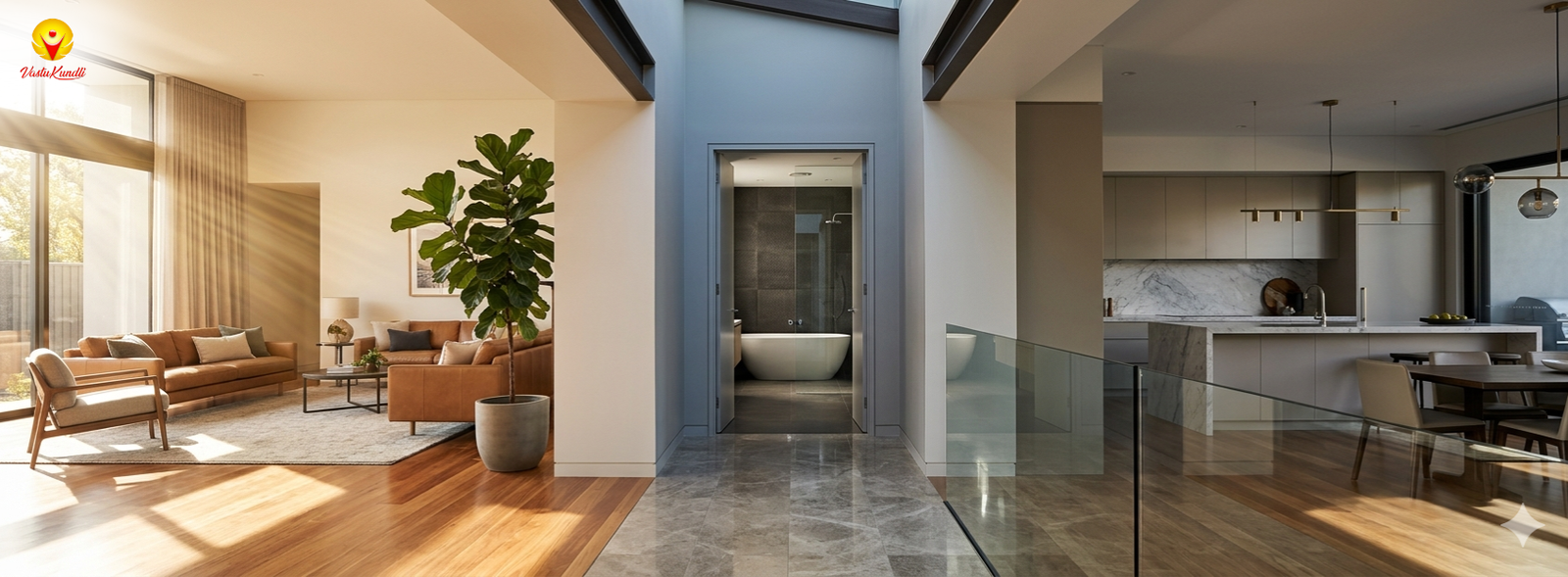
The northeast direction holds particular importance in Vastu as the zone of clarity, spiritual energy, and incoming opportunities. When bathrooms occupy the northeast, they create drainage in this critical area, affecting both health and prosperity. Families often don’t connect their financial struggles and health issues to a bathroom location, but the correlation is consistent.
Northeast bathrooms drain incoming positive energy before it can circulate through your home. New opportunities, financial growth, beneficial connections- all of these enter through the northeast energetically. When that zone contains waste and drainage, the positive flow gets depleted immediately upon entering your space.
Health manifestations from Northeast bathrooms often include immune system weakness and susceptibility to illness. Family members catch everything going around. Recovery from sickness takes longer than it should. There’s a general lack of vitality and resilience. Children in homes with north-east bathrooms may have more frequent health issues than their peers.
Financial impacts appear as money problems despite adequate income. Savings don’t accumulate. Unexpected expenses keep arising. Career advancement feels blocked. The drainage in the northeast zone depletes both health and wealth simultaneously because these are interconnected aspects of well-being.
Correcting Northeast bathroom issues requires keeping the bathroom door closed always and ensuring excellent ventilation so moisture and energy don’t spread. Using bright lighting, light colors, and keeping the space impeccably clean reduces the drainage effect. Strategic placement of plants or specific elements outside the bathroom can help redirect energy, though these are partial solutions, not complete fixes.
Bathrooms Above Sleeping Areas
North American multi-story homes often have bathrooms positioned directly above bedrooms for plumbing efficiency. The upstairs bathroom sits over a downstairs bedroom, creating a situation where sleeping family members are being drained from above nightly. This vertical stacking issue doesn’t exist in traditional single-story construction, so many families don’t even think to check for it.
Sleeping under waste and water drainage affects rest quality, dream state, and vitality restoration that should occur during sleep. Family members sleeping in rooms with bathrooms above often experience disturbed sleep, morning grogginess despite adequate sleep hours, and chronic tiredness that never fully resolves.
Children assigned to bedrooms under bathrooms may have developmental or health impacts over time. Their growing bodies need optimal rest conditions. The drainage from above can contribute to growth issues, immune problems, or behavioral challenges that parents attribute to other causes.
Checking for this issue requires comparing floor plans for multiple levels if you’re evaluating a multi-story home. Note where bathrooms sit on the upper level and which rooms are below them on the lower level. Avoid using rooms under bathrooms as primary bedrooms, especially for children or anyone with health concerns.
If you’re already living in this situation, reassigning which family members use which bedrooms can help. Move children or health-vulnerable family members to rooms without bathrooms above. Use the affected bedrooms for healthier adults or for non-sleeping purposes like home offices or storage.

Bathrooms in Health Zones Creating Specific Issues
Different directional zones connect to different aspects of health and body systems in Vastu understanding. Bathrooms in specific zones can create corresponding health issues affecting the body areas or systems associated with those directions.
Southwest bathrooms can create grounding and stability issues that manifest as bone and joint problems, lower back pain, or challenges with the legs and feet. The southwest represents the earth element and physical foundation. Drainage here weakens structural health.
Southeast bathrooms affect the fire element, connecting to digestion, metabolism, and inflammatory processes. Families might experience digestive disorders, metabolic imbalances, or inflammatory conditions when bathrooms occupy the southeast zone.
Northwest bathrooms impact the air element and can manifest as respiratory issues, circulation problems, or nervous system challenges. Breathing difficulties, anxiety, or restlessness may connect to northwest bathroom drainage.
Understanding these connections helps identify whether your specific health issues might relate to bathroom placement. If your family experiences health patterns that align with the directional zone where your bathroom sits, that’s valuable diagnostic information even if conventional medicine hasn’t identified clear causes.
Master Bedroom Ensuite Placement
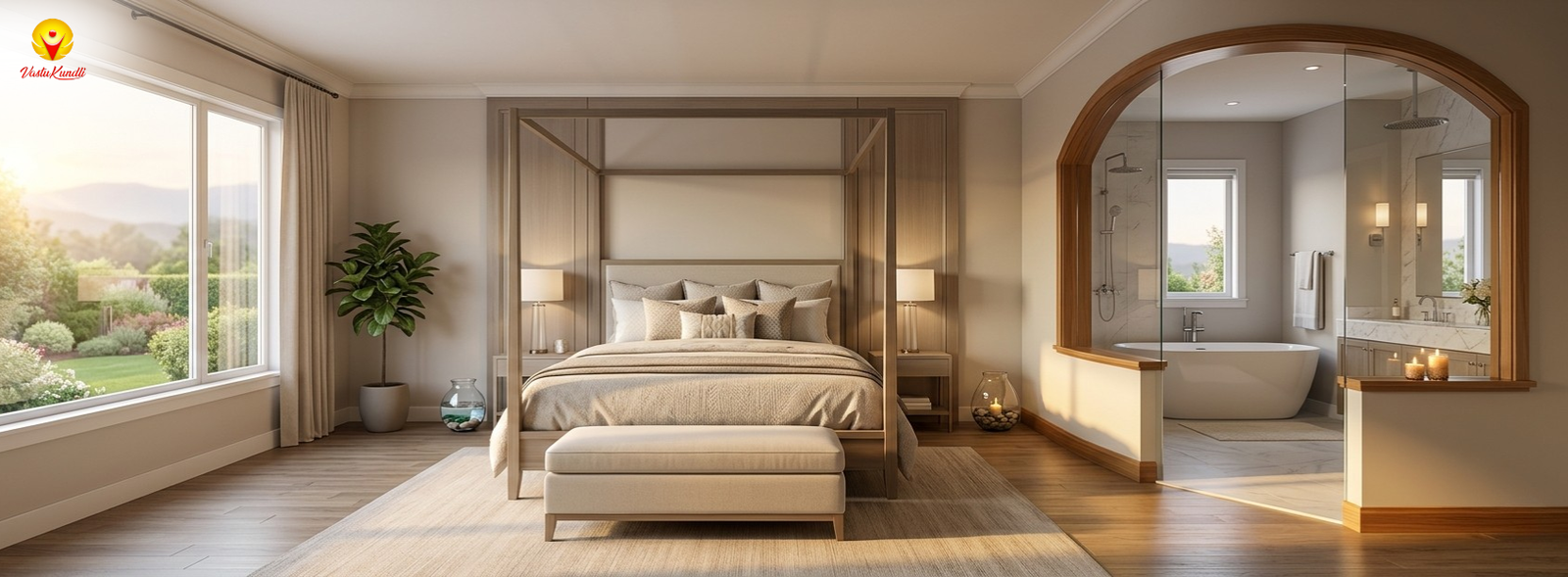
North American master bedrooms almost universally include attached bathrooms or ensuites. While this is convenient, the placement of this bathroom within your bedroom space matters significantly for the health and relationship energy of the primary couple.
An ensuite positioned directly in line with where your bed sits creates drainage affecting the sleeping couple. If you lie in bed looking straight at the bathroom door or if the toilet is visible from bed, that direct alignment creates problems. Sleep quality suffers. Relationship intimacy can be affected. Health issues may develop for one or both partners.
Oversized master bathrooms that occupy large portions of the bedroom can drain the relationship and rest zone excessively. The modern trend toward spa-like master baths with huge soaking tubs and separate shower enclosures creates bathrooms that dominate the bedroom space. This shifts the energy balance unfavorably.
The solution includes keeping the ensuite door closed at all times, especially while sleeping. Position your bed so you’re not in direct alignment with the bathroom door. If the bathroom is visible from bed, use screens or furniture to create visual separation. Consider using the bathroom primarily for toileting and bathing while getting ready for the day in other areas of the bedroom.
For families house hunting, evaluate master bedroom floor plans, specifically noting where the ensuite sits relative to where you’d position the bed. Some layouts work better than others even though they’re all ensuite configurations.
Multiple Bathroom Compound Effects
Modern North American homes often have three or four bathrooms distributed throughout the property. The compound effect of multiple bathrooms requires evaluation beyond just checking each location individually. Too many bathrooms or bathrooms in multiple problematic zones create cumulative drainage.
Each bathroom represents water and waste energy in the directional grid. One bathroom in a less-than-ideal location might be manageable. Three bathrooms, with two in problematic zones and one in a neutral zone, create more significant overall drainage. The cumulative effect impacts the entire home’s energy.
Families should evaluate all bathroom locations when assessing a property, not just the most obvious one. Check the powder room, the kids’ bathroom, the master ensuite, and any additional bathrooms. Note which directional zones each occupies and whether the overall bathroom distribution creates excessive drainage.
If you’re living with multiple bathroom drainage issues, prioritize which bathrooms to optimize based on which get used most frequently and which occupy the most problematic zones. You might focus corrections on the center bathroom and northeast bathroom while accepting that the northwest bathroom is less critical to address immediately.

Practical Bathroom Corrections
While you can’t easily relocate bathrooms in existing homes, several practical corrections reduce the drainage effects without requiring demolition or major plumbing work.
Keep bathroom doors closed always, especially when not in use and particularly overnight. This simple practice contains the drainage within the bathroom space rather than letting it spread throughout your home. Make closed doors the family habit.
Ensure excellent ventilation so moisture doesn’t accumulate. Use exhaust fans during and after showers. Open windows when weather permits. Stagnant moisture amplifies drainage effects while fresh air circulation moderates them.
Maintain impeccable cleanliness in all bathrooms. Clean toilets, sinks, and showers regularly. Don’t allow mold, mildew, or grime to build up. The physical cleanliness correlates directly with energetic cleanliness.
Use bright lighting and light colors in bathrooms to counter the heavy water element. White or light blue walls, good lighting, and avoiding dark or heavy decor helps reduce the oppressive quality of bathroom spaces.
Strategic element placement outside problematic bathrooms can help redirect energy. This might include specific plants, colors, or objects positioned near bathroom doors though these should be done with proper guidance for your specific situation.
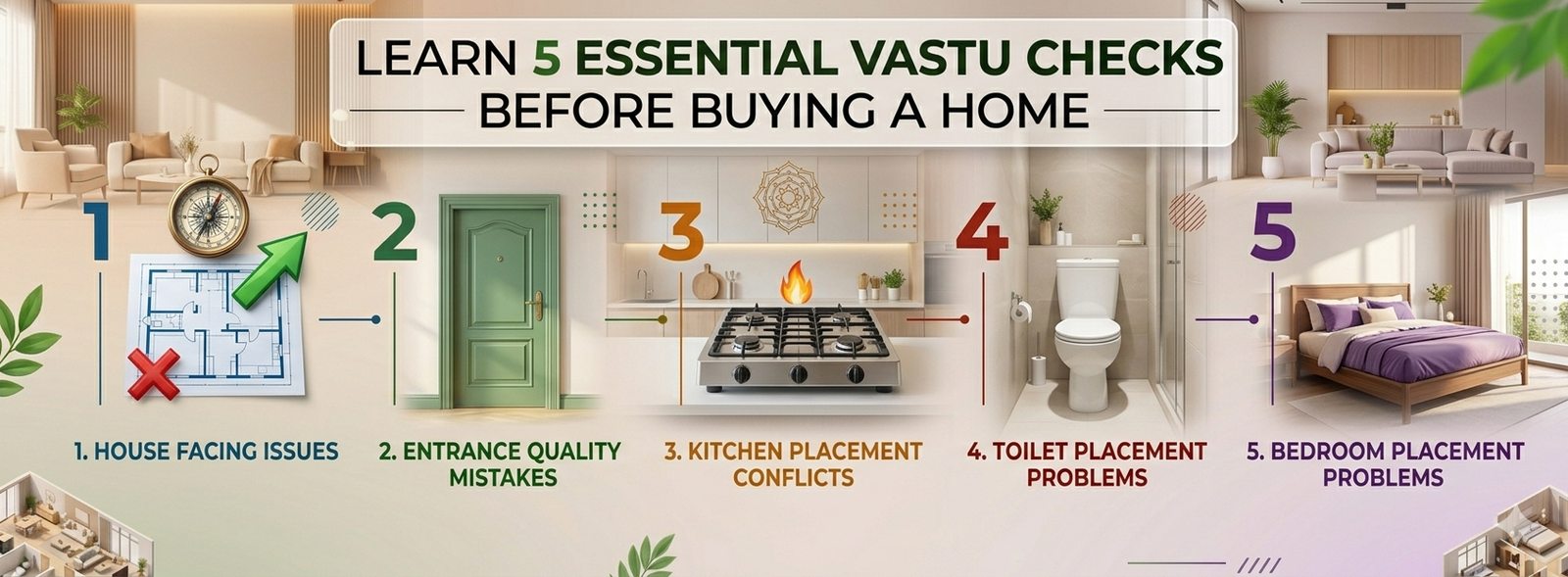
Learn 5 Essential Vastu Checks Before Buying a Home
Even before consulting an expert, families can perform 5 essential checks themselves:
- House Facing Issues – The direction your home faces affects overall energy and growth.
- Entrance Quality Mistakes – The main door controls how positive energy enters the house.
- Kitchen Placement Conflicts – Wrong kitchen direction can disturb health and finances.
- Toilet Placement Problems – Poor toilet location can weaken wealth and health zones.
- Bedroom Placement Problems – Incorrect bedroom zone can affect sleep and relationships.
These simple checks are just the start. To learn them in depth, with practical applications for homes in the USA and Canada:
Join our live course “5 Essential Vastu Checks Before Buying a Home.”
This course will guide you step-by-step to evaluate any property before making a purchase, helping you avoid mistakes that lead to stress, financial strain, and family discomfort. Families who take this course leave with actionable insights they can implement immediately, whether they’re buying a new home or checking an existing property.
Go to the course section and join our live course today to gain major Vastu insights for every home decision.
Book Your Comprehensive Vastu Health Report
For families ready to buy or even after selecting a property, our Vastu Health Report is invaluable. Unlike a casual consultation, this report examines 30-plus critical parameters of your home, including main door alignment and entrance energy, kitchen orientation and placement, bedroom and study room energy, clutter and lighting analysis, and hidden energy zones affecting health, wealth, and relationships.
By checking all these parameters, families can identify and correct energy blockages before moving in, ensuring long-term harmony, prosperity, and well-being.
Book your personalized Vastu Health Report in the consultation section today because your home should nurture your family, not drain it.
About Our Vastu Expert – Gaurav Jindl
Gaurav Jindl helps families understand bathroom placement impacts that conventional medicine and home inspections never address. He recognizes that North American construction creates bathroom configurations that drain family health and provides practical guidance for evaluation and correction.
Practical Advice for Families in the USA and Canada
Check bathroom locations carefully during house hunting using floor plans and compass directions to identify problematic placements before purchase.
Implement basic bathroom corrections immediately, including keeping doors closed, ensuring ventilation, and maintaining cleanliness to reduce drainage effects.
Monitor family health patterns and consider whether they correlate with bathroom locations in your home, as this might reveal connections conventional approaches miss.
Final Thoughts
Abhinav and Shalini couldn’t relocate their bathrooms, but implementing corrections and understanding the issue helped them make better health choices and monitor vulnerabilities. Your bathroom placements affect your health whether you believe in energy principles or not. The correlation between problematic bathroom locations and family health issues is consistent enough to take seriously when evaluating homes and addressing ongoing health concerns.
Frequently Asked Questions
Q. Can bathroom placement really cause health problems, or is this superstition?
The correlation between problematic bathroom placements and specific health patterns is consistent across many families. Whether you understand it as direct energetic causation or as one factor among many affecting well-being, the practical impact is observable enough to consider seriously.
Q. What should I do if my home has a center bathroom?
Center bathrooms are difficult to correct fully without major renovation. Focus on keeping the door closed, excellent cleanliness and ventilation, and implementing compensating corrections throughout the rest of the home. Monitor family health carefully and consider whether the home ultimately serves your long-term needs.
Q. Are all bathroom locations problematic or only certain directions?
Some directional zones are more challenging for bathrooms than others. Center, northeast, and certain positions in other directions create more significant concerns. Not every bathroom creates major problems, but knowing which placements are most concerning helps you evaluate properties and prioritize corrections.
Q. How do I check if bathrooms are above bedrooms in a multi-story home?
Compare floor plans for different levels, carefully noting where bathrooms sit on upper floors and which rooms are below them on lower floors. This vertical relationship matters as much as horizontal directional placement.
Q. Can simple corrections really help, or do bathrooms need to be relocated?
While relocation would be ideal for seriously problematic placements, practical corrections like keeping doors closed, ensuring ventilation, maintaining cleanliness, and strategic element placement can significantly reduce drainage effects without major construction.