
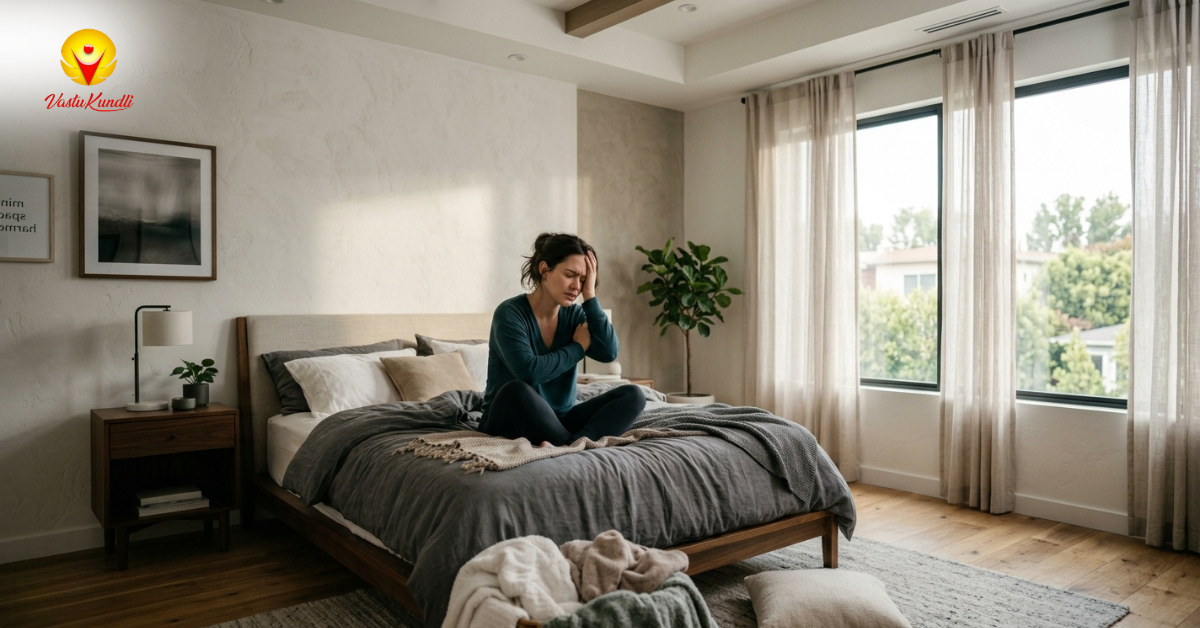
You wake up with a knot in your stomach, and you don’t know why. Your heart races for no apparent reason. You feel on edge constantly, like something bad is about to happen, but nothing in your life justifies this feeling. You try deep breathing exercises, meditation apps, therapy, and maybe even medication. Sometimes these help a little, but the underlying anxiety never really goes away. It just sits there, humming in the background of your life, stealing your peace.
This became the daily reality for Abhay and Nisha after they moved into their new home in Vancouver eighteen months ago. Before the move, both were relatively calm people. Sure, they had normal work stress and life pressures like everyone else, but nothing they couldn’t handle. Nisha practiced yoga regularly and had always been the steady, grounded one in their relationship. Abhay was naturally optimistic, the kind of person who could find the bright side of most situations.
But something shifted after they settled into their new house. Within a few months, Nisha started feeling anxious for no clear reason. She would wake up at three in the morning with her mind racing, heart pounding, overwhelmed by nameless worries. During the day, she felt restless and unsettled in her own home. The house they had been so excited about started feeling somehow wrong, though she couldn’t explain why. Simple tasks felt harder. Decisions felt overwhelming. She started doubting herself in ways she never had before.
Abhay noticed changes in himself too. He became irritable and short-tempered, snapping at the kids over small things. He felt constantly vigilant, unable to relax even on weekends. Work stress that he used to handle easily now felt crushing. He started having trouble sleeping, lying awake worrying about things that rationally he knew weren’t that serious. Their marriage began suffering under the weight of this shared but unexplained anxiety.
They tried everything they could think of. Therapy. Exercise routines. Cutting back on caffeine. Creating better work-life boundaries. Some of these things helped marginally, but the core anxiety persisted. It was like living under a cloud that wouldn’t lift. They even wondered if there was something medically wrong with both of them, some environmental toxin in the house perhaps. Air quality tests came back fine. Water was tested and clean. Mold inspection found nothing.
Finally, a friend who had experienced something similar suggested they look into Vastu. At first, Abhay was skeptical. How could the layout and energy of their home be causing psychological symptoms? But they were desperate enough to try anything. They ordered a comprehensive Vastu Health Report for their property. What they discovered fundamentally changed their understanding of why they had been suffering and gave them a clear path to relief.
The Hidden Energy Stress Your Body Absorbs Daily
Here’s what most people living in USA and Canada don’t realize about their homes. Every space has an energetic blueprint that affects everyone living there. This isn’t mystical nonsense. It’s about how directional energies, magnetic fields, spatial arrangements, and environmental factors combine to create an atmosphere that either supports your nervous system or constantly activates your stress response.
Think about how you feel in different environments. Some spaces make you feel instantly comfortable and at ease. Others make you feel tense or uncomfortable, and you can’t quite put your finger on why. That’s your nervous system responding to the energy quality of the environment. When you live day after day in a space with disturbed or imbalanced energy, your body never fully relaxes. Your stress response stays partially activated all the time.
This constant low-level activation is exhausting. Your adrenal glands work overtime. Your cortisol levels stay elevated. Your nervous system remains in a state of subtle vigilance. Over weeks and months, this chronic activation manifests as anxiety that seems to have no cause because you’re not consciously aware of the environmental trigger. You just feel anxious, and since you can’t identify a reason, it becomes even more anxiety-producing.
The challenge with environmental energy stress is that it’s invisible and continuous. If something stressful happens at work, you can leave work and decompress. If you have a conflict with someone, it eventually resolves. But if your home environment is the stressor, you’re exposed to it constantly. You sleep in it. You wake up in it. You spend your evenings and weekends in it. There’s no escape, no time for your nervous system to fully reset.
For families like Abhay and Nisha, moving into a new home with significant Vastu imbalances meant stepping into an environment that kept their nervous systems in perpetual low-grade fight-or-flight mode. No amount of therapy or self-care could overcome that constant environmental trigger. The anxiety would persist until the environmental cause was addressed.
How Your Home’s Main Energy Zones Affect Mental Peace
In Vastu science, different zones of your home correspond to different aspects of life and wellbeing. When these zones are balanced and functioning properly, they support your mental and emotional health. When they’re disturbed or blocked, they create specific types of stress and imbalance that manifest as psychological and emotional symptoms.
The Northeast zone of your home is particularly critical for mental clarity and peace. This is considered the zone of wisdom, clarity, and spiritual wellbeing. When this area is heavy, cluttered, or contains elements that disturb its natural lightness, it creates mental fog, confusion, and anxiety. Many North American homes have basements, storage areas, or bathrooms in the Northeast without realizing how this placement affects the home’s overall energy and the mental state of its occupants.
For Abhay and Nisha, their Vastu Health Report revealed that their Northeast zone contained a heavily cluttered storage room filled with old furniture, boxes, and miscellaneous items they hadn’t sorted through since moving. This clutter was literally weighing down the energy of the zone that should provide mental clarity and peace. No wonder they both felt mentally foggy and anxious. The space that should be light and open was congested and heavy.
The center of your home, called the Brahmasthan in Vastu, is another crucial zone for overall wellbeing. This should ideally be open and light, allowing energy to circulate freely throughout the space. Many modern homes have staircases, bathrooms, or heavy furniture in the central zone, creating a blockage in the heart of the home’s energy system. This central blockage creates a sense of heaviness and restriction that affects everyone living there.
The bedroom placement and orientation dramatically impacts your ability to rest and recover mentally. If your bedroom is in a zone that amplifies worry or mental activity rather than promoting rest, you never get the deep nervous system reset that sleep should provide. You might sleep for eight hours but wake up still feeling anxious because your sleeping environment is stimulating rather than calming.
Understanding these zone energies helps explain why environmental changes that seem purely physical can have such profound psychological effects. You’re not imagining the impact. Your home’s energy configuration is genuinely affecting your mental and emotional state in measurable ways.
The Bedroom Energy That Steals Your Peace at Night
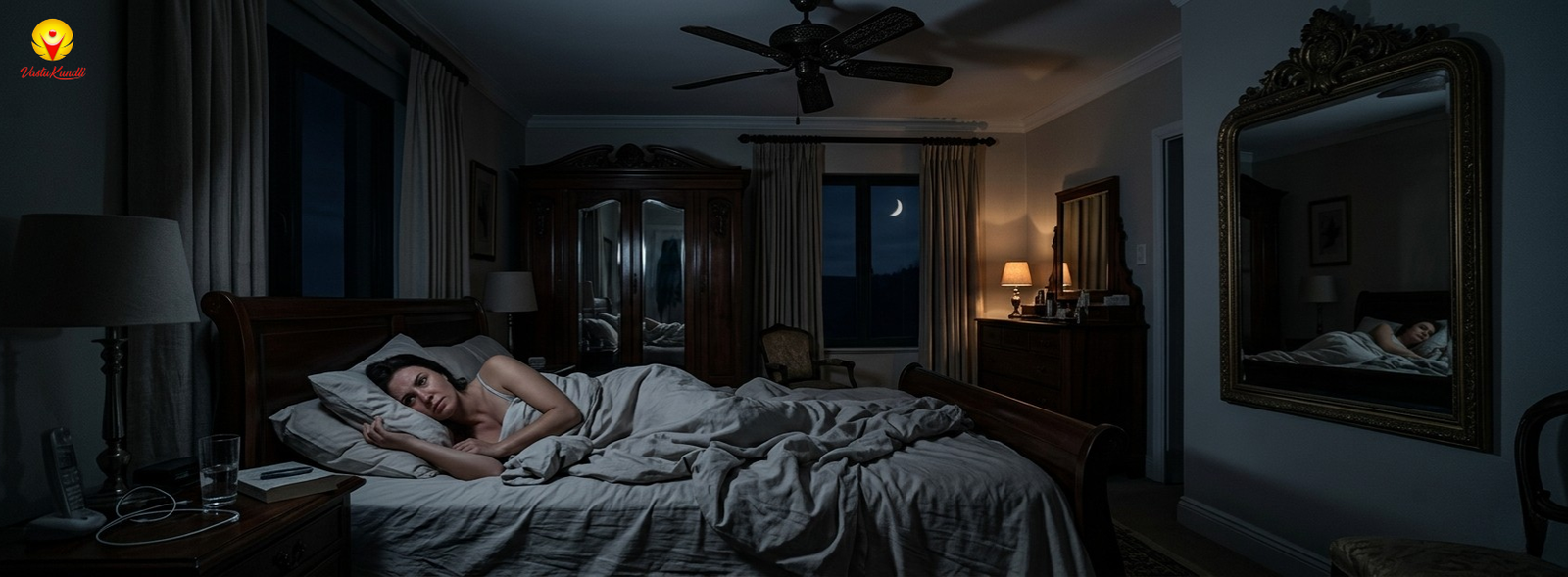
Let’s dive deeper into bedroom energy because this is where anxiety either gets healed or gets reinforced every single night. Your bedroom should be your sanctuary, the place where your nervous system downshifts from sympathetic activation to parasympathetic rest and recovery. When bedroom energy is disturbed, this crucial healing process gets interrupted.
Many North American homes have bedrooms positioned in zones that activate mental energy rather than calm it. The Northwest zone, for example, can create mental restlessness and racing thoughts when used as a master bedroom. The Southeast zone can overstimulate the nervous system with excessive fire energy. These aren’t ideal placements for the room where you’re supposed to achieve deep rest.
But here’s the challenging reality for families in USA and Canada. You usually can’t just move your bedroom to a different part of the house. The floor plan is what it is. This is why Vastu solutions for North American homes focus on optimizing the bedroom you have rather than requiring structural changes.
The direction your head points while sleeping matters enormously for mental peace. Sleeping with your head pointing in certain directions can create mental agitation and disturbed sleep that you’re not consciously aware of. You might think you’re sleeping fine, but your brain isn’t moving through proper sleep cycles, your nervous system isn’t fully relaxing, and you wake up with baseline anxiety already activated.
For Nisha, one of the most impactful changes was repositioning their bed so her head pointed in a more supportive direction while sleeping. Within a week, she noticed she was waking up less during the night. Within three weeks, she realized she was waking up feeling calmer, without that immediate rush of anxiety that had become her normal morning experience. Such a simple change, such a profound impact.
Electronic devices in the bedroom create another layer of disturbance. The electromagnetic fields from phones, tablets, televisions, and even alarm clocks create interference with your body’s natural electromagnetic field. For sensitive individuals, and anxiety-prone people tend to be more sensitive, this EMF exposure compounds the stress their nervous system is already experiencing from other environmental factors.
Lighting in the bedroom affects anxiety levels too. If you’re getting harsh morning light that jolts you awake before your body is ready, your day starts with a stress response. If your bedroom is too dark during the day, it can create a heavy, depressive energy. Finding the right balance of natural and artificial lighting to support your circadian rhythms helps regulate the hormones that affect mood and anxiety.
Why Your Main Entrance Sets Your Anxiety Baseline
This might surprise you, but the quality and direction of your main entrance significantly impacts your baseline anxiety level. Every time you come home, you’re passing through an energetic gateway that influences how you feel from that moment forward. If that gateway’s energy is disturbed, blocked, or chaotic, you’re bringing stress into your home with you every single day.
The direction your main door faces, how it opens, what you see immediately upon entering, the lighting in your entrance area, all of these factors combine to create either a sense of welcome and ease or a subtle sense of constriction and stress. Most people aren’t consciously aware of these feelings, but their nervous system registers them every time they cross the threshold.
Abhay noticed that he often felt a slight heaviness or reluctance when coming home from work. He thought maybe he was developing issues with his marriage or feeling burdened by home responsibilities. The Vastu report revealed that their entrance opened into a narrow, poorly lit hallway that created an immediate sense of confinement and dimness. This subtle energetic message of constriction was affecting how he felt about being home.
In Vastu terms, the entrance represents how life energy flows into your home. When that flow is smooth and positive, it creates an uplifting atmosphere that helps counter external stress. When it’s blocked or disturbed, it actually amplifies whatever stress you’re bringing in from the outside world. Over time, this compounding effect creates chronic anxiety that seems to have no external cause.
Simple entrance remedies can make dramatic differences. Improving lighting to make the entrance bright and welcoming. Decluttering to create a sense of openness and flow. Using mirrors strategically to expand the sense of space. Adding specific colors or elements that balance the directional energy of your particular entrance. These aren’t just aesthetic improvements. They’re interventions that change how your nervous system responds every time you come home.
For many families in North America, the entrance also serves as a dumping ground for shoes, coats, bags, kids’ sports equipment, and mail. This accumulated clutter creates visual chaos that triggers low-level stress every time you see it. Your brain has to process all that disorder, and while it might seem like a small thing, the cumulative effect of this visual stress throughout the day contributes to overall anxiety levels.
The Clutter Connection to Constant Worry
Speaking of clutter, this deserves its own deep exploration because the relationship between physical clutter and mental anxiety is stronger than most people realize. When you live surrounded by disorder, your brain is constantly processing incomplete tasks and unfinished business. Every pile of papers, every box you haven’t unpacked, every closet stuffed with things you don’t use represents a decision you haven’t made or an action you haven’t taken.
This background mental load is exhausting. Even when you’re not actively thinking about the clutter, your subconscious mind is tracking it all. This creates a constant low-level cognitive drain that contributes significantly to anxiety. You feel overwhelmed and you’re not sure why, but part of it is simply the mental burden of managing or avoiding all the physical chaos around you.
In Vastu terms, clutter creates energy stagnation. Energy that should flow smoothly through your space gets trapped in piles of stuff. This stagnation creates pressure in your home’s energy field. If that pressure builds in zones related to mental wellbeing, it manifests as psychological symptoms in the people living there, particularly anxiety and feelings of being overwhelmed.
When Abhay and Nisha did a comprehensive decluttering of their home based on the Vastu recommendations, focusing especially on the Northeast zone and their bedroom, both reported feeling like they could breathe easier in their own home. Nisha said it was like a weight had been lifted that she didn’t even know she was carrying. The physical act of clearing space created mental and emotional clearing that reduced her baseline anxiety substantially.
The challenge is that when you’re already anxious and overwhelmed, decluttering feels impossible. It’s another task on an endless list. This is where understanding the energetic impact can provide motivation. You’re not just organizing for aesthetics or efficiency. You’re literally clearing energetic blockages that are contributing to your mental health struggles. That makes it worth prioritizing even when you feel you don’t have time or energy for it.
How Natural Light Patterns Affect Your Mood and Anxiety
The quality, timing, and intensity of natural light in your home has profound effects on your mental health that most people don’t fully appreciate. Your brain and body are designed to respond to natural light patterns throughout the day. These light patterns regulate hormones, neurotransmitters, and biological rhythms that directly affect mood, anxiety, and mental wellbeing.
When you move into a new home with very different light patterns than your previous residence, your body has to adjust to a completely new environmental rhythm. If your new home’s windows face directions that create harsh morning light, inadequate afternoon light, or poor evening light, your circadian rhythms get disrupted. This hormonal disruption is a significant contributor to unexplained anxiety.
Many North American homes, especially in northern regions, struggle with seasonal light variations. Winter months bring limited daylight and specific light angle challenges. If your home’s layout doesn’t capture and distribute natural light effectively, you can develop what amounts to chronic environmental stress from inadequate light exposure during critical times of day.
The bedroom presents particular light challenges. If eastern-facing windows blast harsh morning sunlight into your bedroom, you might be getting jolted awake by light before your body’s natural wake cycle is ready. This stress hormone spike first thing in the morning sets an anxious tone for your entire day. Alternatively, if your bedroom is too dark even during daytime, it can create a heavy, depressive energy that affects your mental state.
For Abhay and Nisha, their bedroom had large western-facing windows with no effective light control. Late afternoon sun would heat the room and create harsh glare, making the space feel uncomfortable and agitated during early evening when they wanted to wind down. Their living areas, meanwhile, had limited natural light during the day, creating a somewhat dim, heavy feeling. These light imbalances were contributing to their overall sense of environmental unease and anxiety.
Simple solutions like blackout curtains for problematic bedroom windows, full-spectrum lighting in dim living areas, and strategic use of mirrors to redistribute natural light can make substantial differences in how your home feels and how your body responds to being in it. These aren’t luxury upgrades. They’re environmental health interventions that support your mental wellbeing.
The Electromagnetic Field Factor in Modern Anxiety
Here’s a factor that ancient Vastu wisdom didn’t have to contend with but is absolutely critical for modern families, especially in tech-heavy North American homes. We live surrounded by electromagnetic fields from WiFi routers, smart home devices, cell phones, computers, televisions, and countless other electronic devices. These EMFs create an invisible layer of environmental stress that sensitive individuals can react to with anxiety and nervous system symptoms.
The research on EMF effects is still evolving, but what we know is that some people are more sensitive to electromagnetic interference than others. If you’re already prone to anxiety, your nervous system is likely more reactive to environmental stressors, including EMFs. Living in a home with high EMF exposure, particularly in sleeping areas, can keep your nervous system in a state of subtle activation that manifests as anxiety.
When you move into a new home, you’re often setting up your technology differently than before. Maybe your WiFi router is now positioned closer to your bedroom. Maybe your home office setup surrounds you with more devices. Maybe the walls contain more electrical wiring in areas where you spend significant time. These changes in EMF exposure patterns can contribute to unexplained anxiety that starts after moving.
Practical Vastu recommendations for modern homes include awareness of major EMF sources and strategic positioning of beds, desks, and primary seating areas to minimize exposure. This isn’t about eliminating all technology, which isn’t realistic or necessary. It’s about thoughtful placement that reduces cumulative exposure, especially during sleeping hours when your body should be in deep rest and recovery mode.
Simple changes like moving the WiFi router farther from bedrooms, keeping phones out of the bedroom at night or at least several feet from your bed, and positioning your workspace away from dense clusters of electronic devices can reduce your EMF load significantly. For some people, this reduction alone makes a noticeable difference in anxiety levels and sleep quality.
The Whole-Home Energy Balance Your Nervous System Craves
What makes Vastu analysis so powerful is that it looks at your entire home as an integrated energy system rather than isolated rooms or features. Everything connects. The entrance affects the flow to all other areas. The bedroom affects your ability to recover from stress created elsewhere in the home. The kitchen affects your physical health, which affects your mental health. The clutter in your basement affects the overall energy of upper floors.
When you address Vastu imbalances comprehensively rather than piecemeal, the results compound. Each correction reinforces the others. Decluttering the Northeast while also optimizing bedroom placement while also improving entrance energy creates a synergistic effect where the whole becomes greater than the sum of its parts. Your home transforms from an environmental stressor into an environmental support system.
This is what happened for Abhay and Nisha. They didn’t just fix one thing. They implemented a series of simple but strategic changes throughout their home based on the comprehensive Vastu Health Report. Individually, each change seemed small. Collectively, they created a fundamental shift in how the house felt and how their bodies responded to being in it.
Within two months of implementing the full set of recommendations, Nisha’s chronic anxiety had reduced by about seventy percent. She was sleeping through the night again. The morning dread had lifted. She felt like herself for the first time since they moved in. Abhay’s irritability disappeared. His stress management capacity returned to normal. Their marriage improved as they both became calmer and more present with each other and their children.
The beautiful thing about comprehensive Vastu corrections is that they create a positive upward spiral. Better sleep improves stress resilience. Less anxiety improves relationships. Better relationships create more joy. More joy attracts positive experiences. The home that was draining them started nurturing them instead.
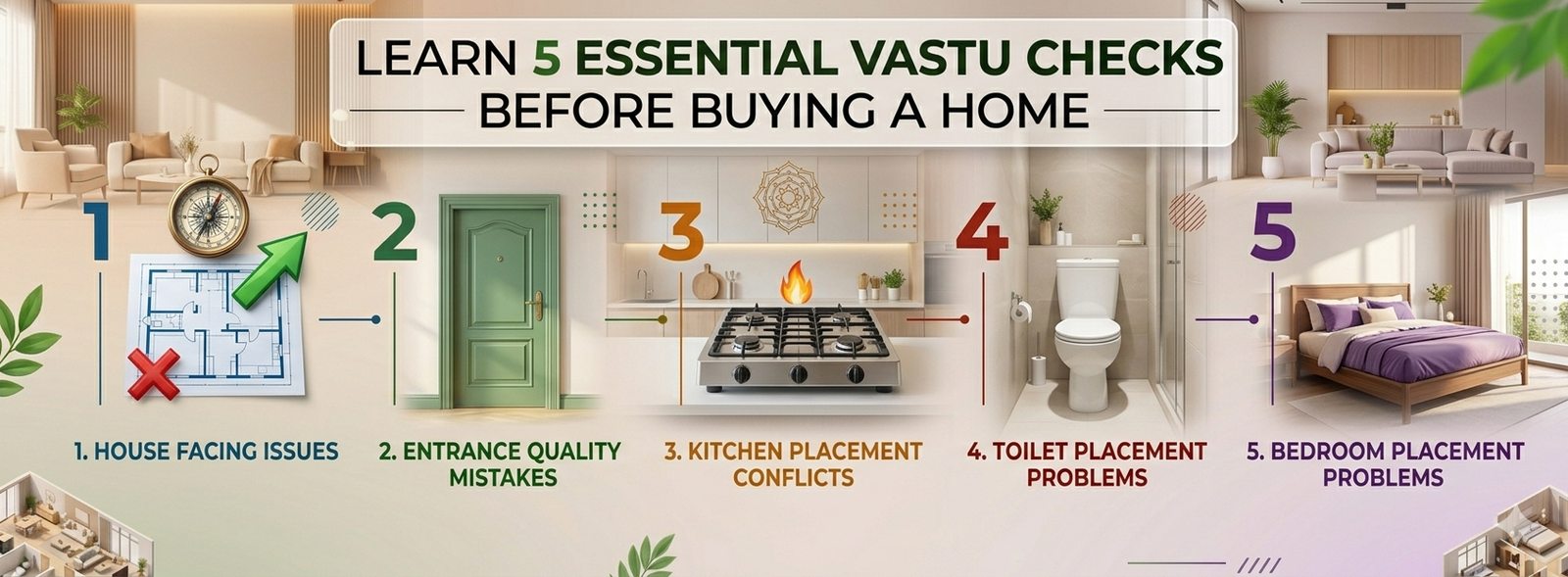
Learn 5 Essential Vastu Checks Before Buying a Home
Even before consulting an expert, families can perform 5 essential checks themselves:
- House Facing Issues – The direction your home faces affects overall energy and growth.
- Entrance Quality Mistakes – The main door controls how positive energy enters the house.
- Kitchen Placement Conflicts – Wrong kitchen direction can disturb health and finances.
- Toilet Placement Problems – Poor toilet location can weaken wealth and health zones.
- Bedroom Placement Problems – Incorrect bedroom zone can affect sleep and relationships.
These simple checks are just the start. To learn them in depth, with practical applications for homes in the USA and Canada:
Join our live course “5 Essential Vastu Checks Before Buying a Home.”
This course will guide you step-by-step to evaluate any property before making a purchase, helping you avoid mistakes that lead to stress, financial strain, and family discomfort. Families who take this course leave with actionable insights they can implement immediately—whether they’re buying a new home or checking an existing property.
Go to the course section and join our live course today to gain major Vastu insights for every home decision.
Book Your Comprehensive Vastu Health Report
For families ready to buy or even after selecting a property, our Vastu Health Report is invaluable. Unlike a casual consultation, this report examines 30+ critical parameters of your home, including:
Main door alignment and entrance energy, kitchen orientation and placement, bedroom and study room energy, clutter and lighting analysis, and hidden energy zones affecting health, wealth, and relationships.
By checking all these parameters, families can identify and correct energy blockages before moving in, ensuring long-term harmony, prosperity, and well-being.
Book your personalized Vastu Health Report in the consultation section today—because your home should nurture your family, not drain it.
About Our Vastu Expert – Gaurav Jindl
With years of dedicated experience helping families throughout USA and Canada, Gaurav Jindl brings practical Vastu wisdom to modern North American homes. His approach focuses on simple, achievable remedies that work with Western home design rather than against it. He understands the unique challenges families face and provides solutions that fit real life without requiring demolitions or major renovations.
Practical Advice for Families in the USA and Canada
If you’re experiencing unexplained anxiety that started or worsened after moving to a new home, pay attention to that signal. Your body is telling you something about your environment. Start with basic observations. Which rooms feel comfortable and which feel unsettling? Do you feel more anxious at certain times of day? Does your anxiety improve when you’re away from home?
Simple first steps include thorough decluttering, especially in bedrooms and the Northeast area of your home. Improve lighting in dim areas and add light control in areas with harsh or poorly timed natural light. Remove or relocate electronic devices from sleeping areas. Position your bed thoughtfully, avoiding placement under windows or against walls with heavy electrical systems if possible.
If anxiety persists despite these basic environmental improvements, invest in a comprehensive Vastu Health Report. The insights you gain and the specific remedies recommended for your unique home can be life-changing. The cost is minimal compared to ongoing therapy, medication, and the toll chronic anxiety takes on your health, relationships, and quality of life.
Final Thoughts
Abhay and Nisha’s experience mirrors that of countless families living in homes with energy imbalances that create psychological symptoms. The frustration of anxiety without clear cause, the failed attempts to fix it through conventional means, and the relief when they finally addressed the environmental root cause- this pattern repeats frequently.
Your home profoundly affects your mental and emotional well-being in ways modern culture often overlooks. When your living environment’s energy works against you, no amount of therapy, meditation, or medication can fully compensate for that constant environmental stressor. But when you optimize your home’s energy to support rather than stress your nervous system, healing becomes possible in ways that might seem miraculous but are actually quite logical.
Take your home environment seriously as a factor in your mental health. The space you live in every day deserves as much attention as your diet, exercise, and stress management practices. Following the principles of vastu shastra for house can help create a more balanced and harmonious living environment. Your home should be your refuge and your recharge station, not another source of stress depleting your reserves.
Frequently Asked Questions
Q. Can a home really cause anxiety even if nothing traumatic happened there?
Absolutely yes. Your nervous system responds to environmental energy patterns continuously. A home with disturbed directional energies, poor light patterns, electromagnetic field exposure, and spatial imbalances creates chronic stress that manifests as anxiety, even without any psychological trigger.
Q. How is home-related anxiety different from clinical anxiety disorders?
Environmental anxiety stems from continuous exposure to stressful energy patterns in your living space. When you address the environmental cause, symptoms often improve dramatically within weeks. Clinical anxiety may have multiple causes, but environmental factors can significantly worsen any underlying condition.
Q. Can Vastu remedies replace therapy or medication for anxiety?
Vastu addresses environmental causes of anxiety. If your anxiety has environmental roots, Vastu remedies can be transformative. However, they work best alongside appropriate mental health care when needed. Think of it as addressing all contributing factors, not choosing one approach over another.
Q. How quickly might I notice anxiety reduction after Vastu changes?
Many people notice subtle improvements within one to two weeks, particularly in sleep quality. More significant anxiety reduction typically develops over four to eight weeks as your nervous system adjusts to improved environmental support and catches up on restorative rest.
Q. Are these remedies suitable for rental homes where I can’t make structural changes?
Yes, most effective Vastu remedies involve furniture placement, lighting adjustments, decluttering, and strategic use of colors and objects. These changes don’t require structural modifications and are perfect for renters who need reversible solutions that improve their living environment.