
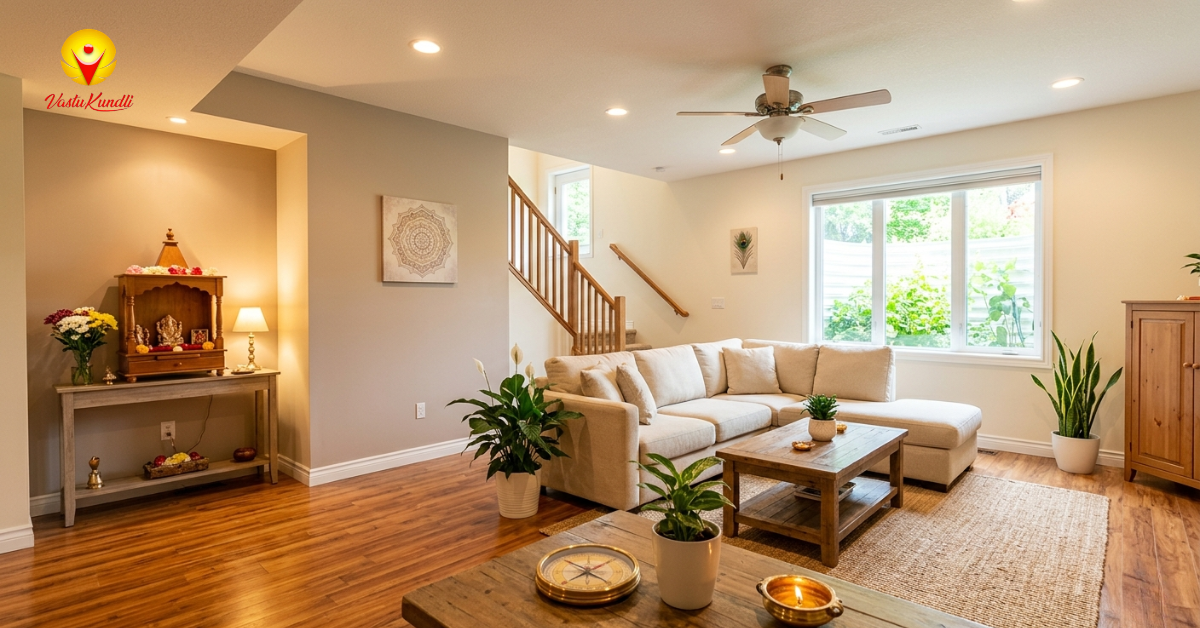
Basements are as fundamental to North American home construction as foundations themselves. Drive through any Canadian neighborhood or explore homes across the northern United States and you’ll find that nearly every property includes a basement level ranging from unfinished storage spaces to fully finished living areas complete with bedrooms, bathrooms, entertainment rooms, and home offices. For families from India where basement living is virtually unknown, these underground spaces present a completely unfamiliar situation that traditional Vastu texts never addressed because they simply didn’t exist in that architectural context.
The challenge for Indian families settling in the USA and Canada is that basements aren’t optional or avoidable in most markets. In cold climate regions, building codes essentially require basements for foundation depth below the frost line. The basement becomes integral to the home’s structure and in many properties represents a significant portion of the total living space. Families can’t simply choose to ignore basements when house hunting because doing so would eliminate the vast majority of available properties in many desirable locations.
What makes this even more complicated is the wide variation in how basements are designed and used across North American homes. Some basements are dark unfinished spaces used purely for storage and mechanicals. Others are fully finished with natural light from walkout or daylight configurations creating spaces that feel almost like above-grade rooms. Many fall somewhere in between with partial finishing, limited windows, and flexible usage that families adapt based on their needs. Understanding how Vastu principles apply to this range of basement situations requires going beyond simple rules to grasp the underlying energy dynamics of below-grade living.
Jay and Swati faced this reality when relocating to Minneapolis for Jay’s engineering position. Coming from Pune where they’d always lived in apartments or standalone homes without basements, they were completely unprepared to evaluate these underground spaces. Their first rental had a finished basement with two bedrooms, a full bathroom, and a family room. The rental agent cheerfully described it as bonus space perfect for guests or a teen hangout. Jay and Swati thought it seemed fine, perhaps even an advantage to have extra rooms.
They assigned one basement bedroom to Jay’s visiting parents and used the other as a home office where Swati worked remotely. Within two months, both started experiencing issues they’d never had before. Jay’s parents complained of poor sleep, feeling heavy and lethargic despite adequate rest hours. They cut their visit short citing health concerns. Swati found herself increasingly depressed and unmotivated working in the basement office despite it being quiet and private. She’d go downstairs enthusiastic about her workday and emerge hours later feeling drained and foggy.
When they consulted a Vastu expert familiar with North American construction, the consultant immediately identified the basement living as a primary concern. The below-grade bedrooms were creating compressed earth energy affecting sleep and vitality. Swati’s basement office lacked the uplifting quality needed for productive creative work. The consultant explained that basements aren’t inherently forbidden in Vastu but they require very careful evaluation of purpose, occupancy patterns, and specific design features to determine whether they support wellbeing or drain it.
Jay and Swati moved Jay’s parents to an upstairs bedroom during their next visit and relocated Swati’s office to a small above-grade room they’d been using for storage. The differences were immediate and dramatic. His parents slept better and felt energized. Swati’s work productivity and mood improved substantially. They learned that understanding basement energy dynamics isn’t about following rigid rules but about recognizing how underground spaces function differently and making smart choices about their use.
The Fundamental Energy Dynamic of Below-Grade Spaces
To understand basements from a Vastu perspective, you need to grasp the basic energetic difference between above-ground and below-ground living. This isn’t superstition or arbitrary tradition. It reflects how earth energy and human energy interact in spaces with different relationships to ground level and the natural environment.
Above-grade rooms sit in balance with earth below and sky above. They receive natural light from multiple directions. Air circulates freely through windows. The space has energetic connection to both the grounding earth element and the expansive sky element. This balanced relationship between earth and heaven creates an environment that naturally supports human vitality and consciousness.
Basement spaces by definition sit below grade with earth surrounding them on multiple sides. Instead of earth below and sky above, basements have earth below, earth on the sides, and the weight of the house pressing down from above. This creates compressed earth energy that’s fundamentally different from the balanced quality of above-grade spaces. The earth element dominates without the balancing influence of sky and light.
This doesn’t make basements inherently bad or uninhabitable. Earth energy has its own positive qualities including grounding, stability, quietness, and protection from external disturbance. For certain activities and certain individuals, the earth-heavy quality of basements can actually be beneficial. The issue is understanding which activities thrive in basement energy and which ones wither there.
Sleep and rejuvenation require specific energetic conditions. While some cultures and traditions use underground spaces for meditation or retreat, sustained living particularly sleeping in compressed earth energy can affect vitality over time. The body’s natural rhythms connect to sunlight and natural day-night cycles. Extended time in spaces disconnected from these natural rhythms can impact circadian patterns, mood regulation, and overall life force.
Similarly creative work, learning, and growth-oriented activities generally benefit from lighter more expansive energy than what compressed basement spaces typically provide. There’s a reason that cultures worldwide traditionally built living, working, and celebrating spaces above ground while using below-ground areas for storage, preservation, and containment of things not actively in use.
Understanding these fundamental energetic differences helps you evaluate specific basements intelligently rather than applying blanket acceptance or rejection. The question isn’t whether all basements are good or bad but rather what makes certain basement configurations more supportive than others and which uses align with basement energy qualities.
Variation in Basement Types and Their Energy Implications
Not all basements create the same energetic conditions. North American construction includes several distinct basement types each with different energy characteristics that require separate evaluation from a Vastu perspective.
Fully underground basements have no walls above grade. All sides are surrounded by earth with the only opening to the outside world being the stairway down from the above-grade level. These create the most compressed earth energy with minimal natural light and no direct exterior connection. Windows if present are small and high near the ceiling providing minimal light and no visual connection to outdoors.
Fully underground basements are most challenging for living spaces from a Vastu perspective. The complete below-grade positioning creates maximum earth compression with minimal sky element to balance it. Using these spaces for active living, sleeping, or daily working requires the most careful consideration and often the most extensive corrections to make energetically viable.
Walkout basements have one wall fully above grade opening to the exterior usually on a sloped lot. This wall contains full-size windows and often patio doors providing natural light and direct outdoor access. The other three walls remain below grade surrounded by earth but one side connects to the outside world creating a very different energy dynamic than fully underground basements.
Walkout basements can function almost like above-grade spaces particularly in areas with the exterior exposure. Rooms with windows in the walkout wall receive substantial natural light and have visual connection to outdoors. The earth compression is reduced because one entire side is open to sky and light. These spaces often work much better for living purposes than fully underground basements.
Daylight basements are partially above grade typically with windows positioned higher on the walls. More of the wall surface is above ground than in traditional basements but less than in walkout configurations. This creates a middle ground where some natural light enters and there’s less complete earth enclosure but it’s not the fully open feeling of walkout basements.
Daylight basements offer improved energy over fully underground spaces while not requiring the sloped lot that walkout basements need. The increased natural light and reduced earth compression make these more viable for living uses though they still require attention to which specific rooms you place in these spaces and how you optimize them.
Finished versus unfinished basements also create different energy. Unfinished basements with exposed concrete, visible mechanicals, and bare studs feel and function as storage utility spaces. The energy aligns with that utilitarian purpose. Finished basements with drywall, flooring, ceiling, and amenities feel more like living spaces. The finish level affects psychological and energetic experience independent of the below-grade positioning.
Understanding these variations helps you evaluate the specific basement in any property you’re considering rather than treating all basements as identical. A walkout basement with large windows and direct outdoor access requires very different assessment than a fully underground basement with minimal light.
Which Activities Thrive in Basement Energy
Rather than trying to force basement spaces to function like above-grade rooms, a more effective Vastu approach recognizes which activities actually benefit from the earth-heavy quality basements provide. Using basement energy for its natural strengths creates better outcomes than fighting against its inherent characteristics.
Storage and preservation align perfectly with basement energy. The earth element naturally supports containment and protection. Basements make excellent spaces for items not in active daily use. The compressed stable energy supports keeping things safely. This is why cultures worldwide have used underground spaces for storing food, valuables, and items intended for future use.
Meditation, prayer, and contemplative practices can actually thrive in certain basement configurations. The quiet grounded quality with reduced external stimulation creates conditions some spiritual traditions specifically seek. If your basement has a peaceful corner that feels stable and protected, it might function beautifully as a meditation or prayer space where the earth energy supports deep inward focus.
Exercise and physical practices often work well in basement spaces. Home gyms, yoga studios, and workout areas can benefit from the grounded stable quality. The earth energy supports physical body awareness and strength building. Many families successfully use basements for fitness without the energetic concerns that would arise from using the same space for sleeping or creative work.
Entertainment and recreation in moderate amounts can function acceptably in basements. Family game nights, movie watching, or casual gathering for a few hours doesn’t carry the same concerns as spending eight hours sleeping or working full days in compressed earth energy. Short-term recreational use differs from extended living or working below grade.
Guest rooms for short stays fall into an interesting middle ground. Having visiting family stay in a basement bedroom for a few nights might be manageable particularly if the basement has good natural light and isn’t fully underground. But extended guest stays or family members living in basement bedrooms long-term raises more significant concerns about vitality and wellbeing.
The critical distinction is between temporary occasional use and primary sustained living. Using a basement for an hour of exercise or an evening of entertainment differs enormously from sleeping there nightly or working there daily for months and years. Duration and regularity of exposure to basement energy affects its impact on wellbeing.
The Bedroom in Basement Concern
Perhaps the most significant Vastu question about basements is whether placing bedrooms below grade creates problems for the people sleeping there. This concern is both valid and nuanced requiring understanding of who’s sleeping there, for how long, and under what specific conditions.
The primary issue with basement bedrooms is the compressed earth energy affecting sleep quality, vitality, and life force over extended periods. Sleep is when your body and energy system rejuvenate. The environment where you sleep profoundly impacts how effectively this rejuvenation occurs. Sleeping in compressed earth energy night after night for months or years can contribute to feeling heavy, lethargic, depressed, or stuck.
This impact varies by individual. Some people are more energetically sensitive than others. Children and elderly individuals often experience stronger effects from environmental energy than healthy adults in their prime. Someone already struggling with depression, low energy, or health challenges might find basement sleeping exacerbates their issues while a robust healthy adult might notice less impact.
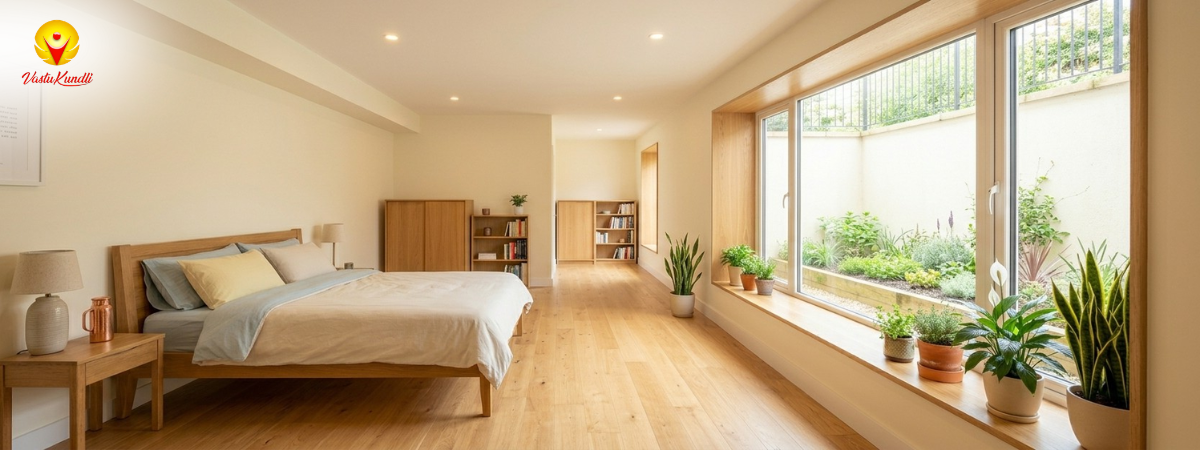
The specific basement configuration also matters enormously. A basement bedroom in a walkout configuration with large windows bringing in natural light and direct visual connection to outdoors functions very differently than a fully underground bedroom with one small window near the ceiling. The more natural light and outdoor connection the bedroom has the less concerning the below-grade positioning becomes.
Duration of occupancy is critical to consider. A college student using a basement bedroom for two years during school has different exposure than a family member assigned to a basement bedroom indefinitely. Short to medium-term basement sleeping particularly for adults in good health carries different implications than making a basement bedroom someone’s permanent sleeping space for many years.
The alternative options available should factor into decisions. If your only choice is between a cramped dark above-grade bedroom shared with siblings or a spacious well-lit walkout basement bedroom with privacy, the basement option might actually serve wellbeing better. Vastu principles should guide toward the best available choice not toward an impossible ideal.
For families with limited bedroom options in the above-grade portion of their home, using basement bedrooms strategically might be necessary. The key is understanding the implications and implementing corrections while also monitoring how family members actually feel and function sleeping below grade.
Children and Basement Bedrooms
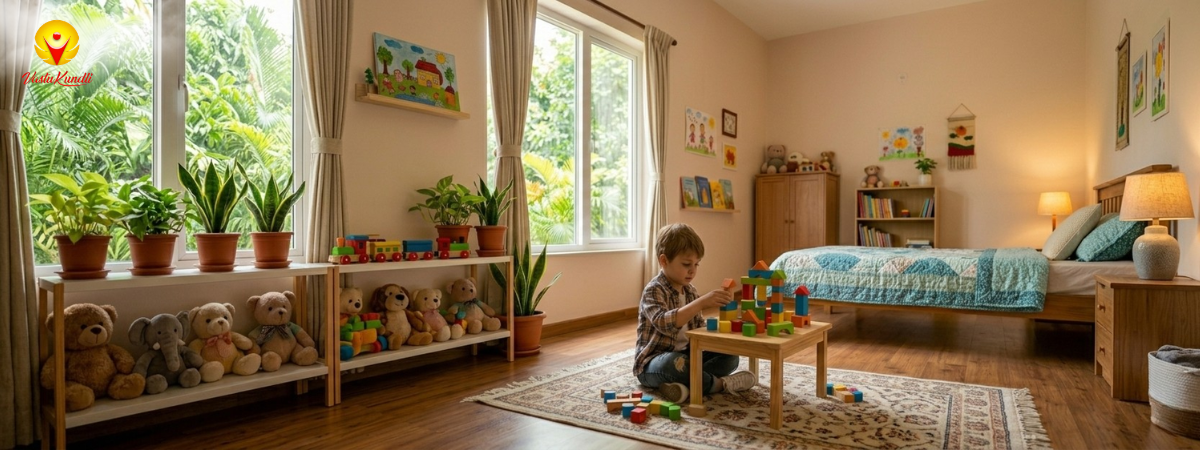
The question of placing children’s bedrooms in basements deserves special attention because children’s developing bodies and psyches may be more impacted by environmental energy than adults. This is an area where Vastu caution is particularly warranted though even here the situation requires nuanced evaluation.
Young children especially need expansive energy for healthy development. Their bodies are growing. Their minds are forming. Their energy systems are establishing patterns that will support them throughout life. The light open quality of above-grade spaces with natural day-night light cycles and connection to sky energy supports this expansion and development naturally.
Placing young children in basement bedrooms particularly fully underground configurations can potentially impact their physical vitality, emotional mood, and developmental trajectory. Children in basement bedrooms might experience more difficulty waking, lower motivation, more depressive tendencies, or reduced vitality compared to the same child sleeping above grade.
However teenagers represent a different consideration. Adolescents often crave privacy and independent space. A finished walkout basement bedroom might offer a teenager their own domain separate from family activity. If the basement space has good natural light, outdoor access, and doesn’t feel oppressively underground, a teenager might thrive having that private retreat.
The family dynamics and alternatives should inform the decision. If placing a teenager in a nice walkout basement bedroom allows a younger child to have an above-grade room that supports their development better, that might be the optimal family arrangement. The age-appropriate needs of all children should be considered together.
Monitoring and flexibility become essential when children use basement bedrooms. Parents should watch for signs of impact including difficulty waking, low energy, depressive mood, or physical health changes. If concerning patterns emerge, be willing to reassign rooms even if it creates inconvenience. Your child’s wellbeing matters more than keeping them in a space that’s not serving them.
Some families successfully use basement spaces for teen recreation and study while keeping actual sleeping above grade. This compromise allows teens to have private space below without the sustained overnight exposure to compressed earth energy. Creative use of available space can often solve multiple needs.
Basement Home Offices and Workspaces
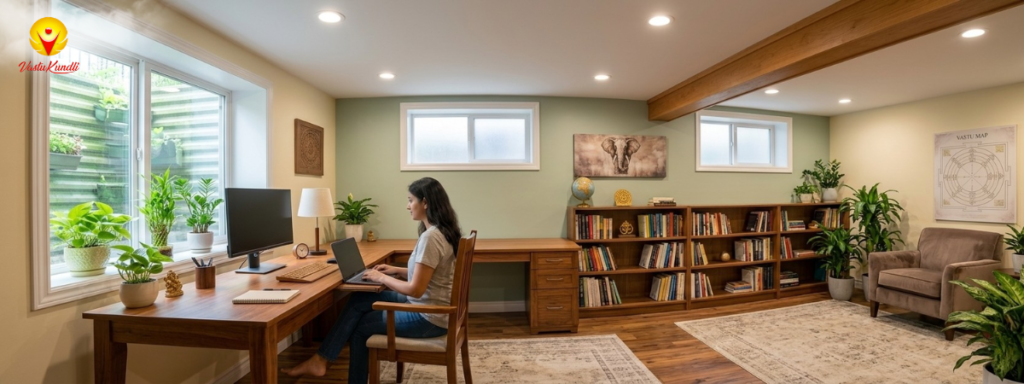
With remote work becoming standard for many professionals, the question of using basement spaces as home offices has become increasingly relevant. Many North American homes have finished basement areas that seem ideal for creating quiet dedicated workspace separate from household activity. But from a Vastu perspective, this arrangement requires careful evaluation.
The compressed earth energy of basements can impact productivity, creativity, and motivation in ways that aren’t immediately obvious. You might work in a basement office feeling that the quiet and privacy are beneficial. But over weeks and months, you might notice decreased creative output, reduced enthusiasm for projects, difficulty maintaining motivation, or a general heaviness that wasn’t present when working above grade.
The type of work matters significantly. Highly analytical focused work that requires concentration might function adequately in basement spaces particularly if the basement has decent natural light. The quiet grounded quality could even support deep focus. But creative work, strategic thinking, collaborative interaction, or work requiring sustained energy and enthusiasm often struggles in compressed earth environments.
Video calls and virtual meetings add another consideration. Basement lighting often creates unflattering appearance on camera. Background views of basement walls or limited windows can project a less professional image. The energy you project on video calls might be affected by working from a basement space in ways that impact how colleagues and clients perceive you.
The duration of work sessions influences impact. Working in a basement office for two to three focused hours might be manageable particularly for specific tasks requiring concentration. But spending eight to ten hours daily five days a week for months in a basement workspace creates sustained exposure to compressed earth energy that can drain vitality and enthusiasm over time.
Walkout or daylight basement offices function considerably better than fully underground workspaces. If your basement office has substantial natural light from windows at or near grade level, visual connection to outdoors, and doesn’t feel cave-like, the energy concerns reduce significantly. The office feels more like a ground-floor space than an underground chamber.
Some families find hybrid approaches work best. Using the basement office for specific focused tasks but moving to above-grade spaces for creative work, video calls, or extended work sessions. This allows you to leverage the basement’s quiet for concentration without subjecting yourself to full-time underground working.
Optimizing Basements You Must Use
For many families in the USA and Canada, basements aren’t optional. Your home includes a basement and you need to use that space for bedrooms, offices, or living areas because the above-grade level doesn’t provide adequate room for your family’s needs. In these situations, the question shifts from whether to use the basement to how to optimize it energetically.
Maximizing natural light becomes the single most important optimization. If your basement has windows, keep them clean and unobstructed. Use light-colored window treatments that can be fully opened during the day. Avoid heavy curtains or furniture blocking windows. Every bit of natural light you can bring into basement spaces helps counter the compressed earth energy.
Artificial lighting strategies matter tremendously in basements. Use full-spectrum bulbs that mimic natural daylight. Layer your lighting with overhead fixtures plus task lighting and accent lighting to eliminate dark corners. Bright well-lit basements feel less oppressive than dim spaces even when both are below grade. Consider lighting levels that might feel excessive for above-grade rooms but are appropriate for basements.
Color choices on walls, ceilings, and floors affect basement energy significantly. Light colors reflect light and create sense of openness. White, cream, light blue, soft yellow, these colors help counter the earth-heavy quality. Avoid dark colors that make basements feel more cave-like. Even if you prefer rich colors above grade, keep basement palettes light and bright.
Air quality and circulation require attention in basements. Ensure your HVAC system provides adequate air exchange. Consider air purifiers or dehumidifiers if needed. Stagnant air compounds the compressed earth feeling. Fresh moving air helps create more vital energy even in below-grade spaces.
Strategic use of mirrors can help in basement spaces though this should be done carefully. Mirrors reflect light making spaces feel brighter and larger. In basements, this can partially counter the enclosed feeling. However, mirror placement should follow Vastu guidelines and not be random or excessive.
Bringing nature elements into basements helps balance earth dominance. Healthy plants if the light supports them add life force. Water features if appropriately placed can introduce movement and flow. Natural materials in decor connect to broader elemental balance. These touches help basement spaces feel less isolated from natural energy.
Regular above-grade time becomes essential for anyone spending significant time in basement spaces. If you work in a basement office, take breaks above grade. If family members sleep in basement bedrooms, ensure they spend substantial waking time in above-grade spaces with natural light and sky connection. Don’t let anyone become entirely basement-dwelling.
Monitoring wellbeing indicators provides crucial feedback. Pay attention to how people actually feel and function using basement spaces. Are children thriving or struggling. Is the remote worker maintaining productivity and enthusiasm. Is sleep quality good or poor. Observable outcomes matter more than theoretical concerns. If people are doing well in optimized basement spaces, that’s valuable information. If problems emerge despite optimization efforts, reassignment might be necessary.
The Walkout Basement Advantage
If you have choice in the properties you consider, walkout basements offer significant advantages over fully underground configurations making them far more viable for living purposes from a Vastu perspective. Understanding these advantages helps you make informed decisions when house hunting.
Walkout basements by definition have one full wall above grade typically with patio doors and large windows providing extensive natural light and direct outdoor access. This transforms the energy dynamic completely compared to fully underground basements. The above-grade wall allows in sky energy, natural light cycles, and visual connection to the outside world.
Rooms positioned along the walkout wall particularly can function almost like ground-floor spaces energetically. A bedroom with large windows and patio door in a walkout basement receives the same natural light as an above-grade bedroom. The earth compression is minimal in these areas because one full side is open to sky. The below-grade positioning becomes less significant when substantial above-grade exposure exists.
Walkout basements often feel psychologically different than underground basements even in areas away from the walkout wall. The knowledge that direct outdoor access exists, that natural light is flooding in from one direction, and that you’re not in a sealed underground chamber affects how the space feels. This psychological factor influences energy experience beyond the purely physical configuration.
Family dynamics often work better with walkout basements. Teenagers or guests using walkout basement bedrooms have their own entrance and exit. They can come and go without moving through the entire house. This independence and separation can be positive allowing different family members different zones while still sharing one property.
From a property value perspective, walkout basements typically command higher prices than fully underground basements reflecting market recognition of their superior livability. This practical consideration aligns with the Vastu assessment that walkouts function better energetically. The market values what works better for actual living.
When house hunting, if your choices include properties with walkout versus fully underground basements, strongly consider prioritizing the walkout configurations. This single factor can make the difference between a basement that functions well for living space and one that remains problematic despite optimization efforts.
Special Considerations for Canadian and Northern USA Homes
Basements in Canada and northern USA states function differently than in southern regions both practically and energetically creating climate-specific considerations that affect Vastu evaluation. Understanding these geographic variations helps you apply principles appropriately for your specific location.
In cold climates, basements provide valuable protection from extreme winter conditions. The earth surrounding basement walls insulates and moderates temperature. Basements stay warmer in winter than above-grade spaces in many homes. This practical benefit creates different energy dynamics than in warm climates where basements might feel damp and oppressive year-round.
The reduced natural light in winter at northern latitudes compounds basement light challenges. When the above-grade world already has limited daylight for months, basement spaces receive even less. This makes artificial lighting and other light-enhancing strategies even more critical in northern basements during winter months. Seasonal variation in how basements feel and function can be dramatic.
Snow coverage and frozen ground affect basement energy during winter months. The earth surrounding your basement is frozen solid for months. This creates different earth energy than in climates where ground remains soft and living year-round. Whether frozen earth energy differs meaningfully from normal earth energy in its impact on basement occupants is an interesting question worth considering.
Many northern homes have basement family rooms as primary gathering spaces simply because that’s where the TV, comfortable furniture, and recreational equipment ended up. In harsh winters when outdoor activity is limited, families spend substantial time in basement family rooms. This becomes important to factor into basement evaluation particularly if natural light is minimal.
Walkout basements in cold climates often provide the winter escape route from the house many families treasure. Direct access to the backyard through basement patio doors means you don’t have to navigate icy front steps. This practical advantage of walkouts in northern climates adds to their appeal and functionality beyond pure Vastu considerations.
The long cold winters also mean that concerns about basement bedrooms might be most acute during November through March when natural light is minimal everywhere and basement bedroom occupants get even less than above-grade sleepers. Seasonal monitoring of wellbeing might reveal that basement sleeping impacts people more during dark months than summer.
Making Informed Basement Decisions
Understanding all these basement considerations helps you make informed decisions aligned with both Vastu principles and practical realities of North American living. The goal isn’t achieving perfect Vastu compliance but rather making smart choices that support your family’s actual wellbeing in real-world housing situations.
When evaluating properties during house hunting, assess basement configuration carefully. Is it fully underground, walkout, or daylight. How much of the available space is in the basement versus above grade. Can you realistically accommodate your family’s needs using only the above-grade levels or will you need to utilize basement spaces for bedrooms or offices. These practical questions should inform which properties you seriously consider.
Think through your intended basement use before purchase. If you’re planning to use basement bedrooms, who will occupy them and for how long. Are there above-grade alternatives you could create through renovations. Would it be worth investing in finishing a walkout basement to create living space that’s more energetically viable than what currently exists.
Consider your family’s specific needs and sensitivities. Some individuals are more affected by environmental energy than others. If family members have struggled with depression, low energy, or vitality issues, be extra cautious about basement bedrooms for them. If everyone in your family is robust and relatively energetically resilient, you might have more flexibility in basement use.
Evaluate the total package of any property not just the basement in isolation. A home with a challenging basement but excellent above-grade layout, perfect location, and good price might be worth buying if you can avoid using the basement for sleeping or daily working. Don’t reject properties based solely on basement concerns if other factors are strong.
Be willing to experiment and adjust after move-in. You might think a basement bedroom will work fine but discover after a few months that the occupant is struggling. Be flexible about reassigning rooms, moving offices upstairs, or converting basement bedrooms to other uses if actual experience shows the arrangement isn’t serving wellbeing.
Remember that Vastu is a framework for creating supportive environments not a set of absolute rules that must be followed rigidly regardless of circumstances. The principles around basement energy are based on real observations about how underground spaces affect human wellbeing. Apply those principles thoughtfully to your specific situation making the best choices available to you rather than pursuing impossible ideals.
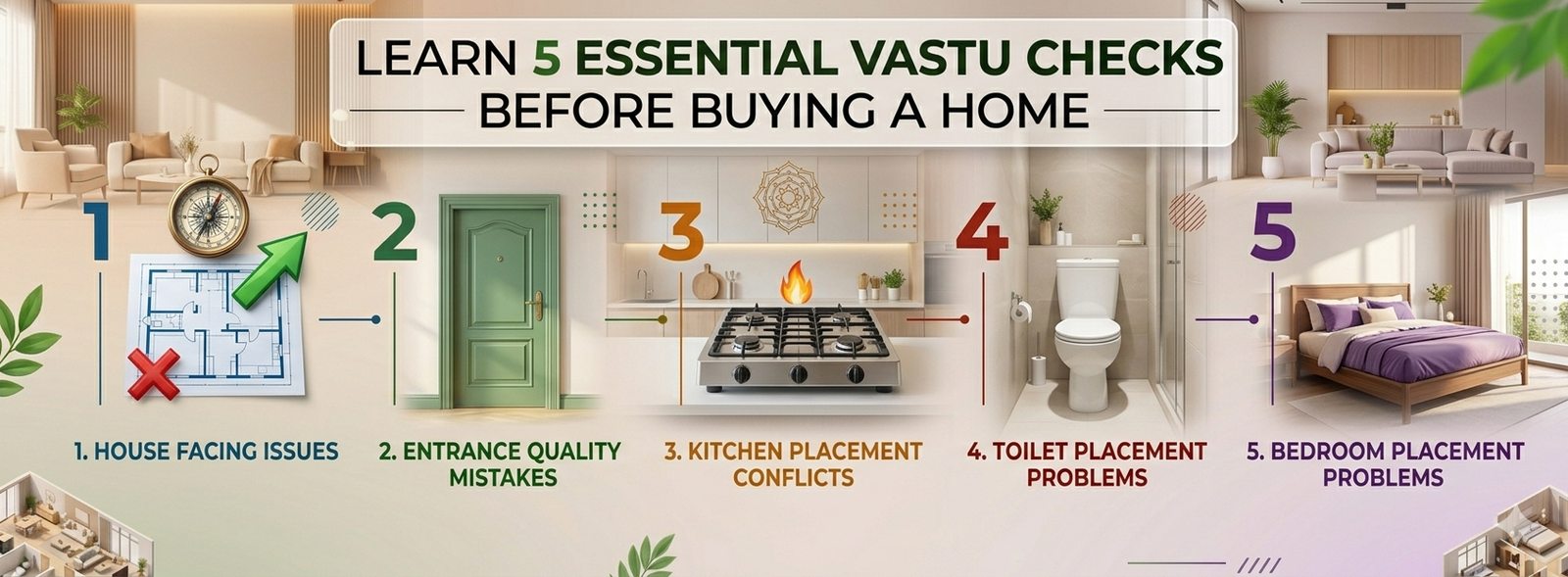
Learn 5 Essential Vastu Checks Before Buying a Home
Even before consulting an expert, families can perform 5 essential checks themselves:
- House Facing Issues – The direction your home faces affects overall energy and growth.
- Entrance Quality Mistakes – The main door controls how positive energy enters the house.
- Kitchen Placement Conflicts – Wrong kitchen direction can disturb health and finances.
- Toilet Placement Problems – Poor toilet location can weaken wealth and health zones.
- Bedroom Placement Problems – Incorrect bedroom zone can affect sleep and relationships.
These simple checks are just the start. To learn them in depth, with practical applications for homes in the USA and Canada:
Join our live course “5 Essential Vastu Checks Before Buying a Home.”
This course will guide you step-by-step to evaluate any property before making a purchase, helping you avoid mistakes that lead to stress, financial strain, and family discomfort. Families who take this course leave with actionable insights they can implement immediately whether they’re buying a new home or checking an existing property.
Go to the course section and join our live course today to gain major Vastu insights for every home decision.
Book Your Comprehensive Vastu Health Report
For families ready to buy or even after selecting a property, our Vastu Health Report is invaluable. Unlike a casual consultation, this report examines 30 plus critical parameters of your home, including main door alignment and entrance energy, kitchen orientation and placement, bedroom and study room energy, clutter and lighting analysis, and hidden energy zones affecting health, wealth, and relationships.
By checking all these parameters, families can identify and correct energy blockages before moving in, ensuring long-term harmony, prosperity, and well-being.
Book your personalized Vastu Health Report in the consultation section today because your home should nurture your family, not drain it.
About Our Vastu Expert – Gaurav Jindl
Gaurav Jindl has extensive experience helping Indian families understand and optimize basement spaces in North American homes. He recognizes that basements represent an architectural feature that traditional Vastu texts never addressed requiring thoughtful application of underlying energy principles to modern construction realities.
His approach focuses on practical assessment of specific basement configurations rather than blanket acceptance or rejection of all below-grade spaces. He helps families understand which basement uses align with earth-heavy energy and which create concerns, how to evaluate walkout versus fully underground basements, and what optimizations make the most difference.
Gaurav provides realistic guidance that honors both Vastu principles and practical housing realities in climates where basements are standard construction. He’s helped hundreds of families make informed decisions about basement bedrooms, offices, and living spaces creating arrangements that support wellbeing within the constraints and opportunities of North American home design.
Practical Advice for Families in the USA and Canada
Don’t reject properties solely because they have basements. In many North American markets, this would eliminate virtually all available housing. Instead, evaluate how the basement is configured and how you would need to use it.
Prioritize walkout or daylight basements over fully underground configurations when you have choice. The increased natural light and outdoor connection make these far more viable for living purposes.
Reserve above-grade bedrooms for young children and anyone with health or vitality concerns. Use basement bedrooms only when necessary and preferably for healthy adults or short-term guests.
Optimize basement spaces you must use with maximum lighting, light colors, good air circulation, and regular above-grade time for occupants.
Monitor actual wellbeing outcomes rather than just following theoretical guidelines. If family members are thriving in basement spaces, that matters. If problems emerge, be willing to reassign spaces.
Final Thoughts
Jay and Swati now live in a home they purchased after understanding basement dynamics. They chose a property with a walkout basement and made careful decisions about how to use that space. Their home gym and storage occupy the basement. Their guest bedroom is down there but only for short visits. Their children’s bedrooms are all above grade. Swati’s office sits in a sunny upstairs room. These choices reflect both practical space needs and energy awareness.
They learned that basements aren’t inherently wrong in Vastu but they’re also not neutral spaces that can be used interchangeably with above-grade rooms. Understanding the earth-heavy energy of below-grade spaces, recognizing which activities align with that quality, and optimizing spaces you must use creates the foundation for making basements work within your family’s overall home environment.
The Vastu truth about basements is nuanced. They’re neither forbidden nor freely usable without consideration. They’re architectural features common in North American homes requiring thoughtful evaluation and intentional use aligned with their energetic characteristics. Your family can absolutely thrive in a home with a basement if you understand how to work with below-grade energy rather than fighting against it or ignoring it entirely.
Frequently Asked Questions
Q. Are basements completely forbidden in Vastu or can they be used for living spaces?
Basements aren’t forbidden but require careful evaluation. Walkout basements with substantial natural light can function well for certain uses. Fully underground basements are more challenging particularly for sustained sleeping or daily working. The specific configuration, intended use, and occupant sensitivity all factor into whether basement living spaces will support wellbeing.
Q. What makes walkout basements better than fully underground basements energetically?
Walkout basements have one full wall above grade with large windows and outdoor access bringing in natural light and sky energy. This dramatically reduces the compressed earth quality that makes fully underground basements challenging. Rooms along the walkout wall function almost like ground-floor spaces energetically making them much more viable for bedrooms and living areas.
Q. Can I use my basement for a home office or will this drain my productivity?
The impact varies based on basement configuration, work type, and duration. Analytical focused work in a well-lit basement might be manageable. Creative work or full-time daily office use in fully underground basements often creates motivation and energy challenges over time. Walkout basement offices with substantial natural light function considerably better.
Q. What are the best uses for basement spaces from a Vastu perspective?
Storage, exercise rooms, meditation spaces, and short-term recreation align well with basement earth energy. These uses leverage the grounded quiet quality without requiring sustained daily living exposure. Guest bedrooms for brief stays and hobby areas for occasional use also work acceptably particularly in walkout configurations.
Q. How can I improve the energy of basement bedrooms my family must use?
Maximize natural light through clean unobstructed windows and bright full-spectrum artificial lighting. Use light colors throughout. Ensure excellent air quality and circulation. Place bedrooms in walkout areas if possible. Monitor occupant wellbeing carefully and be willing to reassign rooms if problems emerge. Reserve basement bedrooms for healthy adults rather than young children when possible.