
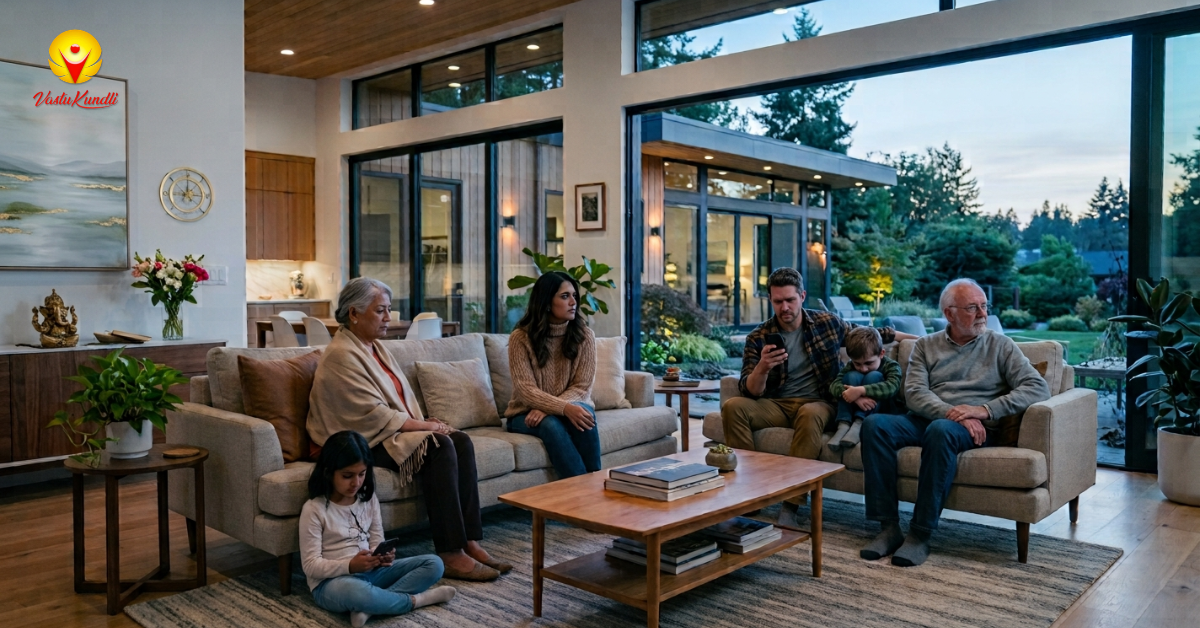
You have a beautiful home. Good jobs. Healthy kids. Everything on paper looks fine. But something feels off. Family members eat together but barely talk. The house feels big yet somehow suffocating. You feel lonely inside your own walls. This is not a relationship problem or a cultural adjustment issue. For thousands of Indian families settled in the USA and Canada, this quiet emotional disconnection is a Vastu problem. When the energy zones of a home are misaligned, the people inside it stop connecting. Not because they do not love each other, but because the home itself is pulling them apart.
Jatin and Mona settled in a spacious home in the suburbs of Calgary with their two teenage children. Life was comfortable, but the house never felt warm. Conversations were brief. The kids spent all their time in their rooms. Jatin and Mona felt more like roommates than partners. A Vastu assessment revealed that their living room, the space meant to be the heart of family bonding, sat in the northwest zone, a direction governed by movement and instability. Their southwest corner, which should anchor relationships and togetherness, was occupied by a bathroom. Simple Vastu corrections, including activating the southwest with earthy decor, improving the living room energy with warm lighting, and clearing the northeast brought a noticeable shift in family warmth within weeks.
How Vastu Misalignment Creates Emotional Distance at Home
In Vastu Shastra, every direction in a home governs a specific dimension of life. The southwest holds relationships and stability. The northwest drives movement and separation. When family spaces like living rooms, dining areas, or master bedrooms land in the wrong directional zones, they carry energy that works against togetherness. Families feel it as restlessness, emotional flatness, and disconnection that no vacation or therapy fully resolves because the source is the space itself.
The Living Room Zone and Why It Matters for Family Bonding
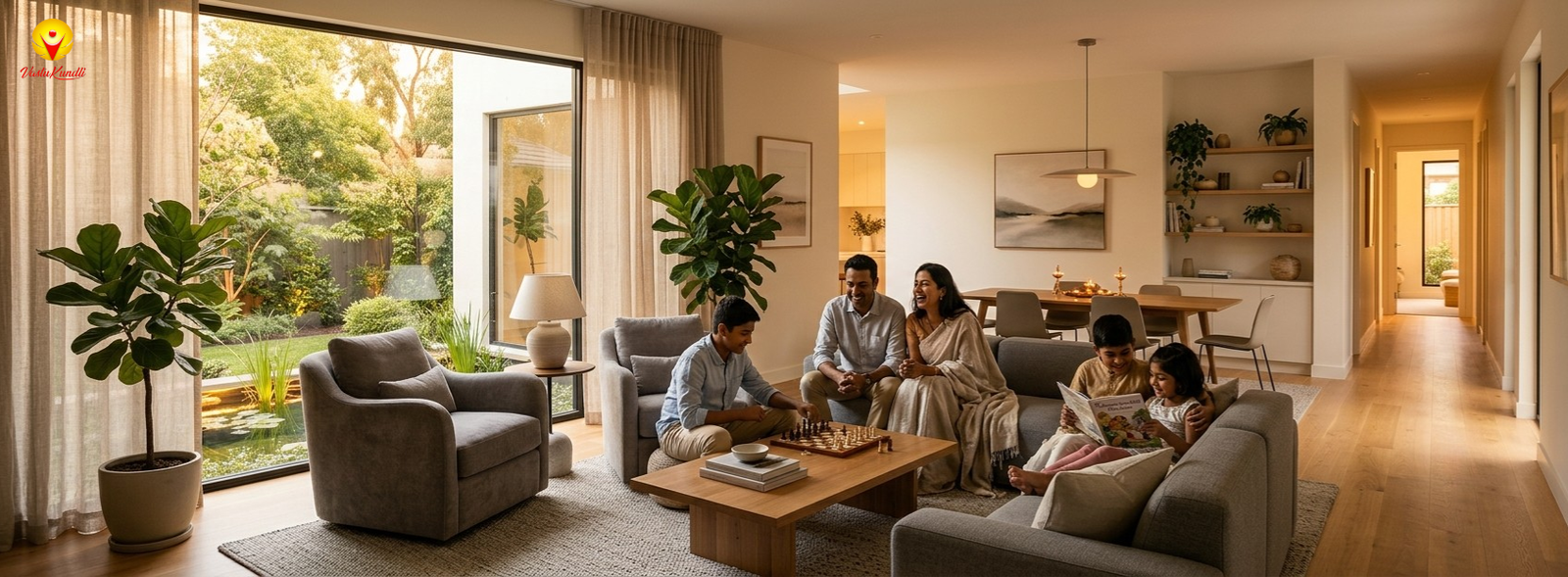
The living room is meant to be the energy hub of the home, a space where family naturally gravitates, conversations happen, and bonds strengthen. In Vastu, a living room placed in the northwest or southeast creates unstable, hyperactive energy. People pass through but do not settle. They feel the urge to retreat to their own rooms. In North American homes where open floor plans are standard, the direction and energy of this shared space directly determines how much time the family actually spends together in it.
Southwest Zone and the Root of Relationship Stability
The southwest zone of any home is the anchor. It governs commitment, depth, and rootedness in relationships. When this zone carries a toilet, staircase, or is left cluttered and dark, the people in that home feel unanchored. Couples drift. Parents and children stop truly communicating. This is one of the most common Vastu issues in homes across the USA and Canada. The remedy is simple. Keep the southwest corner heavy, grounded, and warm. Use earthy colours, solid furniture, and family photographs in this zone to anchor relationship energy.
The Dining Space and Its Direct Link to Family Connection
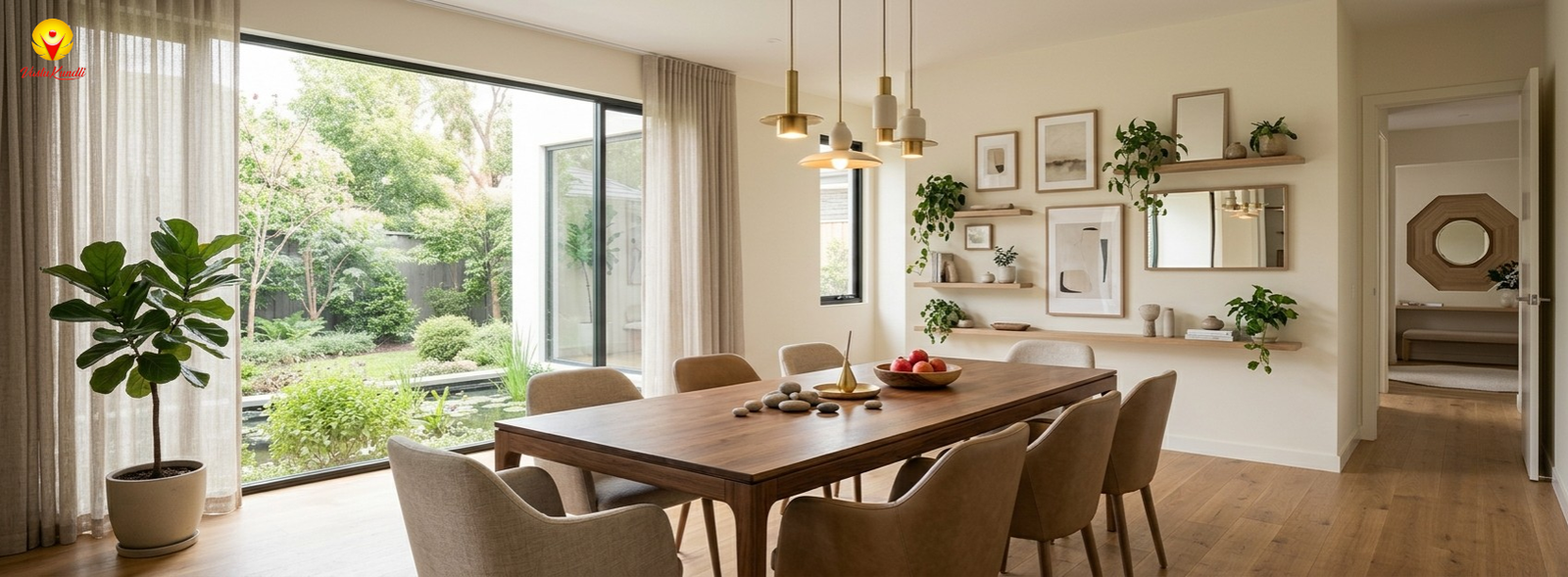
In many North American homes, the dining area is an afterthought, squeezed between the kitchen island and the living room with no defined energy zone. In Vastu, the dining space placed in the west or northwest creates an energy of hurry. Meals are rushed, conversations are surface-level, and the table feels like a pit stop rather than a gathering point. Placing the dining area in the west with warm, soft lighting and keeping it free of screens during meals can dramatically shift the quality of family interaction at mealtimes.
Children Retreating to Their Rooms as a Vastu Warning Sign
When children consistently prefer isolation over family time, parents often blame screens or teenage phases. But in many cases, the child’s bedroom or the family space carries Vastu energy that encourages withdrawal. A bedroom in the northwest, which is the zone of movement and detachment, makes children instinctively pull away. Shifting the sleeping direction to south-facing, adding warm tones to the room, and placing a family photograph in the southwest of the bedroom can reconnect a child to the family energy without any structural change.
The Main Entrance and How It Sets the Emotional Tone of Your Home
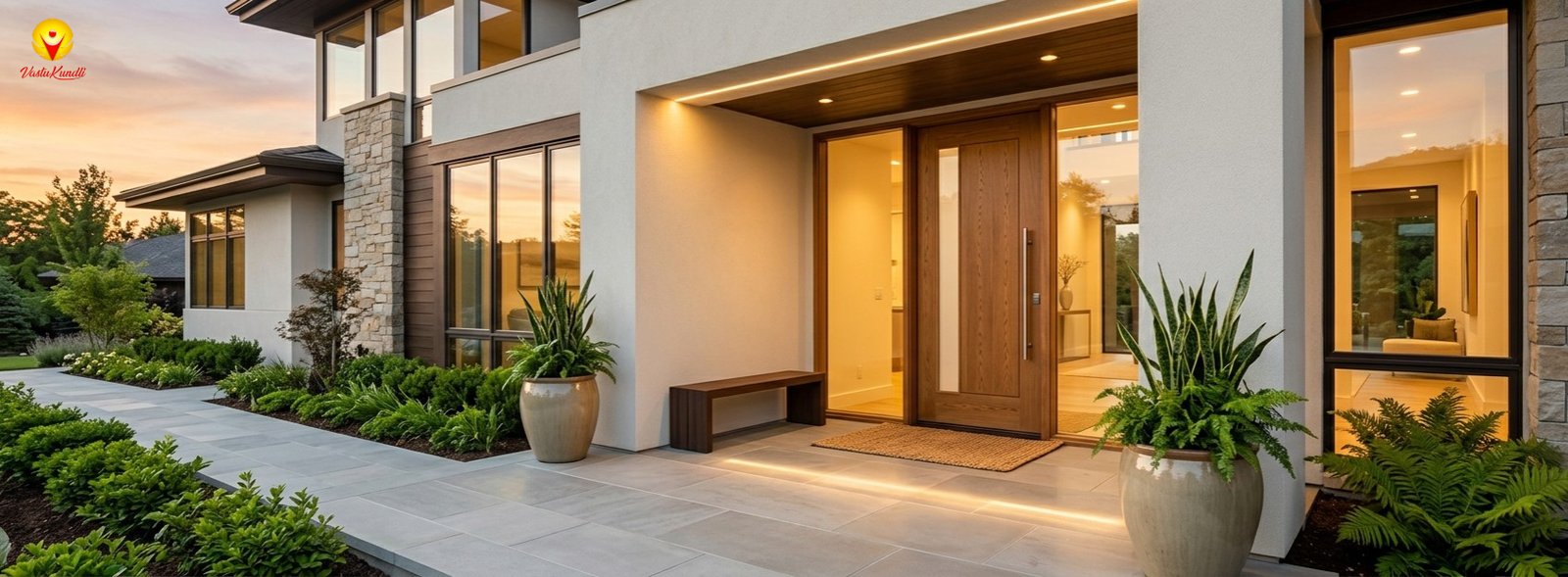
In homes across the USA and Canada, most families enter daily through the garage, completely bypassing the main door. This suppresses the home’s primary energy inlet. When the entrance is energetically weak, the home feels like a place to crash rather than a place to connect. Use your main door at least once daily. Keep it clean, bright, and welcoming. A small plant or a bright light fixture at the entrance activates the energy flow that sets an emotionally warm tone the moment any family member steps inside.
Simple Vastu Remedies to Restore Family Connection in Your Home
None of these require demolition or renovation. Anchor the southwest with solid furniture, earth tones, and family photos. Activate your main entrance daily and keep it lit. Add warm lighting to the living room and dining space. Clear all clutter from the northeast corner completely. Place a rose quartz crystal or copper vessel in the southwest zone to strengthen relationship energy. Fix every broken item in the home immediately. A home that feels emotionally alive is not an accident. It is a Vastu home.
Learn 5 Essential Vastu Checks Before Buying or Moving Into a Home
Even before consulting an expert, families can perform 5 essential checks themselves:
- House Facing Issues The direction your home faces affects overall energy and growth.
- Entrance Quality Mistakes The main door controls how positive energy enters the house.
- Kitchen Placement Conflicts Wrong kitchen direction can disturb health and finances.
- Toilet Placement Problems Poor toilet location can weaken wealth and health zones.
- Bedroom Placement Problems Incorrect bedroom zone can affect sleep and relationships.
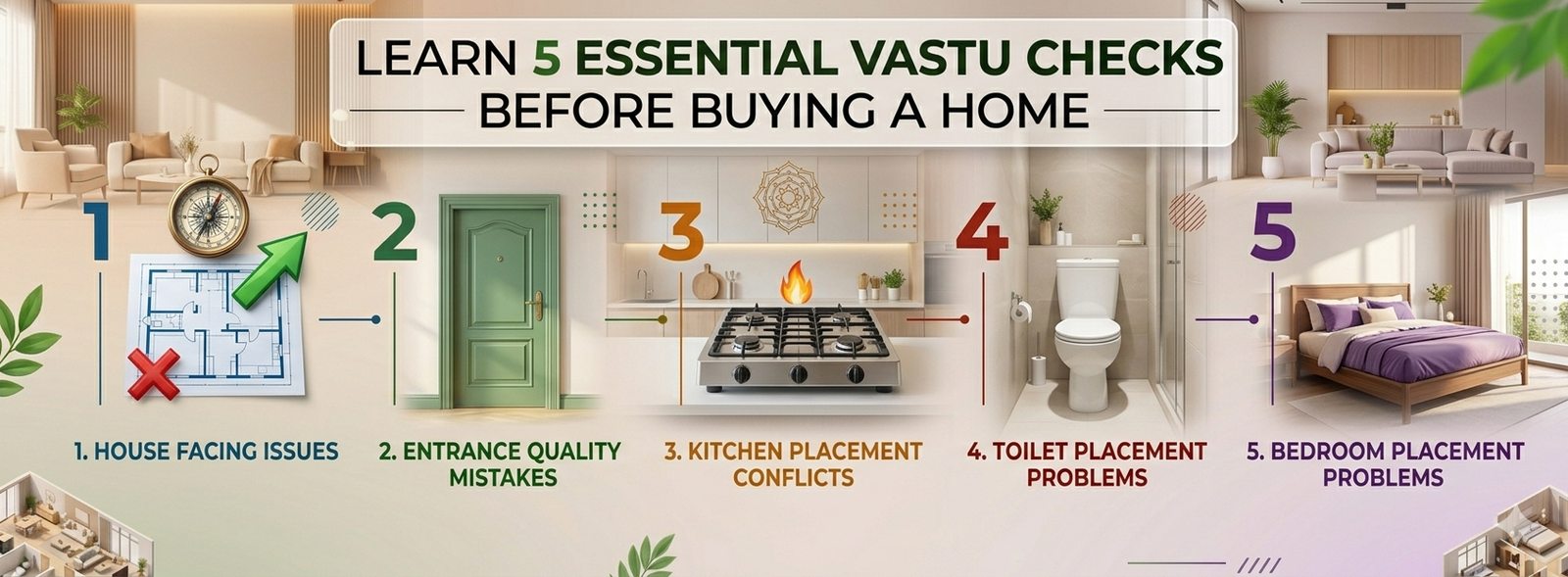
These simple checks are just the start. To learn them in depth, with practical applications for homes in the USA and Canada,
Join our live course “5 Essential Vastu Checks Before Buying a Home.”
This course will guide you step-by-step to evaluate any property before making a purchase, helping you avoid mistakes that lead to stress, financial strain, and family discomfort. Families who take this course leave with actionable insights they can implement immediately, whether they are buying a new home or checking an existing property.
Go to the course section and join our live course today to gain major Vastu insights for every home decision.
Book Your Comprehensive Vastu Health Report for Your Home
For families ready to buy or even after selecting a property, our Vastu Health Report is invaluable. Unlike a casual consultation, this report examines 30-plus critical parameters of your home, including main door alignment and entrance energy, kitchen orientation and placement, bedroom and study room energy, clutter and lighting analysis, and hidden energy zones affecting health, wealth, and relationships. By checking all these parameters, families can identify and correct energy blockages before moving in, ensuring long-term harmony, prosperity, and well-being.
Book your personalized Vastu Health Report in the consultation section today because your home should nurture your family, not drain it.
About Our Vastu Expert Gaurav Jindl
Gaurav Jindl is a highly respected Vastu expert with extensive experience guiding Indian families across the USA and Canada toward homes that truly feel like home. His approach is grounded, practical, and fully adapted for North American architecture. Every remedy he recommends is achievable, non-structural, and effective for the realities of life in North America.
Practical Advice for Families in the USA and Canada
Our consultations are designed specifically for homes in North America where open floor plans, attached garages, and basement layouts create unique Vastu challenges. We do not suggest impossible structural changes. Every remedy fits your existing home, your budget, and your schedule. Real Vastu solutions for real families living real lives in the USA and Canada.
Final Thoughts
If your home feels emotionally cold despite everything being materially fine, do not keep looking for the problem in yourself or your family. Look at the space. Vastu disconnection is real; it is common in North American homes and correctable. The right energy in the right zones can transform a house that merely functions into a home that genuinely holds your family together. Start today.
Frequently Asked Questions
Q. Why do families feel emotionally disconnected even in a comfortable home?
When Vastu energy zones are misaligned, the home creates an atmosphere of emotional distance even when material comfort is present. Wrong room placements, suppressed entrance energy, and disturbed southwest zones are the most common causes of this feeling in homes across the USA and Canada.
Q. Can Vastu really affect family relationships and emotional bonding?
Yes. Vastu Shastra is built on the understanding that space shapes behaviour and emotion. When the zones governing togetherness, stability, and communication are energetically blocked or misused, the people inside the home reflect that imbalance in their interactions and emotional availability.
Q. What is the most important Vastu zone for family connection?
The southwest zone is the most critical for relationship stability and family bonding. When this zone is correctly activated with grounding energy, solid furniture, warm colours, and family imagery, it strengthens the emotional foundation of every relationship in the home.
Q. Do I need to renovate my home to fix Vastu disconnection issues?
No renovation is required. All remedies we recommend are practical, non-structural, and achievable in any North American home. Changes in decor, lighting, directional corrections, and simple Vastu objects are all that is needed to shift the energy and improve family harmony.
Q. How long does it take to feel the difference after applying Vastu remedies for family connection?
Most families notice a shift in the emotional atmosphere of their home within two to four weeks of applying key Vastu corrections. The quality of conversations improves, family members spend more time in shared spaces, and the overall feeling of warmth and belonging returns gradually as the home energy rebalances.