
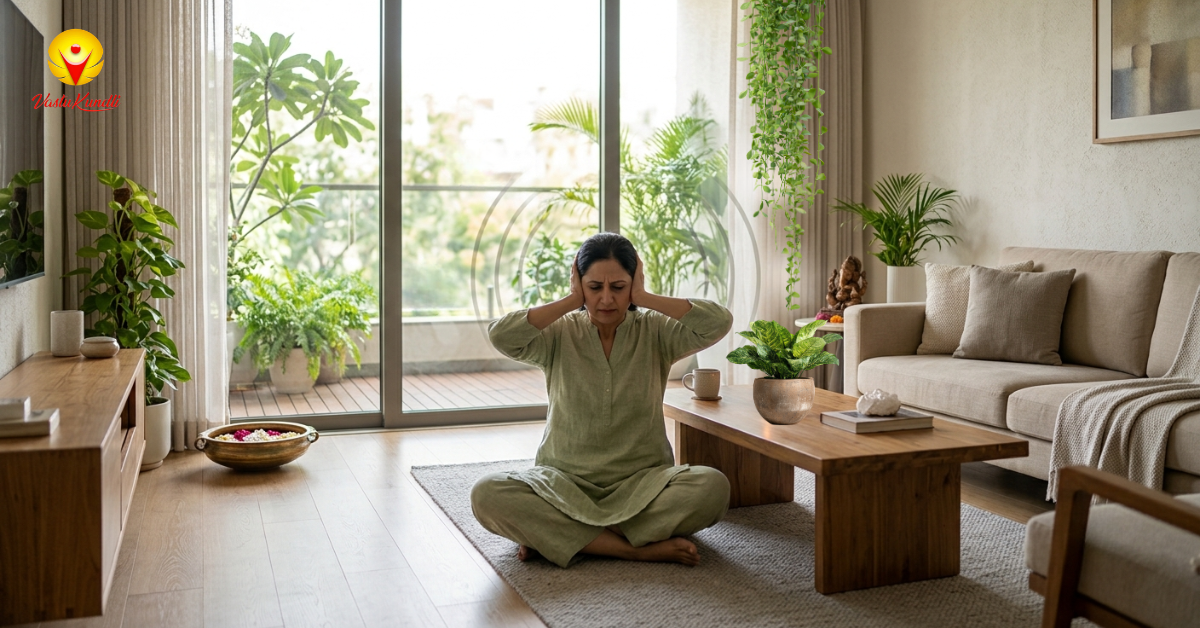
You walk into your house after a long day, close the door behind you, and stand in complete silence. No television playing, no music, no voices, no external sounds. Yet somehow, your mind doesn’t quiet down. The house feels chaotic even though nothing is actually happening. There’s a strange buzzing quality to the atmosphere that you can’t quite name. You feel agitated, restless, unable to settle into calm even though you desperately need rest. The silence isn’t peaceful. It feels almost louder than actual noise.
Tarun and Anika moved from their apartment in downtown Seattle to a house in the suburbs specifically to escape noise and find peace. Their apartment had been on a busy street with constant traffic sounds, neighbors on all sides, city noise filtering in at all hours. They were exhausted by the relentless auditory assault and dreamed of a quiet home where they could finally relax. When they found their house in a peaceful neighborhood with minimal traffic and no nearby neighbors, they thought they had found their sanctuary. But within weeks of moving in, both of them noticed something disturbing. The house felt chaotic and noisy even when it was completely silent. Anika would lie in bed at night in total quiet but feel like her mind was being bombarded by invisible noise. Tarun would sit in the living room trying to read and feel agitated and overstimulated despite the absence of any actual sound. They had escaped external noise only to discover an internal chaos in their home that was somehow even more exhausting than the city sounds they left behind.
Understanding Energetic Noise Versus Auditory Noise
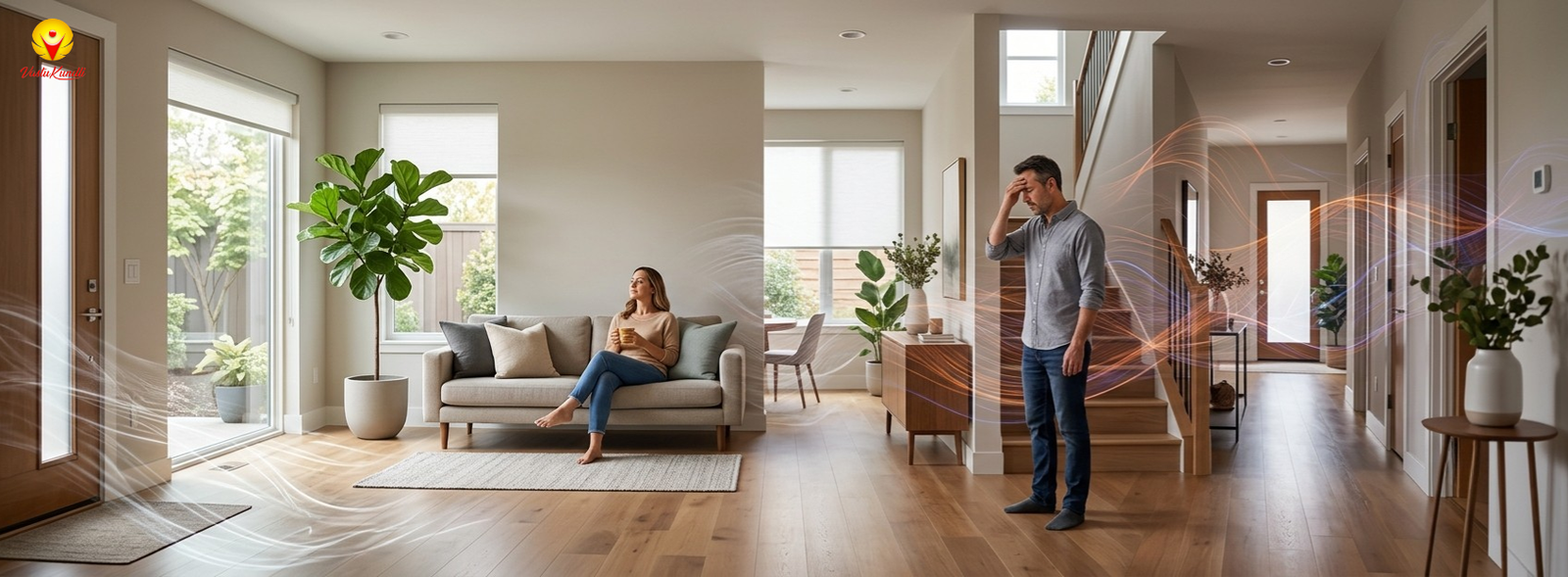
Here’s what most people living in USA and Canada don’t realize about their homes. There are two completely different types of noise that affect your nervous system and sense of peace. There’s auditory noise, which is actual sound waves you can hear. And then there’s energetic noise, which is disturbed energy patterns in your environment that create a sensation of chaos, agitation, and mental loudness even when there’s complete auditory silence.
Your nervous system responds to both types equally, even though you might not consciously recognize energetic noise as a distinct phenomenon. When energy in your home is disturbed, blocked, or chaotic, it creates an atmosphere of invisible agitation that keeps your mind activated and prevents you from settling into genuine peace and calm. You might describe this feeling as not being able to relax in your own home, or feeling restless for no reason, or having racing thoughts whenever you’re home even though nothing stressful is actually happening.
In Vastu terms, energy should flow smoothly and harmoniously through your living space. When this flow is disrupted by poor directional alignment, blocked zones, accumulated clutter, conflicting energies in specific areas, or other imbalances, the resulting energetic disturbance creates a quality of chaos that your subconscious mind perceives as noise. Your brain registers this environmental agitation similarly to how it would register actual auditory noise, activating stress responses and preventing the deep relaxation that should be possible in your own home.
The challenge with energetic noise is that most people don’t have language or concepts to identify it, so they just feel chronically agitated at home without understanding why. They might try soundproofing, white noise machines, or moving to quieter neighborhoods, only to discover that the uncomfortable loudness they’re experiencing isn’t actually about sound at all. It’s about the quality of energy in their living environment.
For families relocating to new homes, energetic noise often becomes apparent after the move when they discover that escaping auditory noise didn’t bring the peace they expected. The new house might be beautifully quiet in terms of sound but feels somehow louder and more chaotic than the noisy apartment they left. This paradox indicates that the issue isn’t auditory but energetic.
The Entrance Energy That Sets Your Nervous System Tone
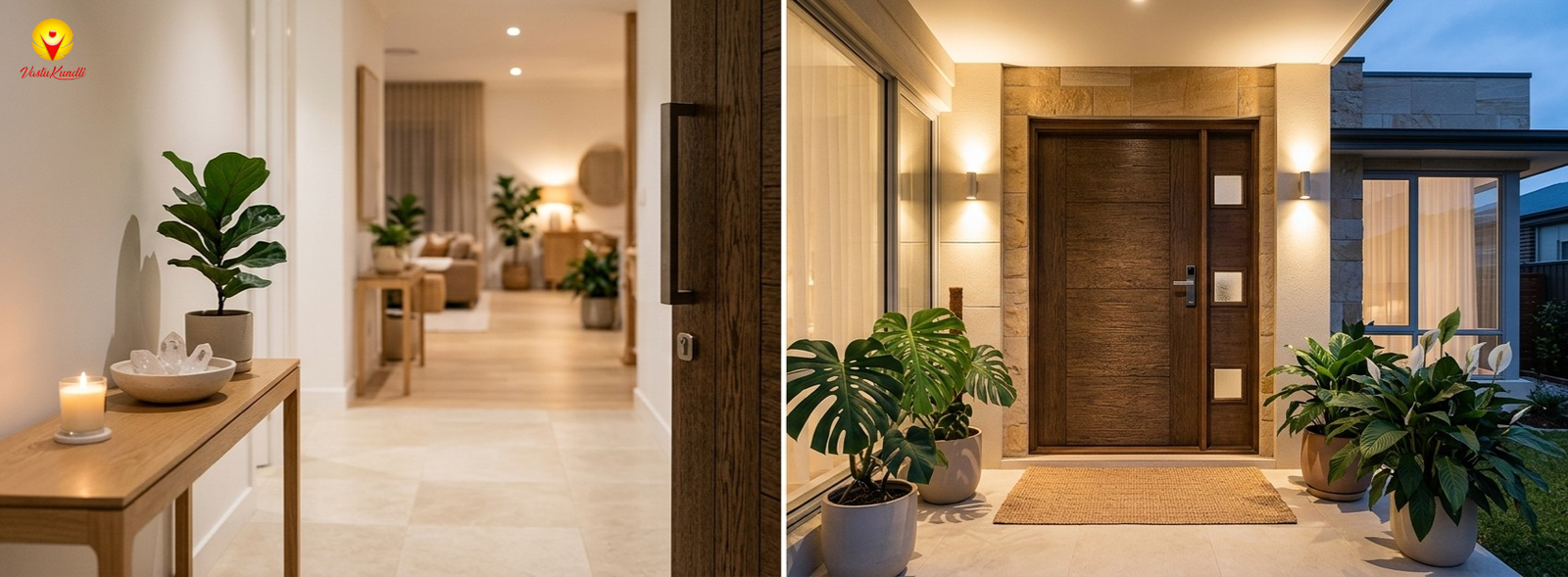
The moment you walk through your main door, your nervous system is absorbing information about the energy quality of your home. Your entrance is the first energetic impression that affects how calm or agitated you feel from that moment forward. When entrance energy is disturbed, chaotic, or blocked, it creates an immediate sense of unsettlement that ripples through your entire experience of being home.
Many North American homes have entrance configurations that create energetic chaos right from the threshold. The door might open into immediate visual clutter or a cramped space that feels constricting. The lighting might be harsh or dim in ways that create unease. The direction of the entrance combined with what you see immediately upon entering might create a sense of disorder or confusion. All of these factors combine to create an energetic greeting that activates rather than calms your nervous system.
Every single time you come home, you’re walking through this disturbed energy field. If the entrance creates a sensation of chaos or agitation, you’re starting your time at home in an activated state rather than a relaxed state. Your nervous system never fully downshifts into rest mode because the energetic message at your entrance keeps it partially activated. Over time, this constant subtle activation creates a baseline feeling of your home being loud and chaotic even in silence.
For Tarun and Anika, their entrance opened directly into their living room with no transitional space, and the first thing visible was a cluttered area with coats, shoes, bags, and miscellaneous items piled on chairs and floors. The lighting was a harsh overhead fluorescent fixture that created a cold, agitating quality. The immediate visual and energetic impression upon entering was one of disorder and harshness rather than welcome and calm. This entrance energy was setting an agitated tone every time they came home, contributing significantly to their sense of the house feeling chaotic and noisy.
The Vastu Health Report they eventually obtained identified the entrance as a critical problem area. Recommendations included completely decluttering the entrance zone, replacing harsh lighting with warm, softer illumination, creating a small transitional area with specific design elements that helped shift energy from outside chaos to inside calm, and using strategic placement of certain objects to redirect and smooth the energy flow. These relatively simple changes transformed how the entrance felt energetically, creating a sense of crossing into peace rather than crossing into agitation when they came home.
Why Open Floor Plans Create Energetic Chaos
Modern North American home design favors open floor plans where kitchen, dining, and living areas flow together with minimal separation. This creates a sense of spaciousness and facilitates family connection, which has real benefits. But from a Vastu perspective, open floor plans also create energetic challenges that can contribute significantly to a sense of chaos and mental noise.
Different activities carry different energy qualities. Cooking is active, fire-oriented transformative energy. Eating is nourishing, earth-oriented, gathering energy. Relaxing in living areas is restorative, calming, and passive energy. When all these different energies occupy one large undivided space, they mix and create a kind of energetic static where no single energy can dominate or create a clear atmosphere. The space becomes energetically ambiguous and chaotic.
Your nervous system craves clean, energetic environments where the space’s purpose and energy quality are coherent. When you walk into a space and the energy says simultaneously cooking, eating, working, playing, relaxing, your brain has to process all those conflicting signals. This creates a subtle but constant cognitive and energetic load that manifests as a feeling of the space being busy, loud, or chaotic even when nothing is happening and no one is making noise.
The lack of walls and clear boundaries also means energy doesn’t have containers or stopping points. It swirls and moves without structure or channeling. This creates a sensation similar to auditory echo or reverberation, where energy bounces around rather than settling. The result is a home that feels energetically loud even in complete silence because the energy itself is moving chaotically rather than flowing in organized, peaceful patterns.
For families in the USA and Canada living in homes with open floor plans, this energetic chaos can be particularly exhausting because you can’t escape to different rooms with different energy qualities. You’re always in the same large, energetically mixed space. When you’re trying to relax, you’re still in the visual and energetic presence of the kitchen, where active cooking energy lingers. When you’re trying to eat peacefully, you’re in the same space as the television and work materials. Nothing feels energetically contained or purposeful.
Tarun and Anika’s house had a large open floor plan that encompassed kitchen, dining area, and living room in one continuous space. While this felt spacious and modern, it also meant there was nowhere in the main living area that felt truly calm and settled. The energy was always mixed and busy. The Vastu recommendations included creating energetic boundaries within the open space using furniture placement, area rugs to define zones, strategic use of colors and materials to differentiate energetic purposes in different areas, and specific objects placed at transition points to help channel and contain energy flow. These interventions created a sense of energetic definition within the physical openness, reducing the chaotic quality significantly.
The Clutter That Screams at Your Subconscious
Physical clutter in your home creates constant mental and energetic noise that your conscious mind might ignore but your subconscious processes relentlessly. Every visible object, every pile of papers, every item out of place represents incomplete tasks, unmade decisions, or unprocessed information. Your brain tracks all of it, creating a background hum of mental activity that prevents genuine quiet and peace.
From a Vastu perspective, clutter creates energy stagnation and blockages. Energy that should flow smoothly through your space gets trapped in piles of stuff, creating pressure, heaviness, and chaotic swirling patterns. This energetic disturbance manifests as a sensation of loudness, business, and agitation even when the house is physically silent and still. The clutter is literally creating noise in the energy field of your home.
The visual impact of clutter contributes too. When your eyes can’t find a place to rest because every surface is covered with stuff, your nervous system remains activated. Visual chaos prevents mental calm. Your brain is always processing, always scanning, always aware of the disorder surrounding you. This constant low-level activation creates a feeling of your home being loud and demanding even when you’re not doing anything and no external demands are being made.
Many people accumulate clutter gradually without realizing how significantly it’s affecting their sense of peace. You get used to the piles and stop seeing them consciously, but your subconscious never stops tracking them. The mental and energetic load grows heavier while you wonder why you can’t relax in your own home anymore. The answer is often that your environment has become so cluttered that genuine peace is energetically impossible in that space.
Tarun and Anika had allowed clutter to accumulate significantly after their move. Boxes they never fully unpacked, items that didn’t have proper homes, surfaces covered with miscellaneous objects, closets stuffed to overflowing. They had stopped really seeing it, but the energetic and mental impact was substantial. Their home felt loud and chaotic partly because the physical environment was visually and energetically chaotic.
The Vastu report identified clutter as a major contributor to their sense of energetic noise. The recommendation was comprehensive clearing throughout the house, not just surface tidying but deep decluttering that involved decisions about what to keep, donate, or discard. When they dedicated time to this process, clearing room by room and creating organized systems for what remained, the transformation was remarkable. Both described feeling like they could finally hear silence in their home for the first time since moving in. The energetic noise that had been so oppressive lifted, revealing the peace that had been buried under all that accumulated stuff.
How Light Creates or Prevents Mental Quiet
The quality, intensity, color temperature, and patterns of light in your home profoundly affect your ability to experience genuine calm and mental quiet. Harsh lighting creates an atmosphere of activation that keeps your nervous system alert rather than allowing it to settle. Inadequate lighting creates heaviness and can actually contribute to mental agitation in different ways. The timing of natural light exposure affects your circadian rhythms and hormonal balance, which influence your overall sense of calm versus agitation.
Many North American homes rely heavily on overhead lighting that tends to be bright, cold in color temperature, and somewhat harsh in quality. This type of lighting is practical for seeing tasks clearly but terrible for creating an atmosphere of peace and relaxation. When this is your primary lighting, your home never feels truly calm because the light quality itself is activating your nervous system and preventing deep relaxation.
Natural light patterns matter enormously too. If your home gets harsh direct sunlight at times when you’re trying to relax, the brightness and heat create stimulation rather than calm. If your home lacks adequate natural light during daytime, the dimness can feel oppressive and create a different kind of agitation. The direction your windows face, what times of day you get direct sun, and how you manage that light all contribute to whether your home feels peaceful or stimulating.
Evening lighting is particularly critical for allowing your nervous system to downshift from daytime activation to nighttime rest. If your evening lighting is too bright or too blue-toned, it suppresses melatonin production and prevents your body from naturally transitioning to sleep readiness. You might be sitting quietly in the evening but feel wired and unable to relax because the light quality is sending wakeful signals to your brain.
For Tarun and Anika, their home had cold, bright overhead lighting throughout with very limited warm, softer lighting options. Their living areas got harsh western sun in late afternoon that felt agitating rather than pleasant. Their evening lighting kept them in bright, cool illumination that prevented natural winding down. All of these lighting factors were contributing to their sense of the home feeling loud and stimulating even when they were trying to rest quietly.
The Vastu recommendations included replacing cold overhead fixtures with warm-toned lighting, adding multiple layers of lighting including soft ambient options for evenings, managing western sunlight with proper window treatments that filtered without completely blocking it, and using specific lighting strategies in different areas to support the energetic purpose of each space. These lighting optimizations created an environment where genuine calm and mental quiet became possible. Tarun described it as finally being able to feel silence not just hear it.
The Electronic Field That Never Stops Buzzing
Modern homes in USA and Canada are filled with electronic devices creating constant electromagnetic fields that sensitive individuals can perceive as a kind of invisible buzzing or static. WiFi routers, smart home devices, televisions, computers, phones, appliances, all contribute to an electronic atmosphere that some people’s nervous systems register as noise even though it doesn’t create actual sound.
The research on EMF sensitivity is still developing, but what’s clear is that constant exposure to electromagnetic fields affects some people more than others. Those who are sensitive might experience symptoms like feeling unable to relax, mental agitation, difficulty sleeping, or a sensation of their environment feeling busy and loud even in silence. The electronic presence creates a quality of activation that prevents genuine peace and quiet.
Beyond the electromagnetic aspect, the simple presence of screens and connected devices creates psychological noise. Even when they’re off or in standby mode, they represent connection to the outside world, work demands, social media, news, entertainment, constant stimulation. Your brain knows these devices are there and what they represent, creating a subtle background mental activation that prevents full disconnection and rest.
The placement and concentration of electronic devices matters significantly. When multiple devices cluster in areas where you’re trying to relax or sleep, the cumulative EMF and psychological presence creates a zone of high energetic noise. Your nervous system can’t fully settle because it’s managing constant invisible environmental input from all those devices.
Tarun had a significant concentration of electronics in their living room where they typically tried to relax in the evenings. Television, sound system, router, smart home hub, phones charging, tablet, laptop. Anika had her phone on her nightstand within arm’s reach all night. The bedroom had a television, alarm clock, phone chargers, and was positioned near the wall where the router was located on the other side. This electronic saturation was creating an environment where genuine quiet was impossible regardless of actual auditory silence.
The Vastu recommendations included relocating the router to a more distant location, removing electronics from the bedroom entirely except for a simple battery-operated alarm clock, creating a charging station in a different area so devices weren’t in primary living spaces during relaxation time, and reducing the overall concentration of electronics in areas intended for rest. These changes created zones in their home that felt genuinely quiet for the first time. The invisible buzzing quality that had been so exhausting lifted, revealing actual peaceful silence.
The Whole-Home Energy Balance That Determines Peace
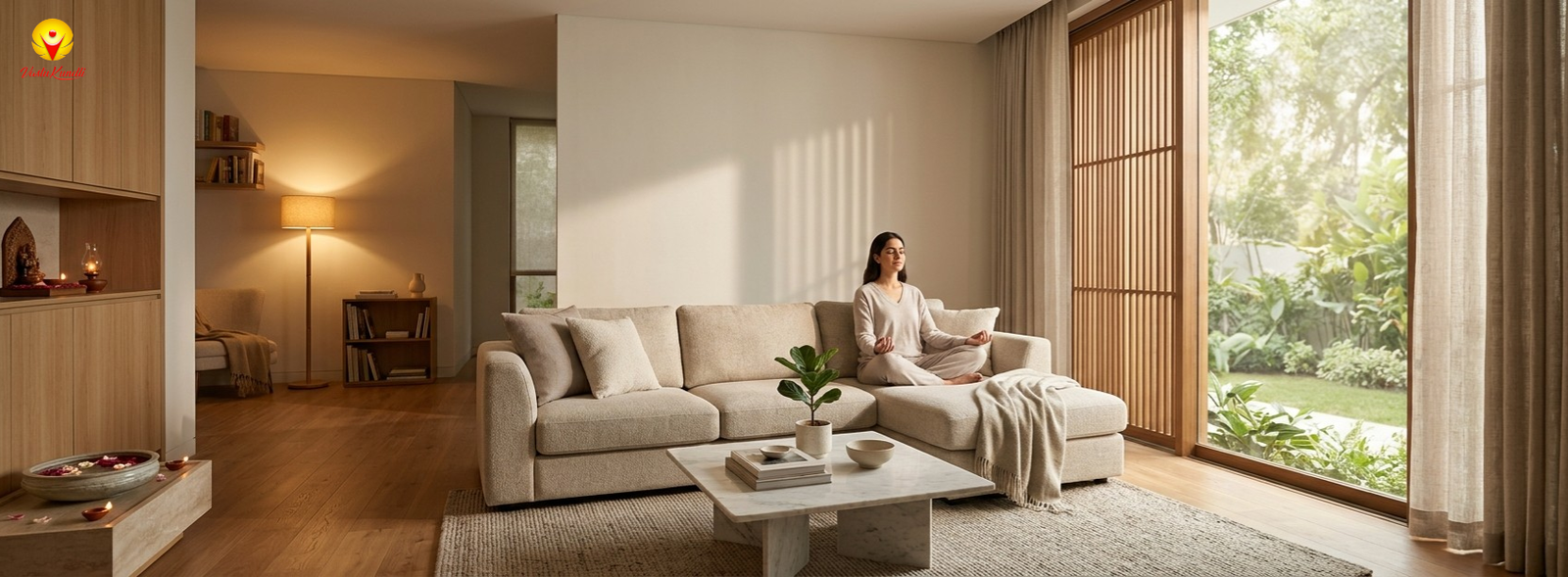
What makes comprehensive Vastu analysis so effective is that it addresses the entire energetic ecosystem of your home rather than isolated factors. Every zone, every directional energy, every element works together to create the overall atmospheric quality of your living space. When multiple factors are disturbed or imbalanced, they compound each other’s effects, creating severe energetic noise and chaos. When they’re all balanced and optimized, they create a symphony of peaceful, harmonious energy.
The entrance sets the initial tone. The clutter level affects energy flow throughout. The lighting creates atmosphere. The electronics contribute invisible noise. The furniture placement channels or blocks energy movement. The directional energies of different zones create varying qualities in different areas. The balance of elements affects how grounded versus agitated the space feels. All of these factors and more interact to create the total energetic environment you’re living in every day.
For families struggling with homes that feel chaotic and noisy even in silence, addressing just one or two factors might help somewhat but won’t create the transformation possible when the entire home is brought into energetic balance. This is why comprehensive Vastu Health Reports that examine all parameters produce such dramatic results. They identify all the contributing factors and provide integrated solutions that address the whole system.
Tarun and Anika implemented their Vastu recommendations systematically over about six weeks, addressing entrance energy, clutter, lighting, electronics, directional optimizations, and various other factors identified in their report. Each change helped incrementally, but the cumulative effect was profound. Their home transformed from a place that felt exhausting and chaotic even in silence to a genuine sanctuary where they could finally experience peace and mental quiet.
Both described the change as life-altering. Anika said she could finally think clearly in her own home. Tarun said he could actually feel his nervous system settling and relaxing when he was home in ways that hadn’t been possible since they moved in. The invisible noise that had been so oppressive was gone, replaced by genuine peaceful silence that nurtured rather than depleted them.
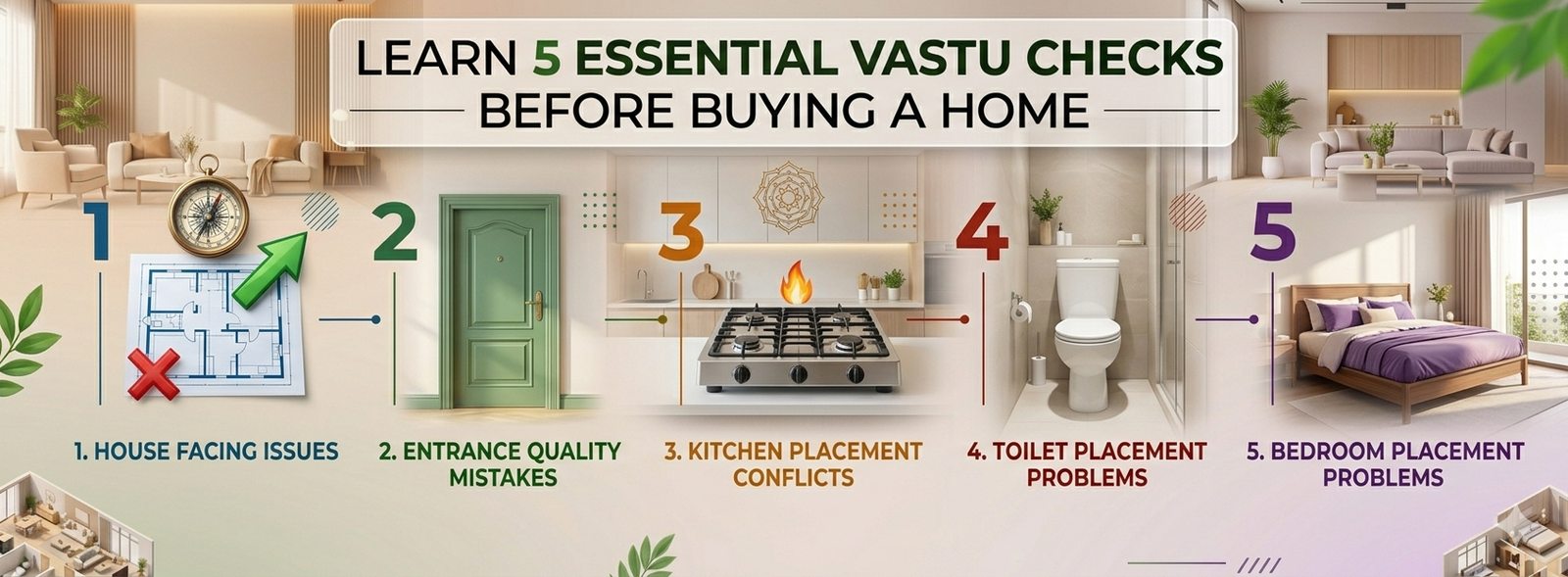
Learn 5 Essential Vastu Checks Before Buying a Home
Even before consulting an expert, families can perform 5 essential checks themselves:
- House Facing Issues – The direction your home faces affects overall energy and growth.
- Entrance Quality Mistakes – The main door controls how positive energy enters the house.
- Kitchen Placement Conflicts – Wrong kitchen direction can disturb health and finances.
- Toilet Placement Problems – Poor toilet location can weaken wealth and health zones.
- Bedroom Placement Problems – Incorrect bedroom zone can affect sleep and relationships.
These simple checks are just the start. To learn them in depth, with practical applications for homes in the USA and Canada:
Join our live course “5 Essential Vastu Checks Before Buying a Home.”
This course will guide you step-by-step to evaluate any property before making a purchase, helping you avoid mistakes that lead to stress, financial strain, and family discomfort. Families who take this course leave with actionable insights they can implement immediately—whether they’re buying a new home or checking an existing property.
Go to the course section and join our live course today to gain major Vastu insights for every home decision.
Book Your Comprehensive Vastu Health Report
For families ready to buy or even after selecting a property, our Vastu Health Report is invaluable. Unlike a casual consultation, this report examines 30+ critical parameters of your home, including:
Main door alignment and entrance energy, kitchen orientation and placement, bedroom and study room energy, clutter and lighting analysis, and hidden energy zones affecting health, wealth, and relationships.
By checking all these parameters, families can identify and correct energy blockages before moving in, ensuring long-term harmony, prosperity, and well-being.
Book your personalized Vastu Health Report in the consultation section today—because your home should nurture your family, not drain it.
About Our Vastu Expert – Gaurav Jindl
With years of experience helping families throughout USA and Canada, Gaurav Jindl specializes in practical Vastu solutions for modern North American homes. He understands how energetic imbalances create invisible chaos and mental noise that exhausts families even in silent homes. His recommendations focus on simple, achievable remedies that restore peace and calm without requiring renovations or structural changes.
Practical Advice for Families in the USA and Canada
If your home feels chaotic and noisy even when it’s completely silent, pay attention to that experience rather than dismissing it. Your nervous system is telling you something about the energetic quality of your environment. Start by observing which areas of your home feel most agitated and which feel relatively calmer. Notice whether the restlessness you feel improves when you leave home.
Simple first steps include thorough decluttering throughout your home to restore energy flow. Improve lighting quality by adding warm, softer options and creating proper light management for natural light. Remove or relocate electronic devices from areas intended for rest and relaxation. Optimize your entrance to create a calm, welcoming threshold rather than immediate visual or energetic chaos.
If the sense of invisible noise and chaos persists despite these basic improvements, invest in a comprehensive Vastu Health Report that analyzes all the energetic factors contributing to the disturbed atmosphere in your home. The relief of finally experiencing genuine peace and silence in your own living space is transformative.
Final Thoughts
Tarun and Anika’s experience represents countless families living in homes that feel exhausting and chaotic despite being objectively quiet. The frustration of escaping auditory noise only to discover invisible energetic noise that’s even more draining is disheartening. But understanding that energetic noise is real and addressable opens the door to genuine solutions.
Your home should be your refuge from the world’s chaos, not a source of additional invisible agitation. When your living environment’s energy is disturbed, no amount of external quiet can compensate for the internal chaos. But when you optimize your home’s energy to support peace and calm, genuine restful silence becomes possible in profound ways.
Don’t accept living in invisible chaos. Your home’s energetic quality deserves attention and can be transformed through simple, practical interventions. The peace you’re seeking is achievable when you address the root energetic causes rather than just the auditory symptoms.
Frequently Asked Questions
Q. Can a home really feel chaotic even when it’s completely silent?
Yes, absolutely. Energetic disturbance in your environment creates a quality of invisible agitation and mental noise that affects your nervous system similarly to actual auditory noise. Disturbed energy flow, clutter, poor lighting, EMF exposure, and directional imbalances all contribute to a sensation of chaos even in complete silence.
Q. How is energetic noise different from actual sound?
Auditory noise is measurable sound waves that you hear consciously. Energetic noise is disturbed environmental energy patterns your subconscious and nervous system perceive as agitation, creating mental restlessness and an inability to experience genuine calm. Both affect your stress levels and sense of peace, but energetic noise is often harder to identify because we lack a familiar language for it.
Q. Will soundproofing help if my home feels loud in silence?
No, soundproofing only blocks auditory noise. If your home feels chaotic in silence, the issue is energetic disturbance rather than sound intrusion. You need to address energy flow, clutter, lighting, electronics, and other Vastu factors creating the invisible chaos, not install sound barriers.
Q. How long before I notice greater peace after making Vastu changes?
Many people notice subtle shifts toward greater calm within a week or two, particularly after decluttering and lighting improvements. A more profound transformation into genuine peaceful silence typically develops over four to eight weeks as you implement comprehensive changes and your nervous system adjusts to the improved environment.
Q. Are these solutions appropriate for apartments or only houses?
Vastu principles apply equally to apartments, condos, townhouses, and single-family homes. Energetic noise can occur in any type of residence. Most remedies focus on controllable factors like clutter, lighting, furniture placement, and electronics rather than structural elements, making them perfectly suitable for rental situations and apartment living.