
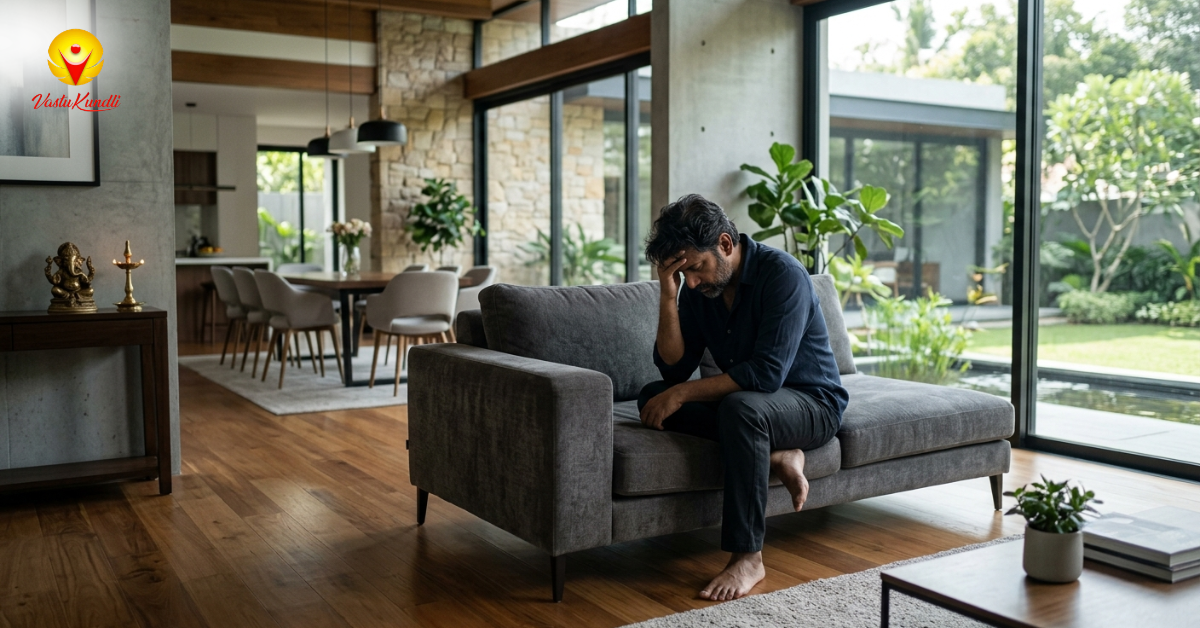
Depression does not always announce itself loudly. Sometimes it creeps in quietly, disguised as persistent tiredness, lack of motivation, or a vague sense that nothing feels quite right anymore. You wake up feeling heavy. The things that used to bring joy now feel like obligations. You go through the motions of daily life, but there is no lightness, no spark, no real presence.
For many people struggling with low mood, anxiety, and depression, the search for answers becomes exhausting. They try therapy, medications, lifestyle changes, exercise routines, meditation apps, and dietary adjustments. Some things help a little. Some things help temporarily. But the underlying heaviness remains, like a fog that never fully lifts.
What most people never consider is that the space they live in might be actively contributing to their mental and emotional decline. Not because their home is ugly or uncomfortable, but because the energetic structure of that space is fundamentally misaligned with human well-being. This is where Vastu Shastra offers a perspective that modern psychology and psychiatry often miss.
Let me share what happened with Harshit and Riya, a young couple who moved to their beautiful new home in Seattle about two years ago. Everything looked perfect on paper. The house was spacious, in a great neighborhood, with excellent schools nearby for their future family. They were excited, optimistic, and ready to build their life together.
Within six months, both of them noticed something shifting. Harshit, who had always been energetic and social, started withdrawing. He felt unmotivated at work, avoided friends, and spent weekends sleeping excessively. Riya developed persistent anxiety and a sense of unease she could not explain. She felt trapped, restless, and increasingly pessimistic about their future despite nothing objectively going wrong in their lives.
They tried everything. Therapy helped them understand their feelings, but did not change them. Antidepressants helped Riya manage anxiety but left her feeling numb. Exercise and better sleep hygiene made marginal differences. The heaviness persisted.
It was only when Riya’s aunt visited and immediately commented on the oppressive energy of the house that they considered a Vastu evaluation. The findings were striking. Their master bedroom was in the Southeast corner with the bed positioned under a massive beam. The main entrance faced a dead end street with a large abandoned building directly in view. The Southwest corner of the home had a bathroom, draining the most grounding and stabilizing zone. The Northeast, which should be light and open, was cluttered with storage and blocked windows.
These were not minor aesthetic issues. These were fundamental energy disturbances creating an environment that systematically undermined mental and emotional health. They made practical adjustments over the following weeks. Changed bedrooms. Cleared the Northeast. Added specific elements to balance the Southwest. Repositioned furniture to improve energy flow.
Within a month, both noticed tangible shifts. The oppressive heaviness began lifting. Harshit felt motivation returning. Riya’s anxiety decreased noticeably. Three months later, they were both off medications and feeling more like themselves than they had in nearly two years. Same jobs, same relationship, same city. Different home energy. Completely different mental state.
This is not an isolated experience. This is the reality for countless individuals whose depression and anxiety have roots in environmental energy imbalances that no amount of talk therapy or medication can fully resolve.
Understanding the Energy Depression Connection
Depression is not just a chemical imbalance in the brain. Modern research increasingly recognizes that mental health is influenced by multiple factors including environment, social connection, purpose, physical health, and yes, the energetic quality of your living space.
Vastu Shastra understands that every direction carries specific energetic frequencies that affect human consciousness and emotion. When these energies are balanced and flowing properly, they support mental clarity, emotional stability, and a general sense of wellbeing. When they are blocked, reversed, or corrupted, they create disturbances that manifest psychologically as depression, anxiety, irritability, hopelessness, and emotional numbness.
The Northeast direction governs mental clarity, spiritual connection, and emotional lightness. When this zone is heavy, cluttered, dark, or occupied by bathrooms, it creates mental fog, spiritual disconnection, and emotional heaviness. People living in homes with compromised Northeast energy often describe feeling cut off from hope, purpose, or any sense of meaning.
The Southwest zone provides grounding, stability, and emotional security. When this area is weakened through missing corners, bathrooms, or excessive openness, people feel unanchored, insecure, and vulnerable to anxiety and depression. There is no solid foundation beneath them energetically, so they cannot find solid ground emotionally.
The Southeast holds fire element energy which should be balanced and contained. When bedrooms are placed here, the excessive fire energy creates restlessness, agitation, disturbed sleep, and over time, burnout and depression from chronic overstimulation.
In homes across USA and Canada, these imbalances are incredibly common because modern architecture prioritizes aesthetics, cost efficiency, and resale value over energetic harmony. The result is beautiful houses that slowly drain the mental and emotional health of the people living in them.
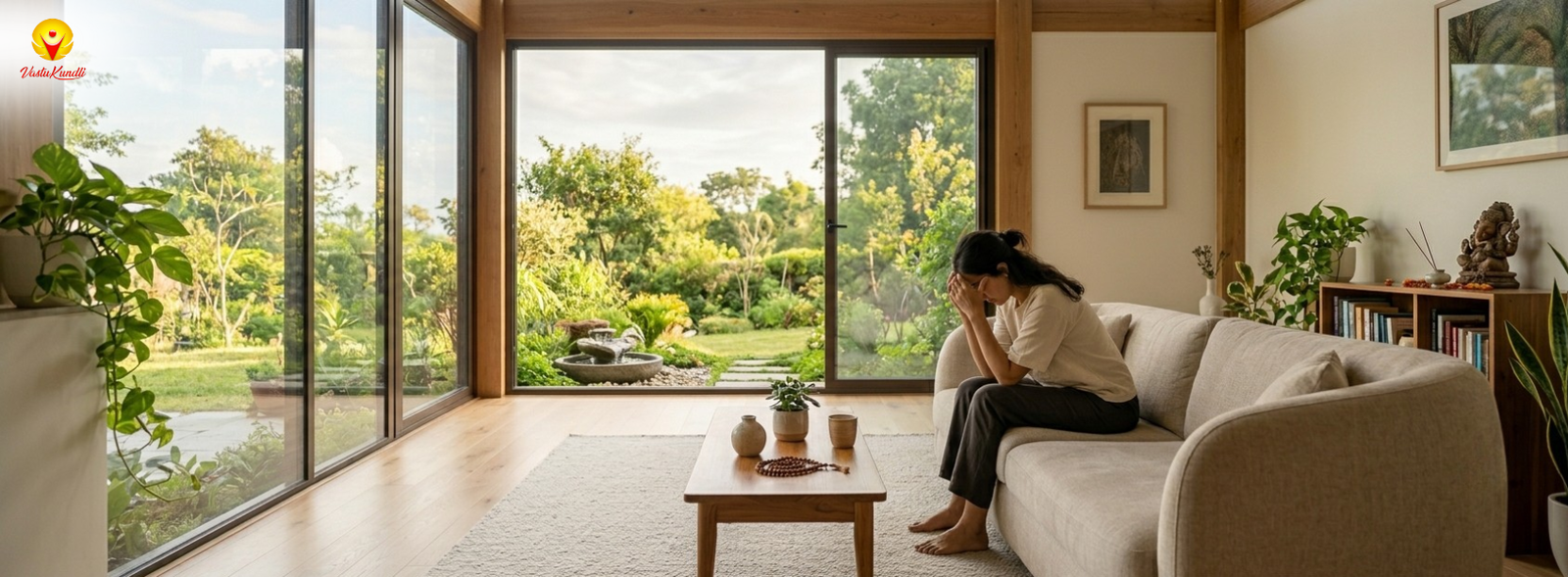
How Specific Vastu Defects Manifest as Depression
Different Vastu imbalances create recognizable patterns of mental and emotional disturbance. Understanding these connections helps identify whether your environment is contributing to your mental health struggles.
Northeast blockages or bathroom placement almost universally create depression characterized by hopelessness, loss of purpose, inability to see possibilities, and spiritual disconnection. This is the heavy, existential depression where nothing feels meaningful and the future looks uniformly bleak.
Southwest deficiencies manifest as anxiety-driven depression with feelings of insecurity, groundlessness, fear about the future, and inability to relax or feel safe. This is the restless, worried depression that keeps you up at night catastrophizing about everything that could go wrong.
Southeast bedroom placement leads to agitated depression with irritability, anger, emotional volatility, and eventual exhaustion and burnout. People in Southeast bedrooms often cycle between anxious hyperactivity and depressive crashes.
Northwest imbalances create unstable moods, scattered thinking, inability to commit or follow through, and a vague sense of being adrift without direction. This is the unfocused, restless depression that makes it hard to complete anything or feel anchored.
Entrance defects blocking positive energy flow create a pervasive sense of struggle, obstacles, and nothing ever working out despite efforts. This is the frustrated, defeated depression where you feel like you are fighting against invisible resistance constantly.
Missing corners or irregular home shapes create energetic voids that manifest as persistent feelings that something essential is missing from life, even when external circumstances seem fine.
When you recognize these specific patterns in your own experience, you can target remedies to the exact imbalances creating your mental health challenges rather than just treating generalized symptoms.
The Role of Light and Darkness in Mental Health
Natural light is one of the most critical factors for mental health, and Vastu gives specific guidance about optimizing light flow through your home.
The Northeast should be the brightest, most open area of your home, allowing maximum morning sunlight. This direction governs mental clarity and emotional uplift. When Northeast is dark, blocked, or occupied by solid structures, it creates mental darkness that contributes significantly to depression.
Bedrooms should have adequate natural light during the day while being able to achieve complete darkness at night. Circadian rhythm disruption from inadequate light exposure or inability to darken rooms creates hormonal imbalances that directly trigger depression and anxiety.
Living spaces in the North and East benefit from maximum light exposure as these directions support mental activity, social connection, and vitality. Homes where these areas are dark or closed off create isolation and withdrawal that deepens depression.
In North American homes with basements, the downward energy and lack of natural light in below-ground spaces make them particularly problematic for mental health. People spending significant time in basements, especially for sleeping or working, show higher rates of depression regardless of how nicely finished those spaces are.
The remedy is increasing natural light wherever possible, using full spectrum bulbs in areas that cannot access sunlight, keeping Northeast zone maximally open and bright, and avoiding extended time in basement spaces.
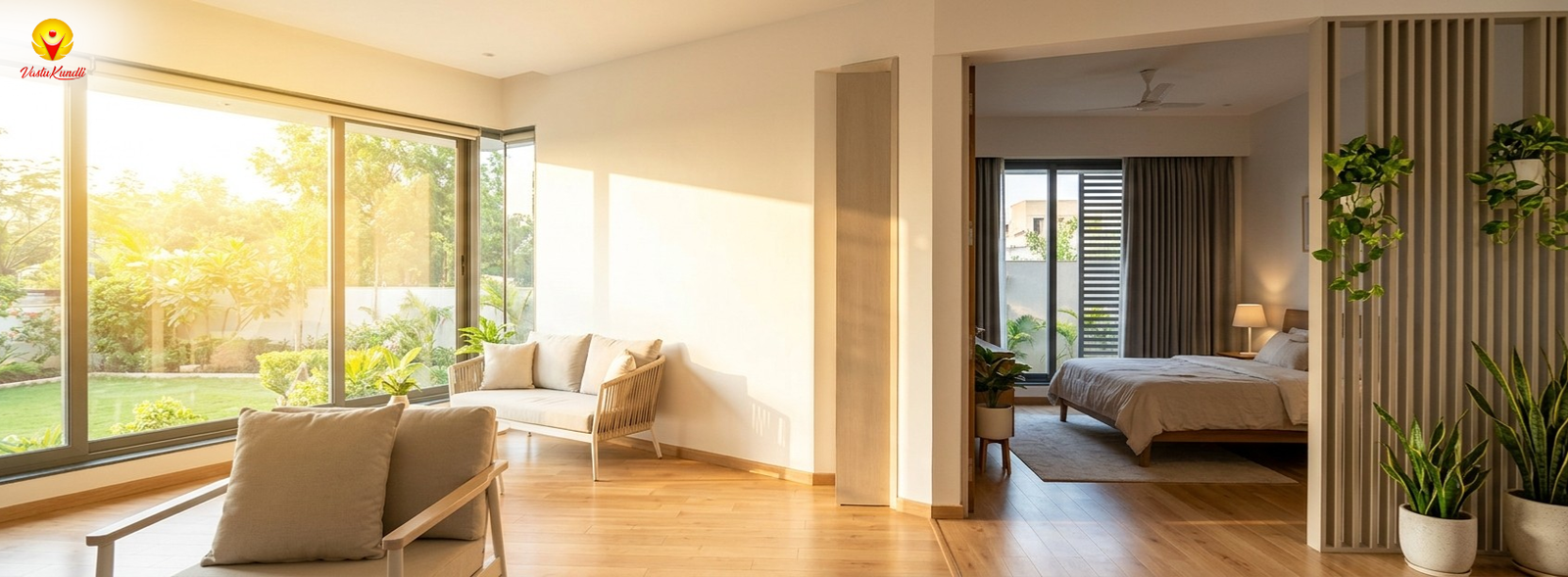
How Clutter and Stagnation Create Mental Fog
Environmental chaos creates mental chaos. This is not metaphor. This is direct energetic cause and effect.
Clutter blocks energy flow through your home, creating stagnation that manifests psychologically as stuck thinking, inability to make decisions, feeling overwhelmed, and a general sense of heaviness. When you cannot move freely through your space, energy cannot move freely through your consciousness.
Hoarding tendencies and excessive accumulation are both symptom and cause of depression. Depression makes it hard to organize and release. Disorganization deepens depression. The cycle perpetuates itself.
In USA and Canada homes where consumerism and busy lifestyles lead to accumulation, many people live surrounded by far more possessions than they need or use. Every unused item carries energetic weight. Closets stuffed with clothes never worn. Garages filled with equipment gathering dust. Storage units rented to hold things with no current purpose.
This physical burden creates psychological burden that contributes to the mental heaviness characteristic of depression.
Clearing clutter is one of the fastest ways to create energetic shift and corresponding mental relief. Not organizing clutter into prettier containers. Actually releasing and removing items that no longer serve you. The lightness people feel after serious decluttering is not just psychological satisfaction. It is actual energetic liberation.
Bedroom Energy and Its Impact on Mental Health
Where and how you sleep determines your baseline mental and emotional state more than almost any other environmental factor because you spend one third of your life in this vulnerable, receptive state.
Bedrooms in heavy, dense zones like Southwest or South can create lethargy, low motivation, and difficulty engaging with life. You wake up already tired, already defeated, already wanting to return to sleep and avoid the day.
Bedrooms in overly active zones like Southeast create disturbed sleep, racing thoughts, anxiety, and inability to rest deeply. You may sleep sufficient hours but never feel truly restored.
Bedrooms with attached bathrooms, especially when the bathroom is in the Northeast corner of the room, create dampness and stagnation that manifests as mental fog, emotional numbness, and low energy depression.
Beds positioned incorrectly create specific mental disturbances. Sleeping with your head toward the North creates mental agitation and disturbed thoughts. Sleeping under beams creates downward pressure that manifests as feeling crushed or trapped. Sleeping facing mirrors creates self-consciousness and internal monitoring that prevents psychological rest.
Electronics in bedrooms create electromagnetic interference that disrupts sleep architecture, preventing the deep sleep stages necessary for emotional regulation and mental health. People sleeping surrounded by devices show increased depression and anxiety even when they believe the technology does not bother them.
For people struggling with depression and anxiety in USA and Canada, bedroom optimization often produces faster mental health improvement than months of other interventions because it addresses the root energetic environment affecting your consciousness during your most vulnerable hours.
The Main Entrance and Life Energy Flow
Your main entrance determines the quality and quantity of energy flowing into your entire life, not just your home. When this is blocked, misaligned, or facing negative features, it creates a fundamental constriction that manifests psychologically as feeling stuck, limited, and unable to access opportunities or joy.
Entrances facing dead ends, walls, or abandoned buildings create the mental experience of hitting obstacles everywhere you turn. Nothing flows easily. Everything requires excessive effort. This persistent frustration and struggle contributes significantly to depression.
Cluttered, dark, or poorly maintained entrances signal to your subconscious that you do not welcome positive energy or experiences into your life. This becomes a self-fulfilling prophecy as you unconsciously close yourself off from connection, opportunity, and vitality.
Entrances that open directly to staircases create rushing energy that prevents grounding and stability. People in such homes often feel scattered, uncentered, and unable to find their footing mentally or emotionally.
Simple improvements to entrance quality often create disproportionate shifts in mood and life experience because you are quite literally opening the door to better energy flow.
Simple Remedies to Address Vastu Related Depression
The encouraging truth is that Vastu solutions for mental health do not require major renovation or expense. Strategic adjustments can create profound shifts.
Clear and brighten your Northeast zone above all else. Remove storage, open windows, use mirrors to amplify light if needed, keep this area minimally furnished and maximally bright. This single change often produces noticeable mental clarity and mood lift within weeks.
Evaluate and optimize your bedroom. If possible, move to a more favorable zone. If not, reposition your bed to avoid North head direction, remove all electronics, eliminate clutter, ensure adequate darkness at night and light during day.
Strengthen your Southwest if it contains bathrooms or is weakened. Use earth element colors, heavy wooden furniture, keep bathroom doors closed, add weight and stability to this zone to create the grounding that reduces anxiety.
Declutter ruthlessly throughout your home. This is not about organization. This is about release. Let go of everything not actively contributing to your current life. The mental space this creates is tangible and immediate.
Maximize natural light especially in Northeast, North, and East areas. Open curtains, trim exterior vegetation blocking windows, use light colors on walls to reflect and amplify available light.
Address entrance issues. Clear the pathway, improve lighting, add welcoming elements like healthy plants, ensure the door opens fully and easily, remove anything creating visual obstacles or heaviness.
Create electronic free zones especially in bedrooms. Turn off WiFi at night. Charge phones outside the bedroom. Reduce electromagnetic pollution that interferes with nervous system regulation.
Introduce living plants to improve air quality and bring vital energy into stagnant areas. Plants are living proof that growth is possible and their presence subtly shifts psychological state.
These remedies work synergistically with therapy, medication, and other mental health interventions, not as replacements but as essential environmental support that makes everything else more effective.
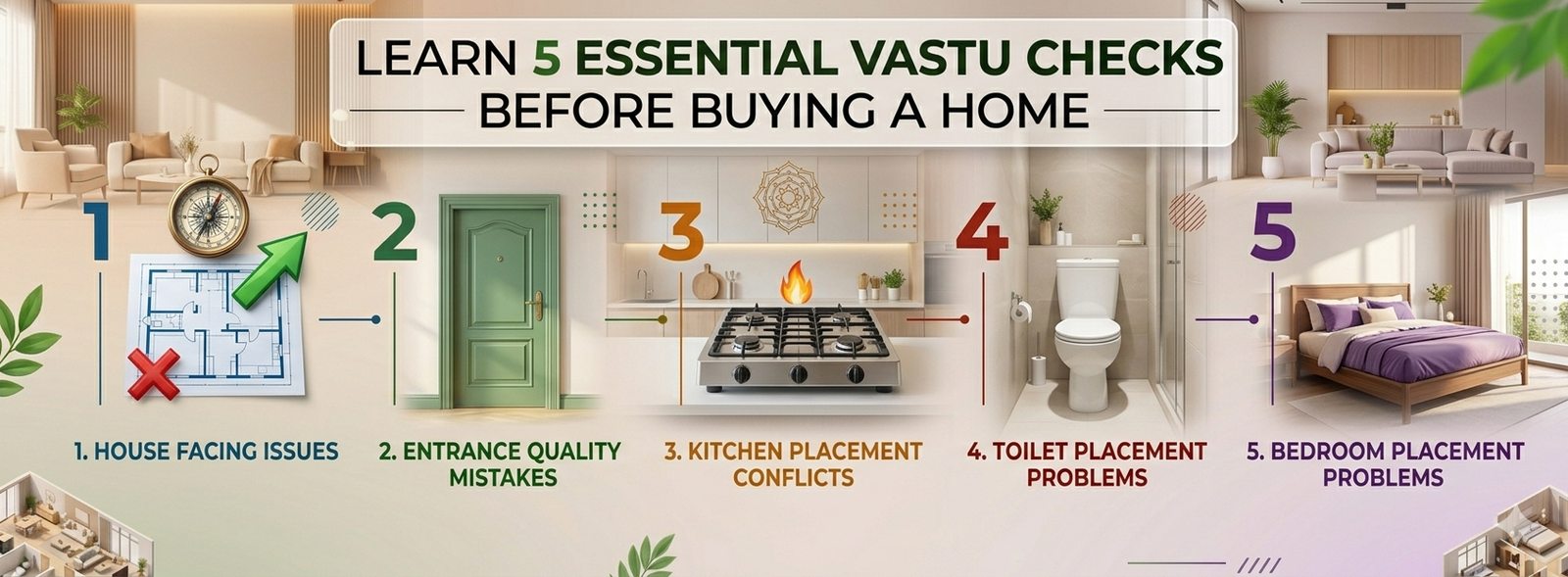
Learn 5 Essential Vastu Checks Before Buying a Home
Even before consulting an expert, families can perform 5 essential checks themselves:
- House Facing Issues – The direction your home faces affects overall energy and growth.
- Entrance Quality Mistakes – The main door controls how positive energy enters the house.
- Kitchen Placement Conflicts – Wrong kitchen direction can disturb health and finances.
- Toilet Placement Problems – Poor toilet location can weaken wealth and health zones.
- Bedroom Placement Problems – Incorrect bedroom zone can affect sleep and relationships.
These simple checks are just the start. To learn them in depth, with practical applications for homes in the USA and Canada, you need a comprehensive understanding beyond surface awareness.
Join our live course “5 Essential Vastu Checks Before Buying a Home.”
This course will guide you step-by-step to evaluate any property before making a purchase, helping you avoid mistakes that lead to stress, financial strain, and family discomfort. Families who take this course leave with actionable insights they can implement immediately, whether they’re buying a new home or checking an existing property.
Go to the course section and join our live course today to gain major Vastu insights for every home decision.
Book Your Comprehensive Vastu Health Report
For families ready to buy or even after selecting a property, our Vastu Health Report is invaluable. Unlike a casual consultation, this report examines 30+ critical parameters of your home, including:
Main door alignment and entrance energy, kitchen orientation and placement, bedroom and study room energy, clutter and lighting analysis, and hidden energy zones affecting health, wealth, and relationships.
By checking all these parameters, families can identify and correct energy blockages before moving in, ensuring long-term harmony, prosperity, and well-being.
Book your personalized Vastu Health Report in the consultation section today because your home should nurture your family, not drain it.
About Our Vastu Expert – Gaurav Jindl
Gaurav Jindl brings over two decades of experience helping families in USA and Canada address mental health challenges through practical Vastu application. His approach recognizes that depression and anxiety often have environmental components that conventional treatment overlooks.
Rather than recommending impossible renovations, Gaurav specializes in achievable remedies that work within the constraints of North American architecture and lifestyle. He understands you cannot rebuild your home, so he focuses on strategic adjustments that produce measurable mental health improvements.
Hundreds of families have experienced significant relief from depression, anxiety, and mood disorders by implementing his straightforward, culturally adapted Vastu solutions designed specifically for contemporary homes in USA and Canada.
Practical Advice for Families in the USA and Canada
Mental health challenges are incredibly common, and environmental factors play a larger role than most people realize. When working with homes in USA and Canada, focus on what you can control.
You likely cannot change your home’s orientation or major structural features. But you can optimize bedroom placement, maximize natural light, manage clutter, address entrance energy, balance directional elements, and create spaces that support rather than undermine mental wellness.
Start with the changes that feel most accessible. If decluttering feels overwhelming, begin with one room. If bedroom changes seem difficult, start with removing electronics. Small consistent improvements create momentum.
Observe your mental state as you make adjustments. Notice whether certain changes correlate with mood shifts. This builds trust in the process and helps you identify which specific remedies create the most benefit for you.
Combine Vastu with professional mental health care. These approaches complement each other. Continue therapy and medication as prescribed while also addressing environmental factors contributing to your struggles.
Final Thoughts
Depression is isolating and exhausting. When you are in it, everything feels heavy and hopeless. Finding the energy to make any changes seems impossible. But environmental adjustments do not require the same psychological effort as behavioral changes. You change your space once, and it continues supporting you automatically.
Your home should be your refuge, your restoration zone, your source of renewal. When the energy of your environment works against your mental health, even strong people eventually break down under that constant invisible pressure.
The families who experience the most profound mental health improvements through Vastu are those who approach it with practical curiosity. You do not need to believe in anything mystical. You simply need to be willing to make strategic environmental adjustments and honestly observe whether your mental state shifts.
For many people struggling with depression and anxiety, addressing Vastu imbalances provides the missing piece that allows other treatments to finally work effectively. The medication can regulate neurotransmitters, and therapy can shift thought patterns, but if your living environment continues draining your vitality daily, full recovery remains elusive.
You deserve to live in a space that supports your mental wellness, not undermines it. Sometimes the path out of depression begins not with changing yourself, but with changing your environment.
Frequently Asked Questions
Q. Can changing my home’s Vastu really help with clinical depression?
Vastu addresses environmental factors contributing to depression and works synergistically with medical treatment. Many people experience significant mood improvement when energetic imbalances are corrected, though this should complement rather than replace professional mental health care. Environmental energy affects brain chemistry and nervous system function in measurable ways.
Q. What is the single most important Vastu change for mental health?
Clearing and brightening the Northeast zone produces the most consistent mental health benefits. This direction governs mental clarity and emotional lightness, and optimizing it often creates a noticeable mood lift within two to four weeks. Combined with proper bedroom placement, these two factors address the majority of Vastu-related depression.
Q. How long before I notice mental health improvements from Vastu changes?
Most people notice initial shifts within two to three weeks, with more substantial improvements developing over two to three months as their nervous system fully adjusts to the improved environment. Acute anxiety often responds faster than chronic depression, which requires more time to shift established patterns.
Q. Can Vastu help with anxiety and panic attacks?
Yes, particularly when anxiety stems from Southwest deficiencies creating groundlessness or Southeast excesses creating agitation. Strengthening stability zones and calming fire element through strategic remedies often reduces anxiety significantly. Removing electronics and optimizing bedroom energy also directly impacts anxiety levels.
Q. Should I stop medication if Vastu improvements help my mood?
Never stop psychiatric medications without consulting your prescribing physician. Use Vastu as complementary support that may eventually allow medication reduction under medical supervision, but do not make changes independently. The goal is to support your mental health through multiple approaches simultaneously.