
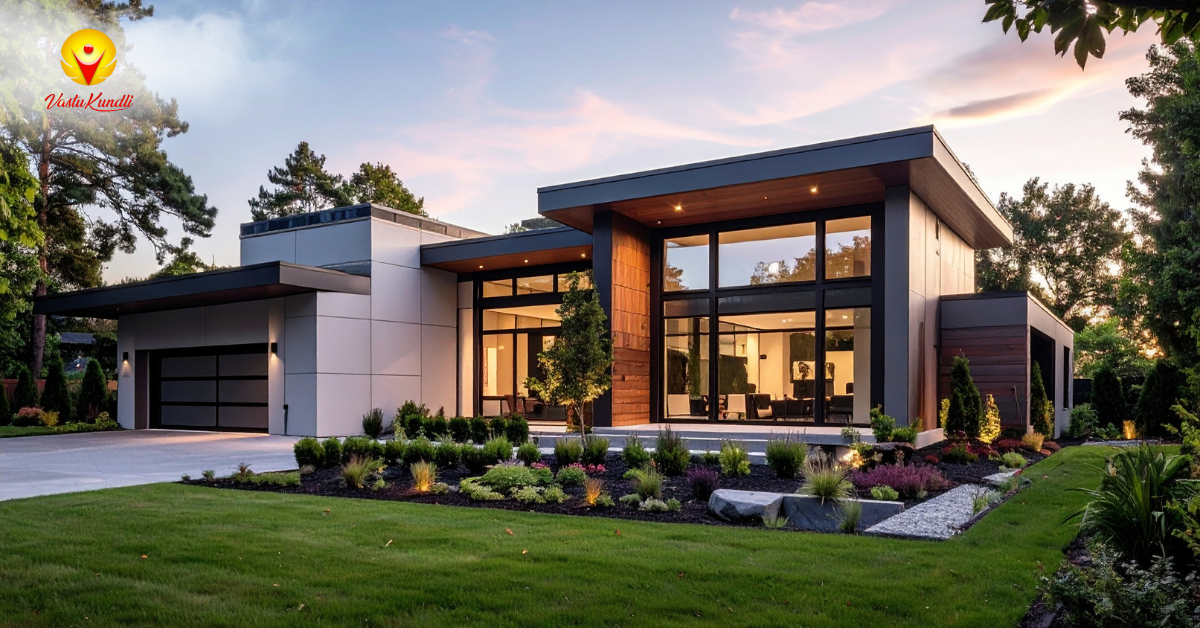
There’s a piece of Vastu advice that gets repeated so often it’s become accepted as absolute truth among Indian families. South-facing homes are bad. Don’t buy them. Walk away no matter what. This blanket statement has caused countless families to reject perfectly good properties in the USA and Canada based on fear rather than understanding. The reality about south-facing homes is far more nuanced than this oversimplified rule suggests and families who understand the actual principles can make much better decisions about which properties truly serve their needs.
The confusion around south-facing homes comes from taking traditional principles out of context and applying them rigidly to modern North American architecture without proper adaptation. In traditional Indian Vastu practice developed for specific climate conditions and building styles, certain directional guidelines made perfect sense. But when you transplant those same rules to a split-level home in Toronto or an open concept house in California without understanding the underlying energy principles, you end up with guidance that doesn’t always fit the actual situation.
Akshay and Shruti discovered this firsthand when relocating to Austin for Akshay’s tech job. They found a beautiful home in an excellent school district within their budget with a layout they loved. Everything about the property felt right when they toured it. The energy in the space was welcoming and warm. The neighborhood was perfect for their young family. But when they checked the compass, their hearts sank. The main entrance faced south.
Their parents back in India were adamant. Don’t buy a south-facing home under any circumstances. It will bring career problems, health issues, and financial struggles. Akshay and Shruti agonized over the decision. They loved this house but didn’t want to invite bad energy into their lives. They consulted with a Vastu expert who actually evaluated the complete property rather than just noting the entrance direction. The expert explained that south-facing isn’t automatically problematic and showed them why this particular home actually had very good energy structure despite the southern entrance. The layout, the internal room placements, and several other factors made it energetically sound.
They bought the home and have thrived there for four years now. Akshay received two promotions. Shruti launched a successful consulting business. Their children are happy and healthy. The family’s finances have grown steadily. None of the doom their parents predicted materialized because the blanket rule about south-facing homes was never as absolute as commonly believed. Understanding when south-facing works and when it doesn’t matters far more than blindly following oversimplified guidance.
Understanding the Traditional Context of Directional Concerns
The traditional Vastu caution about south-facing homes developed in specific geographic and climatic contexts that don’t necessarily apply to all locations in North America. In much of India, the southern exposure brings intense heat and harsh sunlight for large portions of the year. Homes facing south would receive this direct heat impacting comfort and requiring more energy for cooling. The association between south-facing and discomfort had very practical roots.
Additionally in traditional construction without modern climate control, directional orientation affected how a home functioned throughout the year. The cooler northern exposures were preferred for certain activities. The eastern morning light had specific qualities. These considerations mattered tremendously when homes relied entirely on natural ventilation, sunlight, and seasonal breezes for comfort and livability.
Traditional single-story courtyard homes also functioned differently than modern multi-story North American houses. The way energy moved through traditional architecture informed directional guidelines that don’t translate directly to split-level colonials, open concept ranches, or townhouses with shared walls. The underlying principles remain valid but their application needs adaptation for completely different building types.
In North America, you have dramatically different climate zones from Florida heat to Canadian winters. A south-facing home in Minnesota receives welcome sunlight and warmth in winter that’s quite beneficial. The same southern orientation in Arizona creates different conditions. Applying a single universal rule about south-facing homes across such varied contexts doesn’t account for how geography affects directional impact.
Modern construction also includes insulation, HVAC systems, and window treatments that completely change how directional exposure affects interior conditions. You can control temperature, light, and air quality regardless of which direction your home faces. This technological reality means directional concerns must focus more on energetic and subtle influences rather than purely physical comfort factors that are now easily managed.
The Real Factors That Make South-Facing Work or Not Work
What actually matters about a south-facing home isn’t the direction itself but rather how the entrance is positioned within the southern wall and what the overall energy structure of the property looks like. A south-facing home can be excellent or problematic depending on several specific factors that require actual evaluation rather than blanket rejection.
The exact position of the main door within the southern wall is critical. The south direction divides into multiple zones or padas. Some zones within the southern direction are favorable for entrances while others are less supportive. An entrance in the fourth pada from the southeast corner of the south wall functions very differently than an entrance in the center of the south wall. Families who reject all south-facing homes miss this important distinction.
Even more important is which entrance you actually use daily. Many North American homes have an architectural front door facing the street but families enter primarily through a garage or side door. If your south-facing front door is just for show and you actually enter daily through an east or north-facing garage entrance, then functionally your home’s energy entry point isn’t south at all. The direction of your used entrance matters more than the direction of your unused architectural entrance.
The internal layout and room placements affect whether a south-facing home supports your family or creates challenges. A south-facing home with excellent bedroom zones, well-placed kitchen, and favorable bathroom locations might serve you far better than a north-facing home with center bathrooms and problematic room assignments. Directional orientation is one factor among many not the only factor determining energy quality.
The quality of the entrance area itself also matters significantly. A south-facing entrance that’s well-lit, spacious, and properly maintained invites better energy than a north-facing entrance that’s dark, cramped, and cluttered. How you treat and optimize your entrance affects energy flow regardless of direction. Families fixating on direction while ignoring entrance quality miss crucial opportunities for improvement.
Your personal astrological factors can also influence how different directions affect you specifically. Some individuals thrive with southern energy based on their birth chart and life circumstances. Others might need to be more cautious. Blanket rules don’t account for individual variations that a proper consultation would reveal.
How Climate and Geography Affect South-Facing Homes
The physical location of your property dramatically affects whether south-facing orientation creates benefits or challenges. In northern USA states and throughout Canada, southern exposure brings valuable sunlight and passive solar heating during long cold winters. The warmth and light from southern windows reduce heating costs and create bright cheerful interiors during months when daylight is limited.
A south-facing home in Minnesota, Wisconsin, or Alberta receives direct sun that makes the property more energy efficient and livable during harsh winters. Rejecting such properties based on directional concerns ignores significant practical advantages that southern orientation provides in cold climates. The traditional Indian concern about excessive southern heat simply doesn’t apply in regions where winter heating is a bigger challenge than summer cooling.
Even in moderate climates like the Pacific Northwest where summers are mild, southern exposure isn’t the intense heat concern it would be in desert or tropical locations. Seattle or Portland homes facing south receive pleasant light without overwhelming heat for much of the year. Modern windows and shading can manage the summer sun easily making directional exposure a non-issue from a comfort perspective.
Conversely in very hot regions like Arizona, Texas, or southern California, southern exposure does require more attention to sun management. But modern construction with proper insulation, window films, and landscaping handles this effectively. And even in hot climates, the energetic aspects of south-facing homes depend on factors beyond just the directional orientation itself.
Latitude also matters for how sun angles affect different exposures. Southern homes in Canada experience sunlight at different angles than southern homes in Florida. The seasonal variation in daylight length and sun position changes how directional orientation impacts the property throughout the year. What works in one latitude might need different consideration in another.
Corrections and Optimizations for South-Facing Homes
If you have or are considering a south-facing property, there are numerous practical corrections and optimizations that make these homes function beautifully from an energy perspective. You don’t need demolition or major construction to address directional concerns. Simple adjustments create significant improvements.
The most powerful correction is using a different entrance as your primary entry point if your home has multiple options. Many North American homes have a formal front door plus a garage entry or side door. If your south-facing front door concerns you energetically, make your garage entrance or side door your daily entry point. The entrance you use most frequently becomes your energetic main door regardless of architectural designation. This simple shift completely changes your home’s functional orientation.
Entrance area optimization makes tremendous difference regardless of direction. Keep your south-facing entrance extremely clean, well-lit, and welcoming. Add lighting that creates brightness even at night. Place a high-quality doormat in an auspicious color. Remove any clutter or obstacles blocking the entrance path. These enhancements improve energy quality regardless of directional concerns and often resolve issues families attributed to direction when the real problem was entrance neglect.
Strategic use of colors and elements at the entrance can balance directional energy. Certain colors and materials help harmonize southern fire energy creating more favorable entry conditions. These are simple decorative choices requiring no construction that meaningfully shift how energy enters your home.
Interior room purpose assignments offer another correction approach. If certain family members would benefit from different directional influences, assign bedrooms strategically based on who sleeps where. The master bedroom, children’s rooms, guest rooms, and home offices don’t have fixed requirements. You can optimize who occupies which space based on energy needs.
Furniture placement and arrangement within rooms affects how directional energy manifests in your daily life. The direction your bed faces while sleeping, which way your desk points while working, how seating is arranged in living areas, all of these influence your interaction with the home’s directional structure. Thoughtful arrangement optimizes energy flow without changing the building itself.
Landscaping and external features around a south-facing entrance can moderate energy entry. Strategic placement of plants, lighting, or water features creates more favorable approach and entry experience. The pathway to your entrance matters as much as the entrance itself.
When South-Facing Truly Becomes Problematic
While south-facing homes aren’t automatically bad, there are specific situations where southern orientation combines with other factors to create genuine concerns worth considering carefully before purchase or requiring significant correction efforts after purchase.
A south-facing entrance that opens directly into the main living space without any foyer or transition area creates energy rushing regardless of direction but the southern fire energy compounds the issue. This combination of challenging direction and poor entrance structure multiplies problems. You get rapid energy entry with no buffer space plus the particular qualities of southern energy creating a situation that requires substantial correction.
Extremely tight or cramped south-facing entrances also amplify directional concerns. If your south door opens into a small dark hallway or immediately faces a wall, the constricted energy flow combines with directional factors creating blockages and stagnation. The entrance quality problem makes the directional aspect more challenging than it would be with a spacious well-designed entry.
When a south-facing home also has multiple other Vastu defects like center bathrooms, problematic kitchen placement, and bedrooms in unfavorable zones, the cumulative effect of multiple issues becomes harder to manage. South-facing orientation alone is workable. South-facing plus four or five other major defects creates a property that’s energetically challenging overall. The direction becomes one problem among many rather than an isolated concern.
Very specific entrance positions within the south wall can be more problematic than others. The exact pada or subsection where the door sits matters. Some positions are quite favorable even within a southern wall. Others are genuinely challenging and would require more extensive corrections or might make a property better to avoid unless other factors strongly compensate.
For some individuals based on personal astrological factors, southern energy specifically doesn’t align well with their chart. This is where personalized consultation becomes valuable because blanket rules don’t account for individual variations. What works for one person might genuinely create challenges for another based on factors beyond the property itself.
Evaluating South-Facing Properties Holistically
When you encounter a south-facing property that otherwise appeals to you, the right approach is comprehensive evaluation rather than automatic rejection. Look at the complete energy picture not just the entrance direction in isolation.
Check the internal room placements thoroughly. Are bathrooms in favorable positions or do they drain critical zones. Is the kitchen well-placed directionally. Do bedroom locations support rest and relationships. Is the Brahmasthan or center clear of bathrooms. These factors affect your daily life more directly than entrance direction and they’re worth evaluating carefully.
Assess the overall layout and energy flow through the home. Does the floor plan create energy circulation or rushing. Are there natural divisions between public and private spaces. Does light move through the home well. Is there a sense of containment and organization or chaos and openness. How the home feels energetically matters more than which direction it faces.
Consider your actual lifestyle and how you’ll use the property. If you’ll enter daily through the garage and rarely use the south-facing front door, the functional orientation isn’t really south. If you work from home and will spend most time in interior rooms, the entrance direction has less daily impact than if you’re constantly coming and going through that door.
Evaluate what corrections would be needed and whether you’re willing and able to implement them. Some south-facing homes need minimal adjustment. Others require more attention. Understanding the correction scope before purchase helps you make informed decisions about whether the property is worth it given what you’d need to do after moving in.
Consider the complete package of location, price, property condition, neighborhood quality, schools, and commute alongside Vastu factors. A south-facing home in a perfect location at a good price with minor correctable energy issues might serve you far better than a north-facing home in a poor location at inflated price even if the north-facing orientation is theoretically more favorable.
The Psychology of Directional Fears
Beyond the actual energetic considerations, it’s worth examining the psychological impact of directional fears themselves. If you buy a south-facing home while believing it’s inherently unlucky, your own mind creates negative expectations that might manifest as self-fulfilling prophecy. Your belief system affects outcomes as much as the actual energy structure.
Families who purchase south-facing homes with confidence in their evaluation and corrections tend to thrive because they’re not carrying fear and doubt into their daily environment. They’ve done their homework, implemented appropriate optimizations, and moved forward with positive expectation. This mental clarity creates very different outcomes than living in constant worry that your home’s direction is working against you.
Conversely some families reject south-facing homes and buy north-facing properties while ignoring serious Vastu defects in those north-facing homes. They feel safe because of the favorable entrance direction and overlook center bathrooms or problematic layouts. Their directional fixation blinds them to more significant issues. They end up in homes with worse overall energy because they prioritized one factor over comprehensive evaluation.
The emotional attachment to rigid rules also prevents families from seeing opportunities. They develop such strong beliefs about what’s allowed and forbidden directionally that they can’t evaluate properties on their actual merits. This rigidity limits options unnecessarily and might cause families to settle for less suitable homes just to avoid forbidden directions.
Understanding that Vastu is about optimization not perfection helps create healthier psychology around home selection. You’re looking for homes that support your family well not homes that follow every traditional rule perfectly. This practical mindset opens up more possibilities and reduces the anxiety that comes from trying to find impossible ideal properties.
Learn 5 Essential Vastu Checks Before Buying a Home
Even before consulting an expert, families can perform 5 essential checks themselves:
- House Facing Issues – The direction your home faces affects overall energy and growth.
- Entrance Quality Mistakes – The main door controls how positive energy enters the house.
- Kitchen Placement Conflicts – Wrong kitchen direction can disturb health and finances.
- Toilet Placement Problems – Poor toilet location can weaken wealth and health zones.
- Bedroom Placement Problems – Incorrect bedroom zone can affect sleep and relationships.
These simple checks are just the start. To learn them in depth, with practical applications for homes in the USA and Canada: Join our live course “5 Essential Vastu Checks Before Buying a Home.” This course will guide you step-by-step to evaluate any property before making a purchase, helping you avoid mistakes that lead to stress, financial strain, and family discomfort. Families who take this course leave with actionable insights they can implement immediately whether they’re buying a new home or checking an existing property.
Go to the course section and join our live course today to gain major Vastu insights for every home decision.
Book Your Comprehensive Vastu Health Report
For families ready to buy or even after selecting a property, our Vastu Health Report is invaluable. Unlike a casual consultation, this report examines 30 plus critical parameters of your home, including main door alignment and entrance energy, kitchen orientation and placement, bedroom and study room energy, clutter and lighting analysis, and hidden energy zones affecting health, wealth, and relationships.
By checking all these parameters, families can identify and correct energy blockages before moving in, ensuring long-term harmony, prosperity, and well-being.
Book your personalized Vastu Health Report in the consultation section today because your home should nurture your family, not drain it.
About Our Vastu Expert – Gaurav Jindl
Gaurav Jindl has helped hundreds of families navigate the fear and confusion around directional concerns including the widespread anxiety about south-facing homes. He specializes in contextual Vastu evaluation for North American properties understanding that traditional rules require thoughtful adaptation for modern Western architecture and varied climate zones.
His approach emphasizes comprehensive assessment over simplistic directional rejection. He teaches families to evaluate the complete energy structure of properties rather than making decisions based on single factors like entrance direction. He’s helped many families successfully purchase and optimize south-facing homes that support their prosperity and wellbeing beautifully.
Gaurav provides practical correction strategies that work within North American building constraints and lifestyle patterns. He understands which directional concerns are truly significant versus which are overstated and how to optimize properties regardless of their facing direction through room assignments, entrance modifications, and simple non-structural adjustments.
Practical Advice for Families in the USA
Don’t automatically reject south-facing properties without evaluating them comprehensively. You might eliminate excellent homes based on misunderstood traditional advice while overlooking genuinely problematic homes that face favorable directions but have serious internal defects.
When evaluating south-facing homes, check the exact entrance position within the southern wall not just the general direction. The specific pada placement matters significantly and some positions are quite favorable even within the southern orientation.
Consider your actual daily entrance patterns. If you’ll use a garage or side entrance regularly and rarely use the south-facing front door, your functional orientation isn’t south regardless of architectural designation.
Evaluate climate and geography in your decision making. South-facing homes in cold climates often provide significant benefits through solar gain and natural lighting that offset any energetic concerns about direction.
Focus on comprehensive energy assessment including internal room placements, bathroom locations, kitchen zones, and overall flow rather than fixating exclusively on entrance direction.
Final Thoughts
Akshay and Shruti are grateful they didn’t blindly follow the blanket advice to reject all south-facing homes. Their Austin house has supported career growth, family harmony, and financial prosperity for four years now. The entrance direction that initially concerned them turned out to be completely manageable through understanding and simple optimizations. Had they rejected this property based on oversimplified rules, they would have missed a home that’s served them beautifully.
The question isn’t whether south-facing homes are bad. The question is whether a specific property with a southern orientation has overall energy structure that supports your family with or without reasonable corrections. Some south-facing homes are problematic. Others are excellent. The direction alone doesn’t determine the outcome. Comprehensive evaluation does.
Traditional Vastu wisdom contains profound understanding of how directional energies affect human wellbeing. But wisdom requires proper application not rigid rule-following without context. When you understand the principles behind directional guidelines, you can evaluate North American homes intelligently making decisions that honor both ancient knowledge and modern reality. Your home should support your family’s thriving and sometimes that perfect home faces south.
Frequently Asked Questions
Q. Are south-facing homes always unlucky or is this an oversimplification?
A. It’s an oversimplification. South-facing orientation requires more careful evaluation and possibly corrections but isn’t automatically unlucky. The exact entrance position, internal layout, your personal factors, climate, and how you use the entrance all affect whether a south-facing home supports you well. Comprehensive assessment matters more than blanket rejection.
Q. What corrections can make a south-facing home work well?
A. Use a different entrance as your daily entry point if available. Optimize the south entrance area with lighting, cleanliness, and welcoming features. Assign rooms strategically based on energy needs. Use colors and elements that balance southern fire energy. Arrange furniture thoughtfully. These simple non-structural corrections significantly improve south-facing homes.
Q. Does living in a cold climate change how south-facing homes work energetically?
A. Yes, climate affects both physical and energetic aspects. In cold climates, southern exposure provides valuable light and warmth that’s beneficial practically and can offset energetic concerns. Traditional advice developed in hot climates doesn’t translate directly to regions where southern sun is welcome rather than problematic most of the year.
Q. Should I trust my own feelings about a south-facing home or follow traditional rules strictly?
A. Integrate both. If a south-facing home feels welcoming and positive when you visit and comprehensive evaluation shows the internal layout is good, your positive sense matters. But also address any legitimate concerns through corrections. Don’t ignore red flags based purely on feeling but don’t reject homes that feel right based purely on rigid rules either.
Q. Can a south-facing home actually be better than a north-facing home with problems?
A. Absolutely. A south-facing home with excellent internal room placements, no center bathrooms, good kitchen location, and favorable bedroom zones can serve you far better than a north-facing home with center toilets and problematic layout. Focus on overall energy quality not just entrance direction.
