
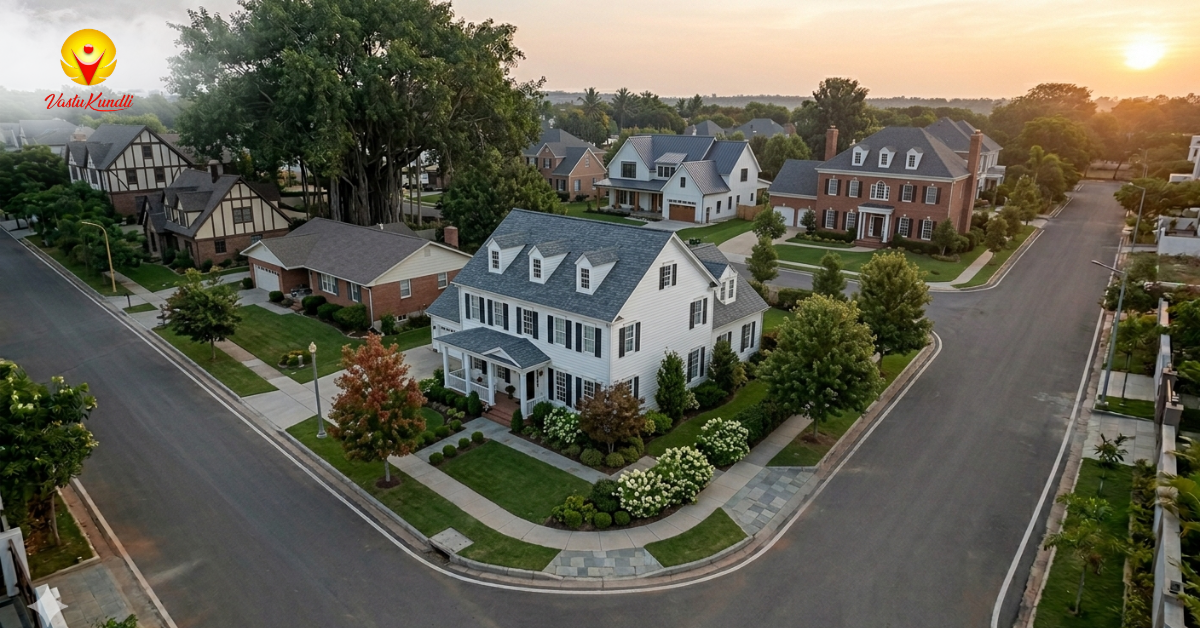
Corner lots carry a special appeal in the North American real estate market. They’re often priced higher than mid-block properties because they offer more yard space, additional windows for natural light, and a sense of prominence in the neighborhood. Real estate agents tout corner lots as premium properties highlighting the extra land, the enhanced curb appeal from two street exposures, and the perceived prestige of these highly visible homes. Many families specifically seek out corner properties believing they’re getting something special.
But from a Vastu perspective, corner lots present unique energy considerations that most families never evaluate before purchase. These properties sit at the intersection of two streets creating directional influences from multiple sides simultaneously. They have exposure and energy flow patterns completely different from homes nestled mid-block with neighbors on both sides. The question isn’t whether corner lots are universally good or bad but rather understanding when these properties support family wellbeing and when they create energy challenges that require careful attention and correction.
Ritesh and Anjali discovered this complexity when they bought their dream home in a Denver suburb. The property was a beautiful corner lot with the house positioned prominently at the intersection. They loved the extra yard space where their children could play. The additional windows flooding the home with natural light seemed like a huge advantage. The price was actually reasonable compared to mid-block homes in the same development which surprised them but they attributed it to a motivated seller rather than any property concerns.
Within the first year of living there, they noticed patterns they couldn’t quite explain. Despite both having stable jobs, money seemed to flow out as quickly as it came in. Their normally healthy children developed recurring minor illnesses. Ritesh felt constantly exposed and unable to relax fully even in his own home. Anjali experienced unusual anxiety particularly in rooms facing the street intersections. When they finally consulted a Vastu expert about these issues, the consultant immediately identified that their corner lot positioning was creating specific energy patterns affecting their family. The dual street exposure, the particular directional orientations of those streets, and how the house sat at that intersection were all contributing to their challenges.
The expert explained that corner lots aren’t automatically problematic or beneficial. Everything depends on which directions the two streets run, where the house entrance sits relative to those directional exposures, and how the internal layout relates to the external energy flows coming from multiple directions. With proper understanding and corrections, corner lots can actually be quite favorable. Without that knowledge, families might struggle with issues they never connect to their prominent corner positioning.
Understanding Dual Directional Exposure
The fundamental difference between corner lots and mid-block properties is exposure to energy from two street directions simultaneously instead of just one primary street exposure. A mid-block home has neighbors buffering both sides with energy primarily entering from the front street direction. Corner homes sit at intersections receiving active energy flow from two different streets running in two different directions.
This dual exposure means your home interacts with two directional energies rather than one dominant direction. If your corner sits where a north-south street intersects an east-west street, you’re receiving energy influences from two cardinal directions at once. The way these directional energies combine and interact affects how energy moves through your property and into your home.
The specific directions of your two streets matter enormously. A corner where north and east streets meet creates very different energy than a corner where south and west streets intersect. The elemental qualities associated with different directions combine in ways that can either support or challenge family wellbeing depending on the specific combination and how your home is positioned within that intersection.
Additionally corner lots often have less energetic buffering from neighboring properties. Mid-block homes have houses on both sides creating containment and protection. Corner homes are exposed on two sides with only one or no immediate neighbors providing energetic boundaries. This increased exposure can feel liberating and open or it can create sense of vulnerability and energy drainage depending on the specific situation and individual sensitivity.
The lot positioning within the corner also varies. Some corner homes sit right at the intersection point with minimal setback from both streets. Others are set back further from one or both streets. Where your house actually sits within the corner lot affects how directly you receive energy from those two street directions and how that energy circulates around your property before entering your home.
Advantages of Favorable Corner Lot Orientations
When a corner lot sits at the intersection of favorable directional streets and the home is positioned appropriately within that corner, these properties can actually offer significant energetic advantages over mid-block homes. Understanding which corner orientations work well helps you identify opportunities rather than avoiding all corner lots out of unfounded concern.
Corners where north and east streets meet can be particularly favorable especially if the home entrance faces north or east. This combination brings growth energy from the east and wealth energy from the north simultaneously. The dual positive directional influence can enhance opportunities and prosperity when the house positioning and internal layout support proper energy circulation.
Similarly corners with northeast exposure where streets create openness in the northeast quadrant of the property can be beneficial. The northeast is associated with clarity, spiritual energy, and new beginnings in Vastu. Having additional openness and light in this direction through corner lot positioning amplifies these positive qualities if the home layout capitalizes on this exposure properly.
Corner lots often provide more flexibility in entrance positioning. Unlike mid-block homes where the entrance must face the single street, corner properties sometimes allow choosing which street your main entrance addresses. This flexibility means you might be able to select a more favorable entrance direction from the available options based on how the house is designed and oriented.
The additional natural light that corner lots receive from windows on multiple sides can be energetically positive. Good natural light circulation supports vitality and positive energy flow. Corner homes with windows facing favorable directions on multiple sides can capture morning light from the east, wealth-supporting light from the north, and beneficial illumination throughout the day in ways that mid-block homes with windows only on front and back cannot achieve.
Some corner lots offer more land and space which provides opportunities for energetic enhancements through landscaping, water features, or outdoor areas positioned in favorable directional zones of the property. The extra yard space on corner lots can be used strategically to strengthen positive directional areas or buffer challenging ones.
Challenges Created by Unfavorable Corner Positions
Not all corner lot orientations offer advantages. Some corner positions create energetic challenges that require significant attention and correction to prevent ongoing problems for families living there. Understanding these challenging configurations helps you either avoid them during property search or implement necessary corrections after purchase.
Corners where south and west streets intersect can be problematic especially if the home sits prominently at that intersection with main living areas exposed to both directions. The combined fire energy from the south and the settling energy from the west can create heaviness, obstacles to growth, and challenges with health and relationships depending on how the home is oriented and where rooms are positioned.
Southwest corner exposure where the property has significant openness or exposure in the southwest quadrant can create instability issues. The southwest is traditionally associated with grounding and stability. When this area is too open or exposed due to corner lot positioning, it can undermine the sense of security and settled energy that families need for long-term wellbeing.
Corner lots with excessive street noise and activity from both directions create energetic disturbance regardless of the specific directional orientations. If your corner sits at a busy intersection with constant traffic, that chaotic energy affects your home environment. The exposure from two active streets amplifies the disturbance compared to a mid-block home with only one street to manage.
The sense of being on display that comes with prominent corner positioning can create energetic drainage for some families. Corner homes are highly visible from multiple directions. Neighbors and passersby can see into your property from different angles. This exposure can feel energizing to extroverted families but draining to those who need more privacy and energetic protection in their home environment.
Some corner lots create piercing energy patterns where traffic flows converge at the intersection and energy shoots toward the property from two directions. This creates rushing energy similar to what happens inside homes with front and back doors aligned. The external convergence of street energies at your corner can penetrate your property creating restlessness and difficulty retaining positive energy.
Entrance Positioning on Corner Properties
One of the most critical Vastu considerations for corner lots is determining the optimal entrance placement given the unique positioning and directional exposures. Corner properties offer both challenges and opportunities regarding entrance direction that mid-block homes don’t have.
Many corner homes have architectural entrances designed to face one of the two streets prominently. Builders often position the front door to address the more important or trafficked street. This architectural decision might or might not align with favorable entrance directions from a Vastu perspective. You need to evaluate whether the designated entrance actually serves you energetically.
Some corner lot designs include entrances addressing both streets or positioned at an angle facing the corner intersection itself. These angled entrances create directional influences that are combinations of the two street directions. Understanding how these diagonal orientations function energetically requires more nuanced evaluation than simple cardinal direction assessment.
The flexibility of corner lots sometimes allows you to designate a different door as your main entrance than the architectural front door. If your corner home has a side entrance facing a favorable direction or a garage entry with better directional qualities, you can make that your primary entry point and use the architectural front door secondarily. This practical strategy optimizes energy entry without any structural changes.
Consider which street your functional entrance addresses in terms of traffic patterns and energy flow. An entrance facing a quiet side street might function very differently than one facing a busy main road even if both are technically part of your corner lot. The quality and quantity of energy moving past your entrance affects how energy enters your home.
Also evaluate what your entrance faces across the street at a corner lot. Some corner entrances look directly at the intersection point where energies converge. Others face down one of the streets with the intersection to the side. What you see and what directional energy flows you encounter when exiting or entering your home matters for daily energetic experience.
Internal Layout Considerations for Corner Homes
Beyond entrance positioning, the internal room placements within corner homes require attention to how they relate to the dual directional exposures from the two streets. You’re not just evaluating rooms against a single directional grid but considering how each room interacts with energy coming from two different directions simultaneously.
Bedrooms facing the street intersection might receive disturbed energy from converging traffic and activity. Consider whether your sleeping spaces can be positioned on the quieter sides of the home away from the busy corner exposure. Master bedrooms especially benefit from being in protected zones rather than rooms with windows directly overlooking the street convergence.
Living areas and public rooms might actually benefit from corner positioning if the directional energies are favorable. Family rooms or home offices in well-lit corner spaces with windows on two sides can feel energized and open if the directions support those activities. The key is matching room functions to the specific energetic qualities of different areas of your corner home.
Kitchen placement needs evaluation against both street directions not just one. If your kitchen sits in a zone receiving energy from two different directions through the corner exposure, consider whether those combined influences support health and prosperity or create conflicts. The relationship between your kitchen and the external directional flows matters.
Bathrooms on corner lots should ideally not be in rooms with windows facing the street intersections if those directions are unfavorable for water element placement. But the corner positioning might actually allow you to tuck bathrooms into interior zones away from street exposures using the corner lot’s shape to your advantage in room assignment.
Consider using rooms that face challenging directional exposures for less critical functions like storage, laundry, or occasional-use spaces rather than for primary living, sleeping, or cooking areas. The corner lot configuration might give you flexibility to shield important rooms from problematic exposures by strategic room purpose assignment.
Privacy and Energetic Protection Strategies
Corner lot homes require intentional strategies for creating privacy and energetic protection due to their increased visibility and exposure from multiple directions. These aren’t structural corrections but rather enhancements that improve how the property functions energetically.
Landscaping serves as energetic buffering on corner lots. Strategic placement of trees, shrubs, and hedges along street-facing sides creates visual privacy while also moderating the energy flow from those directions. The landscaping acts as a filter allowing beneficial energy in while providing protection from excessive exposure or challenging directional influences.
Fencing or low walls where permitted by local regulations and homeowner associations can define your corner lot boundaries creating energetic containment. Even if you can’t install complete privacy fencing, low decorative fencing or hedge lines establish your property’s energetic edges giving the home and family a sense of definition rather than complete exposure.
Window treatments on street-facing windows provide privacy while also allowing you to control when you’re open to external energy and when you’re protected. Quality curtains or blinds that you can adjust based on time of day and activity give you energetic control over your corner lot exposure.
Lighting choices around your corner property affect both security and energy quality. Well-lit pathways and entrances create safety while properly designed exterior lighting can enhance favorable directional areas or moderate challenging ones. Avoid harsh lighting that creates energetic disturbance but ensure adequate illumination for protection and welcoming energy.
Water features or reflective elements strategically placed can redirect or moderate energy flows on corner lots. A small fountain or reflecting surface in a favorable directional zone might enhance positive energy while providing visual interest and buffering from street activity.
Evaluating Corner Lots Before Purchase
If you’re considering purchasing a corner lot property, systematic evaluation before committing helps you understand whether this specific corner will support or challenge your family’s wellbeing and what corrections might be needed if you proceed.
First determine which directions the two streets run that create the corner. Use a compass at the property to identify whether you’re looking at a north-east corner, south-west corner, or another combination. The specific directional meeting point fundamentally affects the energetic potential of this corner lot.
Evaluate where the house actually sits within the corner lot. Is it prominently at the intersection or set back. Does it have more yard space on one street side than the other creating an asymmetric positioning. How the house relates to the corner intersection affects how directly it receives energy from both street directions.
Check the entrance direction and quality carefully. Which way does the main entrance face and is that a favorable direction for your family. Can you use a different entrance if the primary one isn’t optimal. How does the entrance area relate to the street intersection and traffic patterns.
Assess traffic levels and activity at the corner during different times of day and different days of the week. A corner that seems quiet during your Saturday afternoon visit might be quite busy during weekday rush hours. Understanding the actual energy activity levels at your corner helps you gauge whether the exposure will feel manageable or overwhelming.
Walk around the entire perimeter of the corner lot noticing how it feels from different angles and directions. Do you feel energized or drained. Does the corner positioning feel protective or exposed. Your intuitive response to the space provides valuable information alongside analytical directional evaluation.
Consider what you see from the property looking out toward both streets and the intersection. Are you looking at pleasant views or challenging sights. What energy are you receiving visually from your corner position and how might that affect daily life over years of living there.
Practical Corrections for Corner Lot Living
If you already own a corner lot property or decide to purchase one despite some energetic concerns, practical non-structural corrections can significantly improve how the property supports your family without requiring demolition or major renovation.
Designate your optimal entrance as your primary entry point even if it’s not the architectural front door. If your corner home has a garage entrance or side door with better directional qualities than the street-facing front door, make that your daily entrance and keep the front door for occasional use or guests.
Use room purpose assignments strategically based on which areas of your corner home receive which directional influences. Place bedrooms in the quieter, more protected zones. Position active living areas where they benefit from light and energy without being overwhelmed. Assign less critical rooms to any challenging exposure areas.
Implement entrance area enhancements at your chosen main entrance regardless of direction. Keep this area extremely clean, well-lit, and welcoming. Add color and elements that support the entrance direction’s energy. Create the best possible quality for your entry zone even if the direction isn’t ideal.
Optimize window treatments throughout your corner home giving yourself control over exposure and privacy. You might keep certain windows more open during beneficial times and more protected during challenging periods managing your interaction with the dual street energies.
Use furniture arrangement to create energetic boundaries within rooms that face street exposures. Position larger furniture pieces to provide psychological and energetic buffering between your active living spaces and the external corner exposure creating protected zones within your home.
Consider seasonal adjustments to how you use different rooms in your corner home. Certain areas might feel better during specific seasons based on sun angles and weather patterns. Flexibility in room usage allows you to optimize your corner lot experience throughout the year.
Learn 5 Essential Vastu Checks Before Buying a Home
Even before consulting an expert, families can perform 5 essential checks themselves:
- House Facing Issues – The direction your home faces affects overall energy and growth.
- Entrance Quality Mistakes – The main door controls how positive energy enters the house.
- Kitchen Placement Conflicts – Wrong kitchen direction can disturb health and finances.
- Toilet Placement Problems – Poor toilet location can weaken wealth and health zones.
- Bedroom Placement Problems – Incorrect bedroom zone can affect sleep and relationships.
These simple checks are just the start. To learn them in depth, with practical applications for homes in the USA and Canada:
Join our live course “5 Essential Vastu Checks Before Buying a Home.”
This course will guide you step-by-step to evaluate any property before making a purchase, helping you avoid mistakes that lead to stress, financial strain, and family discomfort. Families who take this course leave with actionable insights they can implement immediately whether they’re buying a new home or checking an existing property.
Go to the course section and join our live course today to gain major Vastu insights for every home decision.
Book Your Comprehensive Vastu Health Report
For families ready to buy or even after selecting a property, our Vastu Health Report is invaluable. Unlike a casual consultation, this report examines 30 plus critical parameters of your home, including main door alignment and entrance energy, kitchen orientation and placement, bedroom and study room energy, clutter and lighting analysis, and hidden energy zones affecting health, wealth, and relationships.
By checking all these parameters, families can identify and correct energy blockages before moving in, ensuring long-term harmony, prosperity, and well-being.
Book your personalized Vastu Health Report in the consultation section today because your home should nurture your family, not drain it.
About Our Vastu Expert – Gaurav Jindl
Gaurav Jindl has extensive experience evaluating corner lot properties across the USA and Canada helping families understand the unique energetic dynamics these prominent positions create. He recognizes that corner lots require specialized assessment beyond standard Vastu evaluation because of their dual directional exposures and increased visibility.
His approach focuses on identifying which corner orientations offer genuine advantages versus which create challenges requiring significant correction. He teaches families how to evaluate the specific directional combination of their corner lot intersection and how to position themselves energetically within that configuration for optimal results.
Gaurav provides practical correction strategies specifically designed for corner lot constraints and opportunities including entrance optimization, room assignment, landscaping for energetic buffering, and privacy enhancement that work within North American building restrictions and lifestyle patterns.
Practical Advice for Families in the USA
Don’t automatically seek or avoid corner lots without understanding the specific directional dynamics. Some corner orientations are quite favorable while others require more attention. Evaluate each corner individually rather than applying blanket preferences.
When evaluating corner lots, bring a compass and check both street directions carefully. The specific combination of directional energies at that intersection fundamentally affects whether the corner supports or challenges you.
Visit corner properties multiple times at different times of day and different days of the week to understand traffic patterns, noise levels, and activity rhythms. What seems quiet once might be quite busy at other times.
Consider your family’s privacy needs and sensitivity to exposure. Extroverted families comfortable with visibility might thrive on corner lots while those needing more retreat and protection might find the exposure draining regardless of directional factors.
Factor in landscaping potential and restrictions when evaluating corner lots. Some neighborhoods have strict rules about fencing and hedges that limit your ability to create energetic buffering. Knowing these constraints before purchase helps you assess whether you can implement needed protections.
Final Thoughts
Ritesh and Anjali worked with their Vastu consultant to implement several corrections for their Denver corner lot home. They started using their garage entrance as their primary entry rather than the street-facing front door which improved the directional energy they were working with daily. They repositioned their bedroom to a quieter area away from the intersection exposure. They added strategic landscaping for privacy and energetic buffering. They made their front-facing rooms into a home office and playroom rather than primary living spaces.
Within six months of these adjustments, they noticed significant improvements in their family’s wellbeing. The constant financial drainage slowed and they finally started building savings. The children’s recurring illnesses reduced noticeably. Ritesh felt more able to relax at home despite the corner visibility. Anjali’s anxiety decreased substantially. They learned that their corner lot wasn’t inherently problematic but required understanding and optimization that they hadn’t known to provide initially.
Corner lots aren’t universally blessings or burdens from a Vastu perspective. They’re unique energetic situations requiring specific evaluation and often some intentional correction to function optimally. The dual directional exposure can be an advantage or challenge depending on which directions meet at your corner, how your home is positioned, and how you optimize the space through entrance selection, room assignments, and protective strategies. Understanding these dynamics helps you make informed decisions about corner properties and live well in them if you choose them.
Frequently Asked Questions
Q. Are corner lots always more expensive and does that higher price indicate better energy?
Corner lots often command premium prices in North American real estate due to extra land and perceived prestige but price doesn’t correlate with energetic quality. Some expensive corner lots have challenging directional combinations while some reasonably priced corners offer favorable energy. Evaluate energy separately from market value.
Q. How do I determine which direction my corner lot intersection creates energetically?
Visit the property with a compass and identify which direction each of the two streets runs. The corner creates a combination of those two directional energies. A north-south street intersecting an east-west street creates a different energetic dynamic than two diagonal streets meeting. The specific combination matters significantly.
Q. Can corner lot challenges be corrected without major construction?
Yes, most corner lot issues respond well to entrance optimization, strategic room assignments, landscaping for privacy and buffering, window treatments, and furniture arrangement. These non-structural corrections address most corner lot concerns effectively without demolition or major renovation.
Q. Should I avoid corner lots if I value privacy or is there a way to create privacy on these exposed properties?
You can create substantial privacy on corner lots through strategic landscaping, fencing where permitted, window treatments, and room positioning that places private areas away from street exposures. If privacy is critical to you, evaluate whether the specific corner lot allows adequate buffering before purchase rather than avoiding all corners automatically.
Q. Does traffic noise and activity at the corner intersection negate any favorable directional benefits?
Excessive traffic and noise create energetic disturbance that can outweigh directional benefits. When evaluating corners, assess both the directional combination and the actual activity levels. A theoretically favorable corner with constant chaos might serve you less well than a less ideal corner with peaceful surroundings. Both factors matter in the complete evaluation.
